An oil spill from a damaged tanker off the coast of the United Arab Emirates has widened, prompting authorities to close additional beaches and raising concerns about the impact of marine pollution on coastal ecosystems.
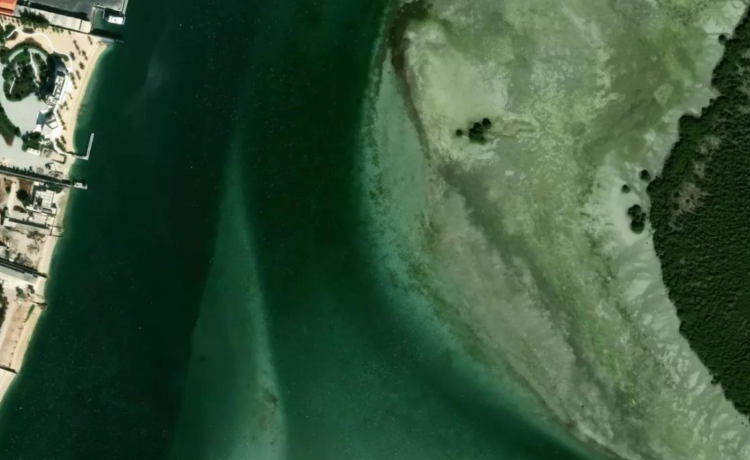
Satellite images released through the European Union’s Copernicus observation programme showed that the spill had expanded in recent days and was moving closer to the coastline of Umm Al Quwain, one of the northern emirates of the UAE.
The images, dated October 24, revealed extensive dark layers of oil spreading across the sea and reaching areas close to the shoreline. The development has increased pressure on authorities to contain the pollution and assess its possible effects on marine life, coastal habitats and local economic activities.
According to a report published by Reuters on Monday, October 26, UAE authorities had already begun containment efforts while the Ministry of Climate Change and Environment continued its assessment of the incident.
The widening spill has also raised questions about the environmental consequences of growing security threats affecting commercial vessels in Gulf shipping lanes.
Authorities Close Beaches as Precaution
Authorities in several northern emirates have introduced restrictions to reduce public exposure to the pollution.
The UAE Ministry of Climate Change and Environment announced the temporary closure of beaches and coastal areas around Umm Al Quwain. Authorities in neighbouring Sharjah also closed Al Hamriyah Beach as a precaution.
In Ras Al Khaimah, officials announced that all beaches in the emirate would remain closed until further notice.
The restrictions are intended to protect residents and visitors while environmental specialists examine the spread of the oil and determine the extent of the damage.
Nidal Hilal, a professor of engineering and director of New York University Abu Dhabi’s Water Research Center, described the incident as a serious environmental concern in comments reported by Reuters.
The closures underline the importance of precautionary measures when oil pollution reaches coastal areas. The movement of an oil slick can change with winds, currents and tides, making it difficult to predict which locations may be affected next.
Authorities will need to continue monitoring the coastline and communicating updates to the public as more information becomes available.
Damaged Tanker Linked to the Spill
Although UAE authorities had not officially identified the tanker responsible or confirmed the cause of the spill in the October 26 report, experts cited by Reuters linked the pollution to a vessel called Gem No. 2.
Shipping sources reportedly indicated that the tanker had been struck by an unidentified projectile in the previous month, causing a fire that was later extinguished.
The vessel’s reported damage and the subsequent appearance of oil in the surrounding waters have drawn attention to the connection between maritime security incidents and environmental emergencies.
However, the precise circumstances surrounding the leak, the total volume of oil released and the full extent of the pollution had not been established in the report.
A confirmed assessment of the vessel’s condition and the source of the leak would help authorities determine the appropriate response and identify any further measures needed to prevent additional pollution.
The incident also demonstrates how damage to a commercial vessel can create consequences beyond the immediate safety of its crew. A damaged tanker can become an environmental hazard if fuel or cargo escapes into surrounding waters.
Threat to Marine Life and Coastal Habitats
Oil spills can harm marine organisms by contaminating the water, coating animals and damaging sensitive coastal habitats. Their effects depend on the type of oil involved, the quantity released, the duration of exposure and the effectiveness of containment operations.
The Gulf supports a wide range of marine species. Information cited by Reuters from the International Union for Conservation of Nature indicates that the region’s waters contain more than 500 fish species, alongside marine turtles and dolphins.
Oil pollution can affect fish and other organisms directly, while also threatening the habitats on which marine animals depend. Coastal wetlands, shallow-water habitats and areas used by marine wildlife may be particularly vulnerable when oil reaches the shoreline.
The consequences can extend to people who rely on coastal waters for fishing, tourism and other commercial activities. Beach closures may disrupt businesses and reduce visitor activity, especially in areas where coastal recreation is an important source of income.
Environmental assessments will therefore be important not only for measuring the immediate damage but also for identifying any longer-term effects.
Maritime Security and Environmental Protection
The spill comes amid heightened security concerns affecting shipping in the Gulf and the Strait of Hormuz.
Reuters reported that attacks on commercial vessels in the surrounding waterways had increased risks for maritime traffic, while October had recorded a particularly high level of attacks according to data compiled by the Washington Institute for Near East Policy.
For shipowners, operators and insurers, such incidents create operational uncertainty. Security threats can affect voyage planning, insurance costs and decisions about the safest routes for transporting oil and other commodities.
The environmental consequences add another layer of risk. A security incident involving a tanker can lead to costly containment operations, coastal closures, damage to marine ecosystems and possible disruption to economic activity.
The situation highlights the need for effective emergency-response arrangements, reliable maritime monitoring and cooperation among shipping operators, coastal authorities and environmental agencies.
Early detection can help authorities identify pollution and begin containment measures before a spill spreads further. Satellite observation is especially useful because it allows specialists to monitor large areas of sea that may be difficult to inspect directly.
Containment Efforts Remain Important
As of October 26, UAE authorities were working to contain the spill and assess its environmental impact. Further details about the total amount of oil released, the complete area affected and the long-term recovery process had not yet been confirmed in the Reuters report.
The immediate priority is to limit the spread of the pollution, protect vulnerable coastal locations and establish the extent of the damage.
Authorities will also need to determine when affected beaches can safely reopen. Such decisions depend on environmental assessments rather than the passage of a fixed period alone.
The incident serves as a reminder that safe shipping involves more than preventing collisions and protecting vessels from attacks. It also requires preparations for emergencies that may threaten marine ecosystems and communities along the coast.
For the UAE and the wider maritime industry, the response to the spill will be an important test of the ability to manage environmental risks arising from damaged commercial vessels.