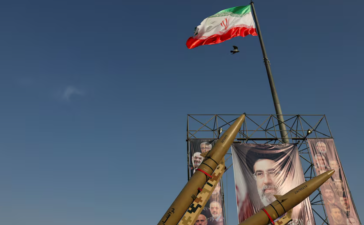
The conflict between the United States and Iran escalated sharply on Wednesday after Tehran launched ballistic missiles at a military base used by US forces in Jordan and said it attacked 10 ships near the Strait of Hormuz, deepening fears that the six-month-old war could spread further across the Middle East.
Iran’s Islamic Revolutionary Guard Corps, IRGC, said it fired ballistic missiles at the base near Al Azraq in Jordan following the destruction of five Iranian oil tankers by US forces on Tuesday.
Jordanian authorities said their air defences intercepted 18 of 20 Iranian missiles, with the remaining two falling in unpopulated areas. No casualties were reported.
A US official also said American personnel were accounted for and described the Iranian attack as ineffective.
The exchange marks another dangerous escalation after a month of relative calm, with both countries increasingly targeting military, shipping and energy assets.
US Destroys Five Iranian Tankers
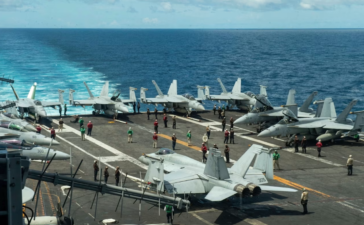
The United States said its forces destroyed five Iranian oil tankers on Tuesday in retaliation for attempted Iranian ballistic missile strikes against a US Navy warship.
US Central Command released footage of the attacks and said the tankers were linked to a network used to finance the Revolutionary Guard and Iranian-backed armed groups.
US Secretary of State Marco Rubio warned that Washington would continue retaliating against attempts to attack American naval vessels.
Iran responded by widening its operations.
The IRGC said it attacked 10 ships, including two US vessels and eight oil tankers, attempting to pass through an area of the Strait of Hormuz that Tehran has declared prohibited and unsafe.
Iran has also threatened tankers operating around Kuwaiti and Bahraini ports.
Hormuz Traffic Falls
The escalation is increasingly affecting one of the world’s most strategically important shipping corridors.
Preliminary data from Kpler showed only six commodity vessels passed through the Strait of Hormuz on Tuesday, compared with nine the previous day and a 10-day average of 12.
The figures could subsequently be revised because some ships operating in the region have switched off their tracking transponders.
Any sustained disruption to Hormuz carries global consequences because the waterway is a crucial export route for oil and liquefied natural gas produced across the Gulf.
Houthis Expand Attacks on Saudi Arabia
The crisis has also widened beyond direct exchanges between Washington and Tehran.
Iran-aligned Houthi forces in Yemen launched attacks on several Saudi Arabian cities on Tuesday, reportedly injuring 73 people and setting oil installations ablaze.
The Houthis said drones and missiles targeted a Saudi air base at Khamis Mushait as well as energy assets in Abha, Najran and Jazan.
Saudi authorities reported fires and said women and children were among those injured.
The attacks increase the risk of Saudi Arabia being pulled more deeply into a conflict that has already disrupted energy markets and shipping routes.
For the global economy, the immediate concern is whether the confrontation begins to cause sustained reductions in Gulf oil exports.
With energy infrastructure, tankers and major shipping routes increasingly caught in the conflict, the economic consequences are spreading far beyond the battlefield.