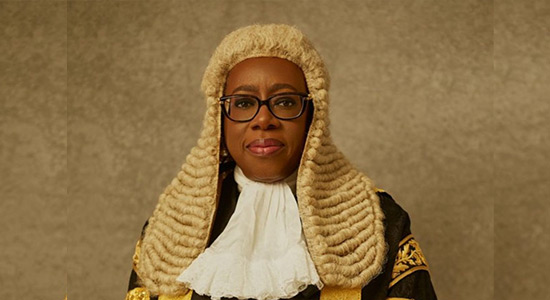
The Chief Justice of Nigeria (CJN), Justice Kudirat Kekere-Ekun, has warned judges and heads of courts against practices that could undermine the administration of justice, particularly as Nigeria approaches the 2027 general elections.
Kekere-Ekun urged judicial officers to guard against forum shopping, concealment of related court proceedings and attempts to obtain conflicting orders from courts of coordinate jurisdiction. She said political sensitivity and public pressure must not interfere with the judiciary’s responsibility to apply the law fairly.
The Chief Justice made the remarks on Monday, October 26, 2026, during the opening session of the 2026 Roundtable for Heads of Courts, organised by the National Judicial Institute (NJI) in Abuja.
Her warning comes as political parties and aspirants prepare for the next general elections, a period when disputes over party leadership, nominations, electoral procedures and candidates can place additional demands on the courts.
According to reports by Punch Newspapers and Arise News, Kekere-Ekun emphasised that judicial officers must discharge their constitutional responsibilities with impartiality, courage and fidelity to the law.
She maintained that neither political interests nor the urgency attached to a case should replace careful consideration of the Constitution, the Electoral Act and the applicable rules of court.
Warning against forum shopping
Forum shopping generally refers to attempts by litigants to seek a favourable decision by approaching different courts or choosing a particular court in circumstances that may undermine established judicial procedures.
The practice can become especially contentious when related cases are filed in different courts and competing orders are issued. Such situations may create uncertainty for the parties involved and make it difficult for authorities to determine which order should be followed.
Kekere-Ekun urged judges to scrutinise applications carefully and ensure that relevant facts are fully disclosed. She also warned against attempts to use urgent applications or orders made without hearing all parties, where applicable, to gain an improper advantage.
The Chief Justice said related proceedings must be considered and existing procedural safeguards respected. She stressed that no litigant should be allowed to manipulate the judicial system in search of a favourable outcome.
The warning highlights the importance of consistency and transparency in judicial proceedings. Court orders carry legal authority, and conflicting decisions can create confusion for litigants, government institutions and the public.
By encouraging judges to follow established procedures, the CJN is seeking to protect the credibility of the courts during a politically sensitive period.
Importance of judicial independence
The judiciary plays a central role in resolving disputes and interpreting the law. During election periods, its decisions can affect political parties, candidates and the wider electoral process.
Kekere-Ekun said judicial officers must remain impartial and resist pressure from any quarter. Political disputes, she stressed, should be determined according to the facts and applicable law rather than public sentiment or the interests of powerful individuals.
Maintaining judicial independence is important because parties involved in political disputes must have confidence that their cases will receive fair consideration. Where the courts are perceived as favouring particular political interests, public trust in the justice system can suffer.
The Chief Justice’s remarks also place responsibility on heads of courts to ensure that cases are assigned and managed appropriately. Proper administration can help reduce the risk of parallel proceedings creating avoidable conflicts.
Her message is particularly relevant ahead of the 2027 elections, when disputes could arise over party primaries, candidate eligibility, internal party decisions and the interpretation of electoral rules.
Call to reduce delays in justice delivery
Beyond conflicting orders, Kekere-Ekun expressed concern about delays in the determination of cases. She noted that prolonged proceedings can impose financial and emotional burdens on litigants and reduce public confidence in the justice system.
Delays may also weaken the practical value of legal remedies. A decision delivered after a dispute has become urgent or after an important deadline has passed may not provide the timely resolution a party needs.
The Chief Justice acknowledged that some delays arise from challenges such as inadequate funding, infrastructure and judicial manpower. However, she also pointed to administrative problems that could be addressed through improved court management.
These include inefficient docket management, repeated adjournments, poor scheduling and inadequate monitoring of cases that remain inactive for long periods.
She urged heads of courts to understand the condition of their dockets, including the number of pending cases, how long they have remained unresolved and the reasons for the delays. Such information, she said, should guide practical plans to reduce backlogs and improve the allocation of hearing dates.
Improved scheduling and monitoring could help courts use available resources more effectively. However, sustained progress may also require adequate staffing, facilities, funding and support for court administration.
Implications for the 2027 elections
Election-related disputes can attract intense public attention because they may determine who is eligible to contest, whether party procedures were followed and how electoral laws should be applied.
A reliable judicial process is therefore important to the credibility of elections. Parties must be able to challenge decisions through lawful procedures, while courts must ensure that cases are handled fairly and without unnecessary delay.
Kekere-Ekun’s warning does not determine the outcome of any specific political dispute. Instead, it sets out expectations for how judicial officers should approach cases and safeguard the integrity of proceedings.
The effectiveness of these expectations will depend on how consistently courts apply procedural rules, disclose relevant information, manage related cases and deliver decisions within reasonable timeframes.
As preparations for the 2027 elections continue, the judiciary will remain an important institution for resolving legal disputes. The Chief Justice’s message is that courts must perform that role without political interference and with close attention to fairness, efficiency and the rule of law.
Readability optimisation: Short paragraphs, descriptive subheadings, plain-English explanations of legal terms and a clear distinction between general judicial guidance and the outcome of any individual case.