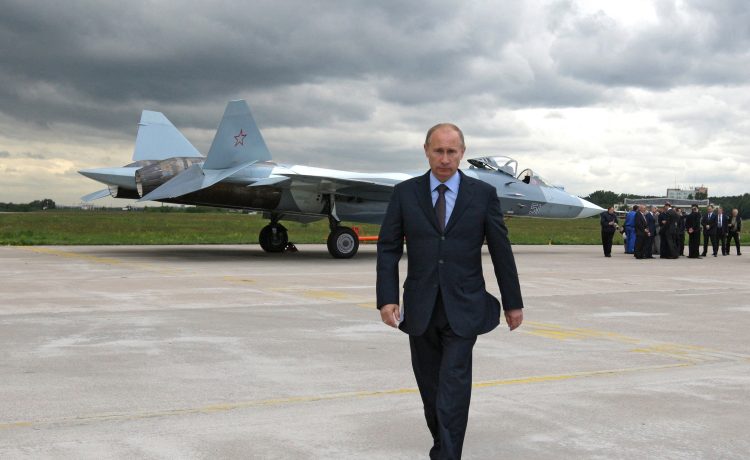
Russia is using this week’s El Alamein International Airshow in Egypt to aggressively market its latest military technology to African and Middle Eastern governments, highlighting the battlefield experience of weapons developed and upgraded during years of confrontation with Western-supplied systems.
The second El Alamein International Airshow, running from September 8 to 10 at El Alamein International Airport, has brought aerospace and defence companies together with military officials and prospective buyers.
Russia has established a major presence through state arms exporter Rosoboronexport and companies including Almaz-Antey, Tactical Missiles Corporation and High-Precision Systems.
The Russian delegation is showcasing fighter aircraft, air-defence systems, counter-drone technology, precision weapons and unmanned aircraft.
At the centre of Moscow’s sales pitch is a simple proposition: Russian weapons have accumulated extensive experience against Western and NATO-supplied military technology in actual combat.
Su-57E Takes Centre Stage
One of the most prominent Russian products at the show is the export version of the Su-57E fifth-generation fighter.
Russia is displaying the aircraft in Egypt with a range of weapons, including short- and long-range air-to-air missiles and precision air-to-surface weapons.
Rostec said some of the weapons being presented with the Su-57E had never previously been publicly displayed in Russia or overseas.
The Russian exhibition also includes the ZAK-30 Citadel anti-aircraft artillery system, Pantsir-SMD-E surface-to-air missile system, Verba portable air-defence system and several unmanned platforms.
Russia is also promoting Lancet-E loitering munitions and other drone systems, technologies whose importance has increased dramatically as unmanned aircraft have reshaped modern warfare.
The Ka-52E reconnaissance and attack helicopter is another product being marketed with upgrades based on combat experience.
Ukraine War Becomes Marketing Tool
Russia’s presentation illustrates an unusual consequence of the war in Ukraine: battlefield experience has become part of the commercial competition in the global defence industry.
Russian systems have spent years confronting Western-supplied weapons, electronic warfare equipment, air-defence systems and drones.
Moscow is attempting to convert lessons from those encounters into an export advantage by emphasising that products have been modified based on combat experience.
Rosoboronexport describes several systems being marketed in Egypt as “combat-proven,” including air-defence and unmanned technologies.
The claim should nevertheless be understood as part of Russia’s commercial marketing.
Actual battlefield performance can be difficult to assess independently, and both Russian and Western weapons have experienced successes, losses and vulnerabilities during modern conflicts.
What is clear is that buyers increasingly want weapons designed for a battlefield dominated by drones, electronic warfare, precision missiles and layered air defence.
Africa, Middle East Central to Moscow’s Strategy
Egypt is particularly important to Russia because of its position at the intersection of Africa and the Middle East.
Rosoboronexport Director-General Alexander Mikheev described Egypt as one of Moscow’s most important strategic partners and said the company planned meetings with military and industry representatives from African and Middle Eastern countries during the exhibition.
Those regions remain major markets for defence suppliers from Russia, the United States, Europe, China, Turkey and increasingly other emerging military exporters.
African governments, in particular, face security challenges ranging from insurgencies and terrorism to border surveillance and maritime security, creating demand for relatively affordable aircraft, drones and air-defence equipment.
Egypt itself has historically operated military equipment from multiple suppliers, making the country an important showcase for competing defence industries.
Global Arms Competition Intensifies
Russia is far from alone at El Alamein.
India, for example, has deployed its Sarang Helicopter Display Team, flying the domestically produced Advanced Light Helicopter Dhruv, as New Delhi also seeks to showcase the capabilities of its growing aerospace industry.
The wider competition reflects changes in the global defence market.
The wars in Ukraine and the Middle East have demonstrated the growing importance of relatively inexpensive drones, counter-drone systems, electronic warfare and precision weapons alongside conventional fighter aircraft and missile systems.
For Russia, the challenge is to persuade international customers that years of combat experience provide an advantage despite the economic and technological pressures associated with Western sanctions.
Its large presence in Egypt shows Moscow remains determined to compete for defence contracts across Africa and the Middle East—and to turn its experience fighting Western-backed forces into part of its global weapons sales pitch.