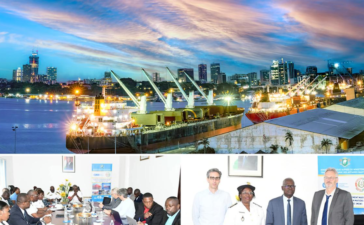
Nigeria has intensified efforts to attract investment into its maritime and blue economy sectors following the inauguration of the organising committee for the Nigeria Marine and Blue Economy Expo, known as NIMBEX.
The Minister of Marine and Blue Economy, Dr Adegboyega Oyetola, inaugurated the committee as part of the Federal Government’s strategy to position Nigeria as a leading destination for maritime investment, innovation and trade in Africa.
The development was reported by The Guardian on October 23, 2026. According to the report, the expo is expected to bring together policymakers, international investors, industry leaders and technology innovators to identify opportunities within Nigeria’s marine and blue economy.
Oyetola, who was represented at the inauguration by the ministry’s Permanent Secretary, Mrs Fatima Mahmood, said the initiative would provide a platform for turning the country’s maritime resources into investment opportunities, economic growth and employment.
The minister highlighted the potential of the sector to support economic diversification and create sustainable jobs by attracting the capital, expertise and partnerships needed to develop maritime activities.
NIMBEX to Cover Key Maritime Industries
The planned expo will focus on a broad range of activities, reflecting the different ways Nigeria can generate economic value from its coastal waters, inland waterways and maritime infrastructure.
Key areas identified for attention include deep-sea mining, port development, shipping, inland waterway transportation, logistics, offshore energy, maritime finance, fisheries, marine biotechnology, maritime security and environmental sustainability.
The event is also expected to showcase emerging opportunities in marine renewable energy, green shipbuilding, artificial intelligence-driven logistics, subsea robotics and coastal tourism.
These areas could provide opportunities for investors, technology companies, shipping operators and businesses interested in supporting the development of Nigeria’s maritime industry.
For example, investment in port infrastructure and logistics could help improve cargo handling and the movement of goods. Developments in shipping and inland waterways could support transportation, while marine technology could create opportunities for specialised services and skilled employment.
However, converting these opportunities into commercial projects will depend on factors such as financing, infrastructure, regulatory certainty, security and the ability of businesses to operate sustainably.
Nigeria’s Maritime Resources Offer Significant Potential
Nigeria has important geographical and commercial advantages that could support the development of its marine and blue economy.
According to the minister’s remarks reported by The Guardian, the country has an 853-kilometre coastline, more than 10,000 kilometres of navigable inland waterways spanning 28 states, and a substantial domestic market.
These resources provide a foundation for expanding maritime trade, improving inland transportation and developing industries linked to marine resources.
Nigeria’s ports also play an important role in international commerce by facilitating the movement of imports and exports. Better infrastructure, more efficient logistics and greater private-sector participation could strengthen the contribution of maritime activities to the wider economy.
The inland waterways offer another potential area for development. Where suitable infrastructure and safety measures are in place, water transportation can provide alternatives for moving passengers and cargo, potentially improving connectivity between communities and commercial centres.
The blue economy also extends beyond traditional shipping. Fisheries, coastal tourism, marine biotechnology and renewable energy could contribute to economic activity if developed with appropriate investment and environmental safeguards.
Committee to Bring Industry Stakeholders Together
The NIMBEX organising committee includes representatives of coastal states, terminal operators, shipowners, freight forwarders, barge operators and other maritime industry stakeholders.
This broad representation is intended to encourage coordinated planning and connect potential investors with opportunities across different segments of the sector.
Bringing public and private stakeholders together could help identify challenges affecting investment and encourage discussions about the policies, infrastructure and partnerships required to address them.
Investors typically need clear information about projects, expected commercial opportunities, regulatory requirements and potential risks before committing capital. An expo can provide a forum for these discussions, although participation alone does not guarantee that investment agreements or projects will materialise.
The committee’s work will therefore be important in determining how effectively the event translates interest into practical outcomes.
Investment and Job Creation Remain Key Priorities
The Federal Government’s broader ambition is to make the marine and blue economy a stronger contributor to Nigeria’s economic development.
More investment could support employment in shipping, port operations, marine engineering, logistics, fisheries, tourism and related professional services. It could also create opportunities for local companies to provide equipment, technology and support services to larger maritime businesses.
At the same time, sustainable development will require attention to maritime security, environmental protection, workforce training and effective regulation.
The sector’s long-term performance will depend not only on attracting investors but also on ensuring that projects are commercially viable, responsibly managed and capable of generating lasting benefits for Nigerian communities.
NIMBEX provides a platform for advancing these discussions. Its impact will ultimately be measured by the quality of partnerships it generates, the investment it helps mobilise and the extent to which resulting projects improve Nigeria’s maritime capacity.