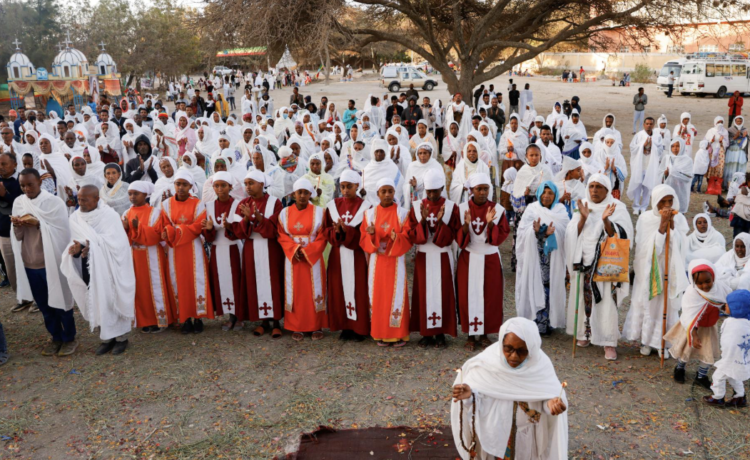
At least 60 people were killed in two separate attacks in Ethiopia’s conflict-hit Oromiya region, according to the Ethiopian Orthodox Tewahedo Church, raising fresh concerns about civilian security and the continuing instability affecting parts of the country.
In a report published on October 27, 2026, Reuters said the church reported that 14 Christians were killed in Merti Woreda on October 20, while another 46 people were killed in Sherka Woreda on October 24.
The church also reported that more than 20 homes were burned during the violence and that over 20 people were hospitalised with severe injuries.
The incidents highlight the continuing challenges facing communities in Oromiya, Ethiopia’s largest region, where insecurity and armed conflict have affected civilian life in several areas.
Although the reported death toll has attracted national and international attention, important questions remain about the circumstances surrounding the attacks, the identities of those responsible and the motives behind the violence.
The competing accounts emerging from the region have also complicated efforts to establish responsibility.
Responsibility for the Attacks Remains Disputed
The Oromiya regional government and a source connected to a rebel alliance have traded accusations over who was responsible for the killings.
According to Reuters, the regional government blamed a rebel alliance linked to armed groups in northern Tigray, alleging that the attacks were intended to provoke religious conflict. However, the government did not provide evidence supporting that allegation in the report.
A source connected to the rebel alliance offered a different account, accusing the Oromiya regional government of carrying out the killings and citing conversations with two local residents.
These competing claims have made it difficult to establish responsibility independently.
The Oromo Liberation Army, an armed group previously blamed by the regional government for attacks on Orthodox Christians, did not immediately respond to a request for comment, according to Reuters.
The group is among seven armed organisations that announced the formation of an alliance in September, with the stated objective of overthrowing Prime Minister Abiy Ahmed’s government.
The accusations underline the complex security environment in Ethiopia, where political rivalries, armed movements and local grievances can complicate investigations into attacks against civilians.
Establishing responsibility through credible investigations will be important for preventing further violence and ensuring that those responsible are held accountable.
Concerns About Religious Tensions and Civilian Protection
The Ethiopian Orthodox Tewahedo Church identified the victims as Christians but did not provide detailed information about how the victims died or establish who carried out the attacks.
The reported targeting of members of a religious community has raised concerns about the potential for the violence to deepen mistrust among communities.
However, the available reporting does not independently establish that religious identity was the motive for the attacks.
That distinction is important because unverified claims about responsibility or motive can increase tensions and complicate efforts to restore peace.
The reported burning of homes also points to the wider consequences of insecurity for families and communities. Beyond the immediate loss of life, attacks on residential areas can leave people without shelter, disrupt access to essential services and force families to seek safety elsewhere.
The more than 20 people reportedly hospitalised with severe injuries may also require continued medical attention and support.
Local communities facing repeated insecurity often experience disruptions to education, trade, transport and agricultural activities. While the full impact of these particular attacks has not been established, the reported destruction of homes and injuries demonstrate the humanitarian consequences of the violence.
Ethiopia’s Wider Security Challenges
Ethiopia has faced multiple security challenges in recent years, including armed conflict, political tensions and violence in different regions.
Oromiya has experienced prolonged insecurity involving government forces and armed groups. The region’s size and strategic importance make stability there significant for the country as a whole.
Prime Minister Abiy Ahmed’s administration has faced pressure to improve security and protect civilians while addressing the political and military challenges posed by armed opposition groups.
The latest attacks are likely to renew calls for stronger protection of vulnerable communities, credible investigations and measures to prevent retaliatory violence.
Nevertheless, the available reports do not establish whether the latest incidents are part of a coordinated campaign or whether the two attacks were connected.
Authorities and independent investigators would need to establish those details before firm conclusions could be drawn.
The Need for Investigation and Accountability
The immediate priority following the reported killings is the protection of affected communities and the provision of assistance to injured people and displaced families, where necessary.
Investigations should establish the circumstances of both attacks, identify those responsible and determine whether civilians were deliberately targeted.
Transparent findings would also help counter misinformation and reduce the likelihood that unverified accusations could trigger further violence.
Religious leaders, community representatives and local authorities may also have an important role in encouraging calm and discouraging retaliatory attacks.
The situation highlights the importance of distinguishing confirmed information from allegations while investigations remain incomplete.
Conclusion
The deaths of at least 60 people in two attacks in Ethiopia’s Oromiya region represent a serious development in the country’s ongoing security challenges.
The Ethiopian Orthodox Tewahedo Church has reported significant loss of life, injuries and damage to homes, while the parties implicated in the competing accounts have yet to establish a mutually accepted explanation of responsibility.
As investigations and reporting continue, protecting civilians, assisting affected families and establishing the facts will be essential.
The developments also reinforce the need for sustained efforts to address insecurity and prevent violence from escalating into broader community or religious tensions.