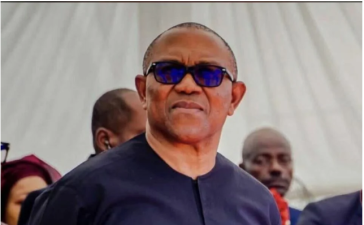
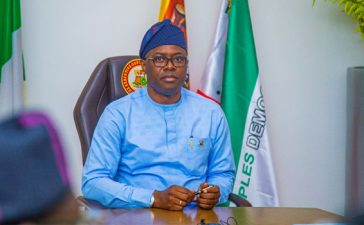
Vice-President Kashim Shettima has criticised Peter Obi, the presidential candidate of the Nigeria Democratic Congress (NDC), saying the opposition politician has little to offer Nigerians beyond citing statistics.
Shettima made the remarks on Monday, October 26, 2026, in Abuja during the opening of the 32nd Nigerian Economic Summit. He urged members of Nigeria’s economic community to support the Federal Government’s policies while defending its decision to remove the petrol subsidy.
The comments add to the political exchanges between the ruling All Progressives Congress (APC) and opposition figures ahead of the 2027 general elections. Economic management, fuel prices, public spending and the cost of living are expected to remain major subjects of debate as parties seek public support.
According to reports by TheCable and Punch, Shettima acknowledged Obi’s position that he would not restore the petrol subsidy but argued that relying on statistics was insufficient to provide a convincing alternative for the country.
“I respect Peter Obi for having the courage to say he’s not going to restore the petrol subsidy, but beyond spouting some statistics, Mr Peter Obi has absolutely nothing to offer,” Shettima said, according to the reports.
The Vice-President also encouraged economic experts and other participants at the summit to support the Federal Government’s approach.
Shettima defends subsidy removal
A central part of Shettima’s remarks was the government’s defence of petrol subsidy removal, a major economic policy introduced by President Bola Tinubu after taking office in May 2023.
The Federal Government has argued that the subsidy placed a heavy burden on public finances and that ending it would free resources for other national priorities. However, the policy led to a sharp increase in petrol prices, contributing to higher transportation costs and pressure on household budgets.
Shettima compared petrol prices in Nigeria with prices in neighbouring countries, including Niger Republic, Benin Republic and Cameroon. He argued that the differences illustrated the implications of Nigeria’s previous fuel-pricing arrangements.
He also referred to Nigeria’s former level of daily petrol consumption, saying the country had consumed approximately 67 million litres per day a few years earlier.
The Vice-President used the comparison to support the government’s position that the previous subsidy arrangement had consequences beyond the domestic market.
However, comparisons between countries require care. Petrol prices can be influenced by exchange rates, taxes, transportation costs, supply arrangements and government policies. Figures cited during political speeches should therefore be assessed alongside their dates, sources and calculation methods.
Obi’s reliance on economic data
Obi has frequently used economic statistics and public spending figures to question government decisions. His public arguments have included calls for greater transparency, fiscal discipline and accountability in the management of national resources.
Supporters of data-driven policy discussions argue that reliable figures can help voters evaluate government performance and understand the effects of economic decisions. Critics, including Shettima, contend that statistics alone do not necessarily demonstrate that a politician has practical or workable solutions.
The disagreement reflects a broader question in Nigerian politics: how leaders should demonstrate that their policies can improve living conditions.
Economic data can help identify problems, compare outcomes and assess government performance. But figures are most useful when accompanied by clear explanations of the policies proposed, how they would be implemented, how much they would cost and how their results would be measured.
For voters, the challenge is to assess not only the claims made by politicians but also the evidence and practical proposals supporting those claims.
Debate over the cost of living
The subsidy debate remains politically significant because fuel prices affect many areas of the Nigerian economy. Higher transportation costs can influence the prices of food, goods and services, while businesses also face changes in the cost of moving products and operating equipment.
The government has defended subsidy removal as part of wider efforts to reform the economy. Opposition politicians and other critics have questioned whether the benefits of the reforms have been sufficient to offset the financial pressure on households.
The debate involves several issues, including government revenue, inflation, public investment, social protection and the availability of affordable transportation. Any assessment of the policy needs to consider both its fiscal objectives and its effect on ordinary Nigerians.
Shettima’s remarks also follow earlier criticism of Obi by members of the ruling party. Such exchanges are likely to continue as political figures seek to distinguish their economic positions before the next election.
Political implications ahead of 2027
The comments underline the importance of economic policy in the emerging 2027 election debate. The APC is defending the administration’s reforms, while opposition figures are challenging aspects of the government’s economic management.
Ultimately, voters will need to evaluate the competing arguments against measurable outcomes, credible evidence and detailed policy proposals. Political criticism may shape public discussion, but it does not by itself settle whether a particular policy has succeeded or failed.
Shettima’s statement is therefore best understood as part of the continuing political debate over leadership and economic direction. The key questions for Nigerians remain how policies affect their daily lives, whether public resources are being used effectively and which proposals offer credible routes to sustainable growth.