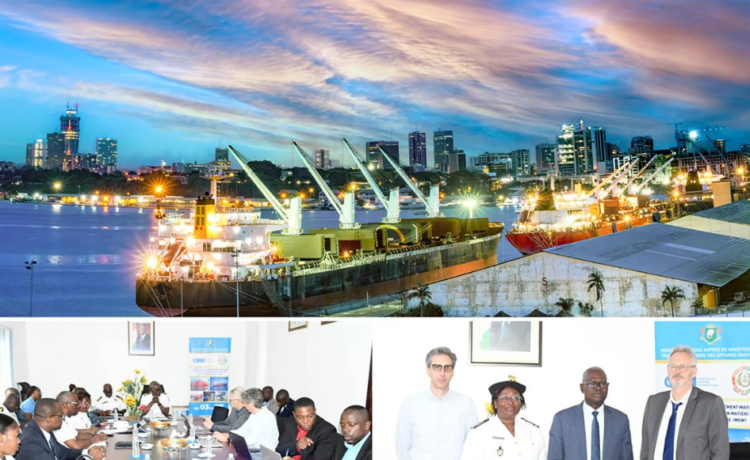
West and Central African countries are strengthening efforts to modernise their maritime ports through digitalisation, with regional authorities and international development partners calling for better coordination among shipping agencies, customs authorities and port operators.
The initiative was highlighted at a regional workshop held in Accra, Ghana, from October 19 to 23, 2026. The workshop brought together maritime stakeholders from nine countries to examine ways to improve vessel clearance, streamline cargo processing and make maritime trade more efficient.
According to the International Maritime Organization (IMO), the workshop was organised in collaboration with the Africa Transport Policy Program (SSATP) and the World Bank, with the Ghana Maritime Authority serving as a partner.
The participating countries were Cabo Verde, Equatorial Guinea, The Gambia, Ghana, Guinea-Bissau, Liberia, Nigeria, São Tomé and Príncipe, and Sierra Leone. The event attracted 55 participants, including representatives of maritime administrations, port authorities and customs agencies.
A major priority of the workshop was expanding the use of Maritime Single Windows (MSWs), digital platforms that allow shipping companies and other relevant parties to submit vessel-related information through a coordinated system.
Under traditional processes, shipping operators may have to submit similar documents to several government agencies. When these agencies operate separate systems that cannot communicate effectively, the process can result in repeated paperwork, longer clearance times and additional costs.
A Maritime Single Window is designed to simplify these procedures by providing a coordinated platform for formalities associated with vessels arriving at, staying in and departing from ports.
The IMO also promoted the adoption of its Compendium on Facilitation and Electronic Business, which provides standards for structuring and exchanging shipping and port information electronically.
The workshop examined how Maritime Single Windows could work alongside Port Community Systems (PCSs). While Maritime Single Windows focus on regulatory formalities, Port Community Systems connect a wider network of port and logistics stakeholders, including terminal operators, freight forwarders and transport companies.
Improving port efficiency is important for African economies that depend on maritime transport to move imported goods, export commodities and connect local businesses to international markets.
Delays at ports can increase the cost of moving goods and disrupt supply chains. Businesses may face additional expenses when cargo remains uncleared or when documentation must be processed repeatedly by different agencies.
Connected digital platforms could help address these challenges by improving information exchange and making procedures more predictable.
The initiative is also intended to strengthen coordination across borders. Maritime trade frequently connects several countries through shared shipping routes and regional transport corridors, meaning inefficiencies at one port can affect businesses and cargo movements elsewhere.
The workshop therefore emphasised the need for systems that can exchange information using recognised standards, even when individual countries use different technology platforms.
Nigeria’s Role in Regional Maritime Development
Nigeria was among the nine participating countries, giving its maritime authorities an opportunity to exchange experiences with neighbouring countries and explore approaches that could support domestic port modernisation.
For Nigeria, stronger digital coordination could complement wider efforts to improve cargo clearance, logistics performance and the competitiveness of its maritime sector.
However, introducing technology alone may not be sufficient. Effective implementation requires clear responsibilities among government agencies, appropriate legal frameworks, trained personnel and cooperation with private-sector operators.
The IMO and its partners also highlighted the importance of financing and policy support to ensure that digital systems are implemented effectively rather than remaining isolated projects.
The Accra workshop was the third in a series of regional engagements, following earlier workshops in Abidjan in December 2025 and Dar es Salaam in April 2026. The programme forms part of broader efforts to improve digital transport infrastructure and trade facilitation across Africa.
The next challenge for participating countries will be translating discussions and shared experiences into practical national implementation plans.
This will involve identifying gaps in existing port systems, improving cooperation among agencies and establishing platforms that allow relevant information to be shared securely and efficiently.
If properly implemented, these reforms could help reduce administrative bottlenecks, improve the predictability of vessel and cargo clearance, and strengthen the ability of African ports to compete for international trade.
The wider objective is to build a more connected maritime trade environment in which technology supports cooperation between countries rather than creating new barriers.
For West and Central Africa, the success of maritime digitalisation will ultimately depend on whether these systems deliver measurable improvements for shipping operators, importers, exporters and consumers.