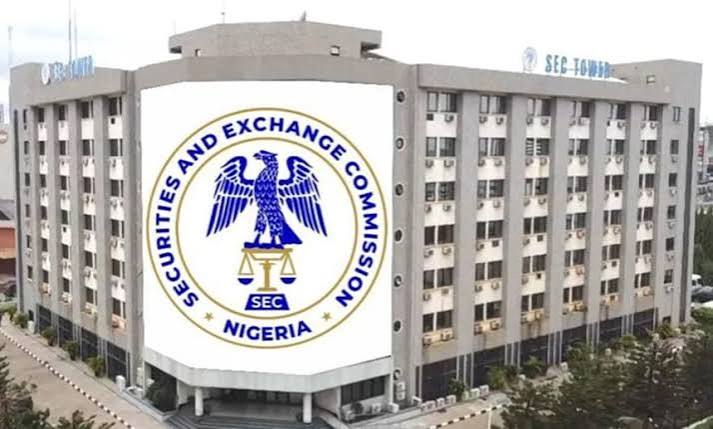
Nigeria’s capital market continues to play an important role in connecting companies seeking finance with investors looking for opportunities to grow their wealth. The Securities and Exchange Commission (SEC) and the Nigerian Exchange (NGX) occupy important positions within this system.
The SEC is responsible for regulating Nigeria’s capital market under the relevant legal framework, while the NGX operates a marketplace where eligible securities can be listed and traded.
Together with other market institutions, they contribute to the framework within which investors buy and sell shares, companies raise capital and market participants receive information about listed securities.
Their roles remain relevant as investors assess company earnings, economic conditions and changes affecting the banking and wider financial sectors.
Why market regulation matters
A functioning capital market requires rules governing securities offerings, trading conduct, disclosure and the responsibilities of market participants.
Regulation helps establish standards intended to protect investors and promote fair, orderly markets. It also provides mechanisms for addressing certain forms of misconduct and non-compliance.
For investors, the availability of reliable information is particularly important. A share price may rise or fall because of changes in company performance, expectations about future earnings, economic developments or shifts in investor sentiment.
Without accurate information, investors may find it difficult to assess these factors or distinguish genuine corporate announcements from speculation.
The SEC’s regulatory role and the NGX’s market operations contribute to the wider framework for trading and disclosure. However, regulation cannot remove all investment risk or guarantee that an investor will make a profit.
The NGX and company performance
The Nigerian Exchange provides the platform through which eligible listed securities are traded. It also publishes market information that investors use to monitor trading activity and price movements.
Changes in market indices and market capitalisation can provide an overview of the performance of listed shares, although they do not necessarily reflect the condition of every company.
Recent market reporting has highlighted movements in Nigerian equities, including changes in market capitalisation and trading activity. Such movements can reflect several influences, including company results, interest-rate expectations, inflation, exchange-rate conditions and investor demand.
Investors should therefore examine individual company disclosures rather than relying solely on whether the broader market has risen or fallen.
For example, a bank reporting stronger profits may still face risks associated with loan quality, funding costs or changes in regulation. Likewise, a company with weak recent results may have a recovery plan, but investors must assess the evidence rather than assume that its share price will improve.
Why disclosure is important
Listed companies are expected to provide financial information and other disclosures in accordance with applicable requirements.
Financial statements help investors examine revenue, profit, expenses, assets, liabilities and cash flow. Other announcements may concern dividends, major transactions, changes in leadership or developments that could materially affect a company’s business.
Timely and accurate disclosure supports informed decisions and helps reduce information gaps between companies and investors.
Investors should be cautious when a decision is based entirely on an unverified social media post, a rumour about a takeover or an unsupported prediction about a share price.
Where an announcement could influence an investment decision, the company’s official disclosure and relevant market notices should be checked.
Challenges facing investors
Nigeria’s capital market operates within an economy affected by inflation, interest rates, foreign exchange movements and changing business conditions.
These factors can influence the returns investors demand and the prices they are willing to pay for securities.
High interest rates, for example, may make some fixed-income investments more attractive relative to shares. Inflation can also affect corporate costs and the real value of investment returns.
Investors must consider their time horizon, financial circumstances and tolerance for risk before making decisions. Diversification can help reduce exposure to a single company or sector, although it cannot eliminate market risk.
What to watch next
Market participants will continue monitoring company earnings, regulatory notices, new listings, corporate actions and changes in economic policy.
For the SEC, important developments would include confirmed rules, enforcement actions or investor-protection announcements. For the NGX, relevant information may include trading data, listed-company disclosures and market notices.
No new SEC-specific policy announcement has been verified for October 26 in the sources reviewed for this article.
The broader lesson is that confidence depends on transparent information, consistent rules and informed participation. A well-functioning capital market can help businesses raise funds and give investors access to opportunities, but both companies and investors must operate with an understanding of the risks involved.