The Federal Government has announced that the remaining sections of the Abuja-Kaduna-Zaria-Kano highway are expected to be completed by November, with the two major sections currently being executed estimated to cost N752 billion.
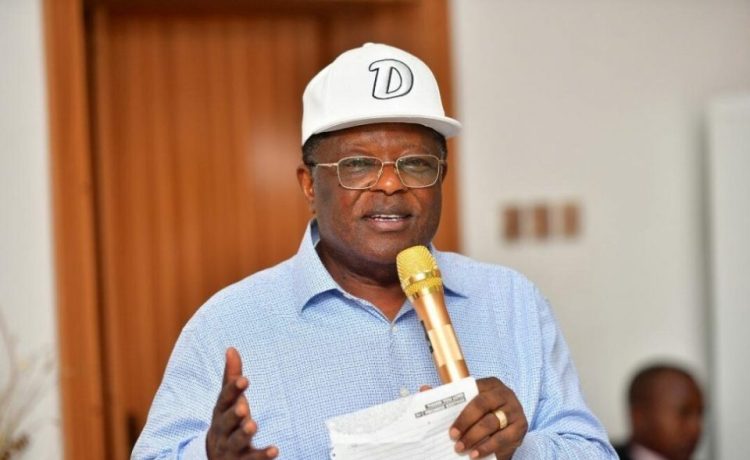
The Minister of Works, David Umahi, disclosed this in Abuja on Monday, saying more than 80% of the cost of the two sections being handled by the present administration had already been paid.
Umahi said the government was also installing solar-powered streetlights along the strategic highway and would deploy what he described as “superhighway guards” to protect the infrastructure from vandalism.
According to the minister, the Abuja-Kaduna-Zaria-Kano route covers 375 kilometres in one direction, translating to 750 kilometres when both carriageways are considered.
He said the Federal Government had previously spent more than N200 billion on the portion of the project handled by Julius Berger, with the contractor completing 240 kilometres on each carriageway, or 480 kilometres in total.
The minister said 140 kilometres remained on that section, equivalent to 280 kilometres across both carriageways.
Umahi said the current administration had also completed 118 kilometres of the highway with concrete pavement within 30 months, describing the achievement as unprecedented. He added that work was continuing on another 164 kilometres, representing 82 kilometres on each carriageway.
“The Abuja to Kaduna to Zaria to Kano is 375 kilometres by two. 750 kilometres,” Umahi said, adding that the two projects currently being executed by the administration were valued at N752 billion.
He said more than 80% of the funds had already been paid and expressed confidence that the entire stretch would be completed by November.
The minister also raised concerns over attempts to vandalise sections of the newly constructed concrete pavement, saying he had observed people digging into the road to remove parts of the infrastructure.
To protect the highway, the government plans to install solar-powered lighting at regular intervals and establish a dedicated security arrangement known as the Abuja-Kaduna-Zaria-Kano Superhighway Guards.
Umahi said the security initiative would complement existing infrastructure protection efforts and help safeguard the strategic corridor after construction is completed.
The highway is considered a major transport route connecting the Federal Capital Territory with Kaduna, Zaria and Kano, while facilitating the movement of people, agricultural produce and goods between the regions.
The minister also defended the government’s infrastructure spending, arguing that major construction projects were creating employment and economic opportunities rather than simply representing government expenditure.
He said construction sites across the country were generating both direct and indirect employment, with some projects employing more than 1,000 people.
Umahi also said the Lagos-Calabar Coastal Highway would be completed despite what he described as attacks on the project, adding that more than 50% of the entire stretch had already been completed.
He urged Nigerian youths to assess the administration based on tangible infrastructure projects and economic indicators rather than relying solely on political arguments or social media narratives.
The minister also highlighted other major road projects being undertaken by the Federal Government, including the Sokoto-Zamfara-Zaria corridor and the Enugu-Port Harcourt route.
According to Umahi, the Sokoto-Zamfara-Zaria road covers about 350 kilometres in one direction, or 700 kilometres when both carriageways are considered. The project has an estimated cost of about N870 billion.
He said the government had changed the pavement design to reinforced concrete to improve the road’s durability and that work was ongoing.
On the Enugu-Port Harcourt corridor, Umahi said the project covers about 260 kilometres in one direction, or 520 kilometres across both carriageways, and is valued at $959 million.
He said the government had introduced a flyover along the Benue section after identifying safety concerns for motorists and residents. According to the minister, the flyover was almost complete.
Other projects cited by Umahi include the reconstruction of the Buruku Bridge and the Bonny-Bodo Road.
He said the Buruku Bridge was more than 80% complete, while the N280 billion Bonny-Bodo Road had been completed. The 39.7-kilometre road has improved land access between Bonny Island and the mainland, reducing residents’ reliance on sea transportation.
The Abuja-Kaduna-Zaria-Kano highway has remained a major infrastructure priority because of its importance to transportation and economic activity across northern Nigeria. Different sections of the route have been handled by successive administrations and contractors over the years.
With November now set as the latest completion target, the Federal Government faces a race to finish the outstanding sections while protecting completed portions from vandalism.
The planned solar lighting and dedicated highway security arrangement are expected to form part of the government’s broader effort to ensure that the strategic road remains operational and secure after construction.