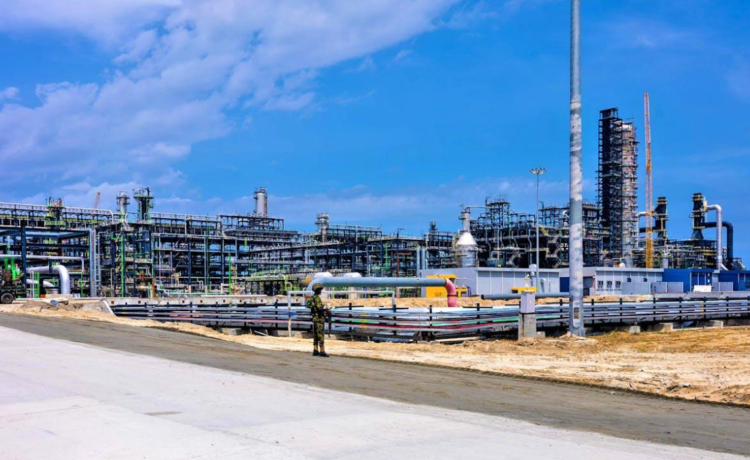
Dangote Refinery is advancing an expansion plan that would increase its refining capacity from 700,000 barrels per day to 1.4 million barrels per day, a move that could strengthen Nigeria’s position in the international petroleum industry.
The refinery’s official website identifies its current crude distillation unit capacity as 700,000 barrels per day and describes the planned expansion to 1.4 million barrels per day. The project would double the facility’s stated current capacity and further increase its importance to Nigeria’s energy and industrial sectors.
However, the proposed capacity should be understood as an expansion target rather than an indication that the refinery is already processing 1.4 million barrels of crude oil daily. Actual output depends on project implementation, equipment readiness, crude availability and operating conditions.
A major investment in domestic refining
Nigeria has historically depended heavily on imported refined petroleum products despite being a major crude oil producer. Domestic refining capacity is therefore an important part of the country’s efforts to strengthen energy security and reduce exposure to international supply disruptions.
A refinery with greater processing capacity could potentially supply more petrol, diesel, aviation fuel and other petroleum products to domestic and international markets. It could also support related industries, including petrochemicals, storage, transportation and marine logistics.
Dangote Refinery has positioned itself as an integrated industrial complex rather than a facility focused exclusively on fuel production. Its operations include petrochemical manufacturing and infrastructure intended to support the movement of petroleum products to different markets.
If the expansion is completed and operates commercially as intended, the additional capacity could improve the company’s ability to serve customers in Nigeria and other countries. Nevertheless, the ultimate effect on fuel availability and prices will depend on a range of market conditions.
Potential impact on Nigeria’s economy
One possible benefit of increased domestic refining is a reduction in the volume of refined products that Nigeria needs to import. When local refineries supply a larger share of demand, the country may become less exposed to certain international shipping, insurance and supply-chain costs.
However, higher refining capacity does not automatically guarantee cheaper fuel for consumers. Domestic prices can still be affected by crude oil prices, exchange rates, transportation expenses, financing costs and the pricing arrangements used by suppliers.
The expansion could also increase the potential for petroleum product exports. If output exceeds domestic demand for particular products, the refinery may be able to supply buyers in other African markets and beyond.
Such exports could generate foreign-exchange earnings and deepen regional energy trade. The scale of those benefits, however, would depend on product quality, international demand, logistics and the competitiveness of the refinery’s prices.
Industrial development and employment
A project of this size could create opportunities across several areas of the economy. Construction, engineering, maintenance, equipment supply and logistics companies may benefit from expansion-related contracts.
Additional refining and petrochemical operations could also support skilled employment and create demand for technicians, engineers, operators and other specialists. Local suppliers may gain opportunities to provide services and materials where they meet the project’s technical and commercial requirements.
The broader industrial impact would depend on how much work is carried out locally, how many permanent positions are created and whether Nigerian businesses can participate competitively in the supply chain.
The refinery’s development may also encourage investment in supporting infrastructure, including storage facilities, pipelines, shipping services and industrial utilities.
Challenges that could affect the plan
Doubling capacity requires substantial investment and careful execution. Refining projects involve complex equipment, process systems, utilities, safety arrangements and logistical requirements. Any expansion must be implemented without compromising the reliability or safety of existing operations.
Crude supply is another important consideration. A larger refinery requires access to sufficient feedstock, making reliable sourcing and transportation arrangements essential.
The company must also consider market demand. International petroleum markets are affected by changes in consumption, electric vehicle adoption, energy policy, competition and global economic conditions. Long-term profitability will depend on whether the refinery can operate efficiently and sell products at competitive prices.
What the expansion means for Nigeria
Dangote Refinery’s stated ambition to reach 1.4 million barrels per day represents a significant industrial objective for Nigeria. If achieved, it would substantially increase the facility’s processing capacity and could strengthen the country’s role in regional petroleum supply.
The economic benefits will not be automatic, and the expansion’s progress should be assessed through official project updates, actual operating figures and confirmed investment milestones.
For consumers, businesses and policymakers, the key questions will be whether the project increases reliable product supply, supports competitive prices, creates sustainable employment and generates additional export opportunities.