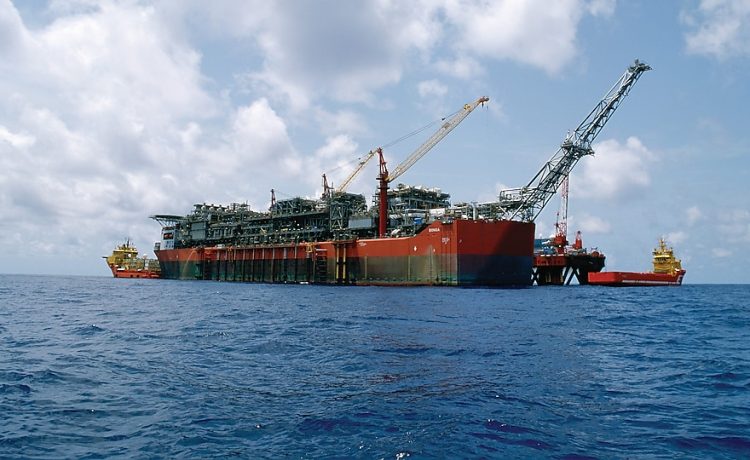
Nigeria’s efforts to attract new investment into its deepwater oil sector have received a major boost following new agreements between the Nigerian National Petroleum Company Limited and its partners on the proposed Bonga Southwest/Aparo offshore development.
The project is estimated to attract up to $21 billion in investment.
The agreements are expected to move the project closer to a Final Investment Decision, representing an important development for Nigeria’s oil industry.
Why Bonga matters
Nigeria remains heavily dependent on oil and gas for government revenue and foreign exchange.
However, investment in the upstream sector has faced several challenges.
International oil companies have become more cautious about committing large amounts of capital to projects with lengthy development timelines and complex fiscal arrangements.
Deepwater projects are particularly expensive.
They require sophisticated technology, specialised vessels and significant upfront investment.
Consequently, investors need predictable commercial conditions before committing billions of dollars.
Fiscal reform takes centre stage
The latest development follows President Bola Tinubu’s approval of the Deep Offshore Oil and Gas Projects Incentives (Tax Remission) Order, 2026.
The policy is designed to improve the competitiveness of Nigeria’s deepwater fiscal framework.
For investors, fiscal terms can determine whether a project is commercially viable.
A project may contain large quantities of oil but still struggle to attract investment if development costs and government take make returns unattractive.
Nigeria therefore wants to create a framework that encourages companies to move forward with major projects.
The investment multiplier
A $21 billion project could have an impact far beyond oil production.
Large offshore developments require engineering services.
They require logistics.
They create demand for specialised equipment.
They also generate opportunities for local contractors and service companies.
If properly structured, major oil developments can therefore stimulate activity across several sectors.
The challenge is ensuring that local businesses are positioned to participate.
Nigeria’s declining oil investment
Nigeria has spent several years trying to reverse declining investment in its upstream sector.
Ageing fields, regulatory uncertainty, security concerns and difficulties with project economics have affected investor confidence.
Deepwater projects provide an opportunity to increase production without relying solely on mature onshore assets.
They can also help Nigeria maintain its position as an important global oil producer.
Government revenue implications
More production can potentially increase government revenue.
However, the exact benefit depends on production levels, oil prices, costs and the fiscal terms governing the project.
Nigeria therefore needs a balance.
If fiscal terms are too restrictive, investors may not develop projects.
If incentives are too generous, the government could sacrifice too much revenue.
The latest tax-remission framework attempts to find that balance.
Energy security
The development also matters for Nigeria’s energy security.
Although the country has enormous crude oil reserves, production has struggled to reach its full potential.
Increasing upstream investment could help stabilise output.
More reliable production could support export earnings and government finances.
What investors will watch
The key question is whether the latest agreements translate into a Final Investment Decision and ultimately construction and production.
Investors will also watch the stability of Nigeria’s fiscal policies.
Large oil projects can take years to develop.
Companies therefore need confidence that policies will remain predictable.
The Bonga Southwest/Aparo development is consequently more than another oil project.
It represents a test of whether Nigeria’s latest upstream reforms can convert into actual capital deployment.
If successful, the project could help establish a new wave of investment in Nigeria’s deepwater sector.