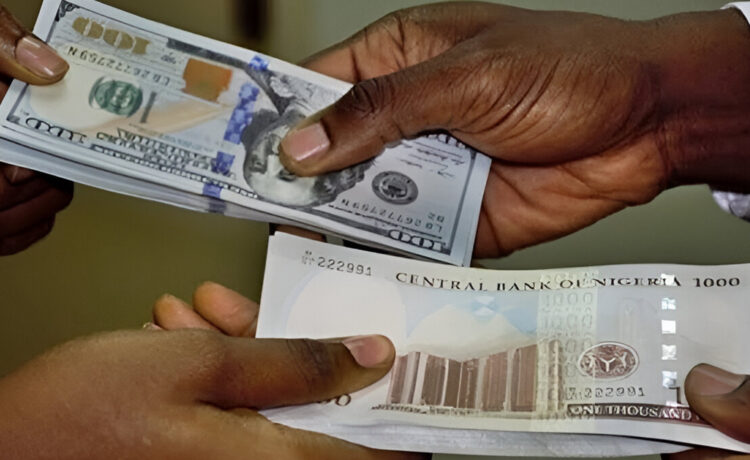
The Nigerian naira recorded a modest gain against the United States dollar on Wednesday, September 23, 2026, despite the Central Bank of Nigeria’s decision to reduce its benchmark interest rate from 26.5 per cent to 23 per cent.
Data from parallel-market operators showed that the dollar was quoted at ₦1,385 on Wednesday, compared with ₦1,390 previously. This represents a ₦5 appreciation for the naira in the parallel market.
The movement came shortly after the CBN announced its 350-basis-point reduction in the Monetary Policy Rate (MPR) following the conclusion of its 307th Monetary Policy Committee meeting in Abuja.
In the official foreign exchange market, the naira also recorded a marginal improvement. The currency appreciated by ₦2.02, with the dollar closing at ₦1,327.78 at the Nigerian Foreign Exchange Market (NFEM), compared with ₦1,329.80 previously.
The latest movement has narrowed the difference between the official and parallel-market rates. BusinessDay reported that the gap stood at about ₦58, or 4.37 per cent, compared with ₦61, or 4.59 per cent, previously.
The relatively stable performance of the naira comes as investors and businesses assess the implications of the CBN’s latest monetary-policy decision.
The rate cut could have different effects on the foreign exchange market. Some analysts have warned that lower domestic interest rates could reduce the attractiveness of naira-denominated assets to foreign investors, potentially creating pressure on the currency. Bismarck Rewane of Financial Derivatives Company said the naira could face depreciation pressure following the CBN’s 350-basis-point reduction, although he noted that the extent would depend on wider market conditions.
For businesses that rely heavily on imported goods and raw materials, movements in the exchange rate remain important because changes in the naira-dollar rate can affect the cost of imports, production and distribution.
The relatively narrow difference between the official and parallel-market rates may also be significant for businesses seeking foreign currency. A smaller gap can reduce some of the uncertainty created when different segments of the market quote substantially different rates.
The CBN has continued to monitor conditions in the foreign exchange market as it works to maintain stability in the naira. The bank’s latest monetary-policy decision came amid improving inflation figures and stronger external buffers. Nigeria’s headline inflation eased to 15.39 per cent in August 2026 from 15.43 per cent in July, according to recent reports.
However, analysts continue to watch the interaction between interest rates, inflation, foreign investment and dollar liquidity. Lower interest rates could support economic activity by reducing financing costs, but changes in returns on naira assets could also influence investment flows.
For now, the naira’s movement remains relatively modest, with the official rate around ₦1,328/$ and the parallel-market rate around ₦1,385/$ based on the latest reported figures. Exchange rates can change during the day depending on dollar supply, demand and market conditions.