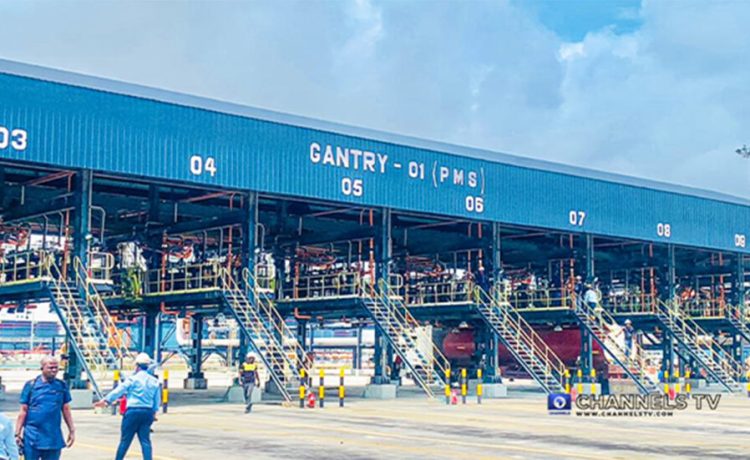
Dangote Petroleum Refinery and Petrochemicals has extended the application period for its initial public offering by two weeks, giving prospective investors additional time to participate in the share offer.
According to an official notice published by the company on October 12, the application period, which was initially scheduled to close on October 13, will now end on October 27, 2026.
The company said the extension received approval from the Securities and Exchange Commission and was intended to support wider investor participation across African markets.
The offer involves 4.1 billion ordinary shares priced at ₦525 per share, according to the official notice. The revised timetable also provides updated dates for the collation of applications, regulatory review, allotment and the expected commencement of trading.
The extension is significant because it gives investors additional time to complete the administrative requirements associated with the offer, including account opening, identity verification and other regulatory procedures.
Why the deadline was extended
The refinery said it had received strong interest from eligible investors in Africa and other jurisdictions.
The company explained that the additional time would support efforts to expand distribution channels and develop depositary receipt programmes intended to facilitate cross-border participation.
These arrangements can be important when a company wants to make its shares accessible to investors in different markets. Investors may face different account requirements, identification procedures and regulatory rules depending on where they live.
An extended application period can give prospective participants more time to understand the offer, complete documentation and submit applications.
However, an extension does not guarantee that all applications will be successful or that investors will make a profit. Participation remains subject to the offer’s terms, applicable eligibility requirements and the allocation process.
Understanding the IPO
An initial public offering, or IPO, is the process through which a company offers shares to investors under a public offering structure.
Investors who purchase shares acquire an ownership interest in the company, subject to the rights attached to those shares.
The value of an investment can rise or fall depending on the company’s financial performance, market conditions, investor demand and other factors. Shares are not the same as deposits in a bank account, and investors may lose some or all of the money they commit.
For a large industrial company such as Dangote Refinery, investors may consider factors including production capacity, operating costs, access to crude oil, fuel demand, financing arrangements and the outlook for petroleum-product prices.
They may also examine the company’s financial statements, debt obligations, business strategy and the risks outlined in the official offer documentation.
Understanding these factors is important before deciding whether to invest.
Why the refinery matters to Nigeria
Dangote Refinery is a major industrial project in Nigeria’s energy sector. Domestic refining capacity can influence how petroleum products are supplied to the local market and how the country participates in regional fuel trade.
Nigeria has historically relied heavily on imported refined petroleum products despite being a major crude oil producer. Dependence on imports can expose the country to international supply disruptions, foreign-exchange pressures and changes in global prices.
A large domestic refinery has the potential to reduce some logistical dependencies, support local industrial activity and create opportunities across transportation, distribution and related services.
However, the overall economic benefits depend on several factors, including reliable crude supply, efficient operations, competition, pricing arrangements and the ability to maintain production at commercially sustainable levels.
The refinery’s contribution to the economy should therefore be assessed using actual production, supply and financial data rather than assumptions based solely on its size.
What the offer means for investors
The IPO provides an opportunity for eligible investors to acquire shares in a company operating in a strategically important sector.
Potential investors should nevertheless evaluate the offer carefully. A company’s prominence or the public attention surrounding an offering does not automatically make its shares suitable for every investor.
Important considerations include personal financial circumstances, investment objectives, the possibility of price fluctuations, the length of time an investor can leave money invested and the terms of the shares being offered.
Investors should read the official prospectus and related disclosures to understand the company’s financial position, the risks involved and how applications will be processed.
They should also verify that they are dealing with authorised channels and avoid relying on unofficial messages or promises of guaranteed returns.
Revised timetable and next steps
The official notice provides the following revised dates:
| Activity | Revised date |
| Application period closes | October 27, 2026 |
| Collation of returns | November 3, 2026 |
| Submission of basis-of-allotment proposal to the SEC | November 10, 2026 |
| Expected SEC no-objection to allotment basis | November 17, 2026 |
The subsequent dates for transferring proceeds, publishing the allotment announcement, returning surplus or rejected application monies, crediting investors’ securities accounts and commencing trading depend on the timetable and applicable business-day calculations.
The company has stated that the timetable is indicative and may be adjusted if required.
Investors should therefore consult the latest official announcement rather than assuming every subsequent date is guaranteed.
Wider implications for the Nigerian capital market
A large public offering can attract attention to the depth of Nigeria’s capital market and the ability of local financial institutions to distribute shares to retail and institutional investors.
Expanding access across African markets could also test the practical arrangements needed to facilitate cross-border investment.
For the market to benefit, investors need reliable disclosures, clear application procedures, appropriate regulatory oversight and a transparent allocation process.
The quality of investor information is particularly important when an offering attracts strong public interest. Prospective shareholders need to understand not only the potential opportunities but also the financial and commercial risks.
What happens next?
The immediate priority is for prospective investors to complete their applications before the revised October 27 deadline if they decide the offer is appropriate for them.
The company and relevant financial institutions will then proceed according to the revised timetable, subject to regulatory requirements and any further official announcements.
The extension gives more time for participation, but it does not determine the eventual market value of the shares or guarantee a particular investment outcome.
The IPO will be watched closely because of the refinery’s scale, its role in Nigeria’s petroleum sector and the interest in expanding domestic and cross-border investment.
Its longer-term significance will depend on the offer’s execution, the company’s financial performance and how effectively the refinery operates within a changing energy market.