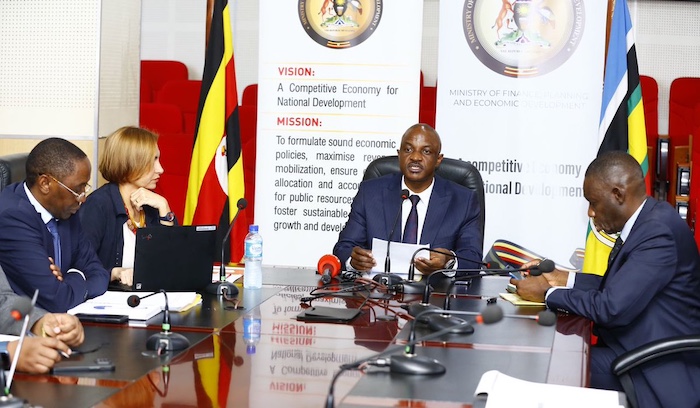
Uganda and the International Monetary Fund are preparing for another round of negotiations over a new financial support programme.
The IMF plans to send a staff team to Uganda in September 2026 to continue discussions with the government.
The talks are significant because Uganda’s previous IMF-supported programme expired in 2024, leaving the country without a current IMF arrangement.
The negotiations come at a time when Uganda’s economy is growing strongly but the government continues to face significant fiscal and debt pressures.
Why Uganda Wants a New Programme
Uganda is seeking continued access to international financial support while attempting to maintain economic growth.
A new IMF programme could provide financing as well as policy guidance.
IMF programmes often involve reforms designed to strengthen public finances, improve debt management, maintain monetary stability and support sustainable economic growth.
For Uganda, those issues are particularly important because government debt-servicing obligations have increased.
The IMF has also raised concerns about Uganda’s fiscal position.
The government therefore faces the challenge of maintaining spending on development while ensuring that debt remains manageable.
Strong Economic Growth
Uganda’s economic outlook is not entirely negative.
The country’s economy has been growing strongly.
One important factor behind the government’s optimism is the expected start of crude oil production.
Uganda has significant oil reserves, and the beginning of commercial production could generate additional government revenue and foreign exchange.
The government hopes the oil industry will help transform the country’s economy.
However, oil revenues will not automatically solve Uganda’s fiscal challenges.
The country will still need to manage public finances carefully.
Oil-producing countries have often faced challenges when governments become too dependent on natural-resource revenues.
That makes the management of future oil income a critical issue.
Debt Remains a Concern
Uganda’s debt-servicing obligations are one of the major issues facing policymakers.
As governments borrow to finance infrastructure and development projects, they must devote increasing amounts of revenue to servicing those debts.
That can reduce the funds available for education, healthcare, infrastructure and other public services.
The IMF has therefore emphasised the importance of fiscal discipline.
A new programme could require Uganda to implement measures aimed at strengthening its financial position.
Those measures can sometimes be politically difficult.
Governments must balance IMF recommendations against domestic demands for increased spending.
Negotiations Could Take Time
The IMF has indicated that the discussions have made progress.
However, an agreement has not yet been reached.
The September mission is therefore expected to be important.
IMF officials will assess Uganda’s economic performance and discuss the government’s policy plans.
They will also examine the country’s fiscal position and debt sustainability.
The final programme could include financial support as well as specific economic targets.
The government will have to agree to those conditions before the programme can be approved.
Oil Could Change the Equation
The expected start of oil production could significantly alter Uganda’s economic position.
New oil revenues could provide additional resources for government spending and debt management.
They could also improve the country’s balance of payments.
However, the IMF is likely to remain focused on ensuring that oil income is managed sustainably.
Uganda will need institutions capable of preventing waste and ensuring that natural-resource revenues support long-term development.
The government could use oil revenue to invest in infrastructure, education and healthcare.
But excessive spending could create inflationary pressure or increase dependence on volatile commodity prices.
Political Considerations
Economic negotiations with the IMF are not purely technical.
They can have political consequences.
Measures involving taxation, public spending and government subsidies can affect households and businesses.
Ugandan policymakers therefore have to consider how reforms will affect ordinary citizens.
The government will also need to explain why a new IMF programme is necessary.
If citizens perceive IMF-supported reforms as worsening living conditions, political opposition could increase.
On the other hand, successful reforms could strengthen investor confidence and improve Uganda’s economic credibility.
What a New Deal Could Mean
A new IMF programme could provide Uganda with access to cheaper financing and greater confidence among international investors.
It could also strengthen the government’s ability to manage economic shocks.
The programme would likely come with policy commitments.
Those could include stronger domestic revenue mobilisation, improved public spending and measures to manage debt.
The September discussions will therefore be closely watched by investors, economists and development partners.
Uganda’s economy is at an important point.
The country has strong growth prospects, particularly with oil production approaching.
But it also faces significant financial pressures.
The IMF negotiations will determine whether Kampala and the Fund can agree on a programme that supports growth while addressing debt and fiscal risks.
For Uganda, the challenge is to ensure that economic growth translates into sustainable development and improved living standards.