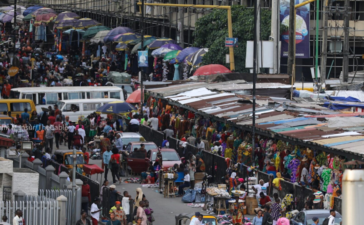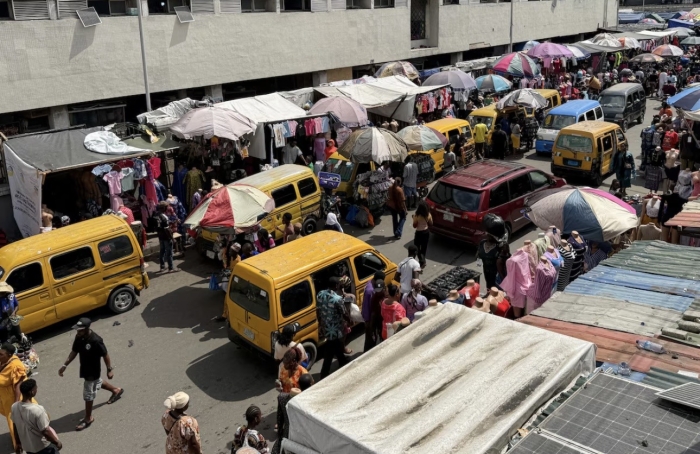
Nigeria’s cost-of-living crisis is emerging as one of the biggest political issues ahead of the country’s next election.
President Bola Tinubu’s administration has defended its economic reforms, arguing that they are necessary to put Africa’s largest economy on a more sustainable path.
But millions of Nigerians continue to face pressure from high living costs.
The political challenge for the government is increasingly clear.
It must demonstrate that the reforms introduced since Tinubu took office can deliver tangible improvements in people’s daily lives.
The Reform Programme
Tinubu’s government introduced major economic changes soon after taking office.
Among the most significant was the removal of the petrol subsidy.
The government argued that the subsidy was expensive and unsustainable.
It also implemented reforms affecting the foreign-exchange market and electricity subsidies.
These policies were designed to reduce government spending, attract investment and allow market forces to play a greater role in determining prices.
However, the immediate effect was difficult for many households.
Fuel prices increased sharply after the subsidy was removed.
Higher transportation costs contributed to increases in the prices of food and other goods.
The depreciation of the naira also increased the cost of imported products.
Pressure on Households
For ordinary Nigerians, economic reform is often judged by a simple question: Can the household afford its basic needs?
Food, transportation, housing and energy costs remain important concerns.
Even where headline economic indicators improve, households can continue to feel financially pressured.
This creates a political problem for the government.
Economic reforms can take time to produce benefits.
But voters experience the immediate impact of higher prices.
That gap between long-term economic policy and short-term household experience can become politically significant.
Government Says the Economy Is Stabilising
The Tinubu administration maintains that its policies are beginning to stabilise the economy.
The government has pointed to improvements in financial markets and developments in the oil sector.
It has also argued that Nigeria’s economic fundamentals are improving.
The administration says that reforms are designed to create a stronger foundation for long-term growth.
The challenge is communicating those improvements to citizens who are still struggling with everyday expenses.
The government has also begun developing indicators to track poverty, incomes and inequality.
Reuters reported in July that Nigeria planned to publish such indicators as part of efforts to demonstrate whether the reforms were improving living standards.
Politics and the Economy
Economic conditions traditionally play a major role in elections.
Voters often judge governments by employment opportunities, income levels and the cost of basic goods.
Nigeria’s next election will therefore provide a major test of public opinion about Tinubu’s economic programme.
The president and his supporters will likely argue that reforms needed to be implemented despite their short-term costs.
Opposition parties are likely to focus on the hardship experienced by households.
The debate could become one of the defining political issues of the election.
The Oil Sector
Oil remains central to Nigeria’s economic story.
The country is one of Africa’s largest oil producers.
However, production challenges and infrastructure problems have historically limited the government’s ability to maximise revenue.
The Tinubu administration has sought to attract new investment into the oil sector.
The government hopes increased production will generate more foreign exchange and strengthen public finances.
Developments in the oil industry could therefore influence the government’s economic narrative.
What Voters Will Be Watching
Nigerian voters will ultimately want to see whether economic reforms translate into better living standards.
They will be watching food prices.
They will be watching fuel costs.
They will be watching employment.
They will also be watching the value of the naira and whether businesses are able to expand.
These issues could become more important as political parties prepare for the election.
For Tinubu’s government, the next phase of the economic programme will therefore have a direct political dimension.
If inflation and living costs ease significantly, the administration could argue that its reforms are beginning to produce results.
If households continue to experience severe financial pressure, opposition parties could use that hardship as evidence that the government’s policies have failed.
The Road Ahead
Nigeria’s economic transformation is unlikely to happen overnight.
Structural reforms require time.
However, political timelines are shorter.
Governments must demonstrate progress before voters go to the polls.
That means the coming months could be critical.
The Tinubu administration will need to show that economic stability is translating into improvements for ordinary citizens.
At the same time, opposition parties will need to convince voters that they have credible alternatives.
The cost-of-living crisis is therefore more than an economic issue.
It is becoming a central political question.
And as Nigeria moves closer to another major electoral contest, the answer to that question could have a significant impact on the country’s political future.