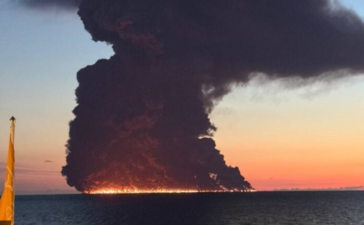
Eleven sailors were reported missing after a drone attack sank the cargo ship HS Dignity off Bulgaria’s Black Sea coast on October 13, 2026, in an incident that has renewed concerns about the safety of commercial shipping in the region.
According to Reuters, the Guinea-Bissau-flagged vessel sank near the coastal village of Krapets, close to Bulgaria’s maritime border with Romania. Bulgarian officials said five crew members had been rescued while eleven remained missing at the time of the initial reports.
The incident formed part of a series of attacks involving two cargo ships in the area. The second vessel, identified as Chelsea 3, was struck by drones, but all 15 crew members were rescued.
The attacks have increased concern among maritime authorities and shipping operators about the growing risks faced by commercial vessels operating in waters affected by the Russia-Ukraine conflict.
Bulgaria Calls for Greater Maritime Security
Bulgarian Prime Minister Rumen Radev condemned the incidents and described the attack near the country’s territorial waters as unacceptable.
Bulgaria stopped short of directly accusing Russia of carrying out the attacks, although Radev said the outcome appeared to benefit the Russian Federation. The country also summoned Russia’s ambassador following the incidents.
Russia had not immediately commented on the attacks in the initial Reuters report. The circumstances surrounding the strikes and responsibility for them remained disputed.
Ukraine and the European Union also condemned the attacks. Ukrainian Foreign Minister Andrii Sybiha accused Moscow of disregarding civilian lives and maritime security, while European Commission President Ursula von der Leyen warned that the Black Sea was becoming another front in the war.
The accusations have not, by themselves, established responsibility for the specific attacks.
The incidents demonstrate the difficulties governments face when protecting commercial shipping in a conflict zone where drones and other weapons can threaten vessels operating far from active battlefronts.
Commercial Shipping Increasingly Exposed to Conflict
The Black Sea is an important route for international trade, particularly for agricultural commodities, grain, energy products and other essential goods.
Russia and Ukraine are both major participants in global grain markets. Disruption to their maritime export routes can affect shipping schedules, commodity availability and transportation costs.
Since Russia launched its full-scale invasion of Ukraine in 2022, commercial vessels and port facilities have faced growing security risks. Ukraine has relied on maritime corridors and alternative routes to move exports, while Russian and Ukrainian operations have increasingly affected shipping throughout the wider region.
Attacks on merchant vessels can force shipowners to reconsider their routes, delay cargo movements and invest in additional security measures. Insurers may also reassess the risks associated with vessels entering affected waters.
These costs can influence freight rates and the prices paid by businesses importing or exporting goods.
A Second Vessel Survives the Attacks
The second vessel involved in the October 13 incidents was Chelsea 3, which was reportedly hit by three drones.
Bulgarian officials said all 15 crew members aboard the ship were rescued. The crew consisted of seven Ukrainian and eight Azerbaijani nationals, and none was reported to have suffered serious injuries in the initial accounts.
The successful rescue offered some relief amid the wider emergency, but the sinking of HS Dignity left families and maritime authorities awaiting information about the missing sailors.
Search and rescue operations are particularly challenging when a vessel sinks rapidly, leaving limited time for crew members to escape. Weather conditions, sea currents, visibility and the location of the incident can further complicate rescue efforts.
The fate of the eleven missing sailors was not established in the initial reports.
NATO and European Authorities Monitor the Situation
The incidents have raised questions about how Bulgaria and other countries bordering the Black Sea can protect merchant vessels and critical maritime infrastructure.
NATO Secretary-General Mark Rutte said the alliance would continue working with its Black Sea allies and adjust its deterrence and defence posture as necessary.
The European Union has also highlighted the need to strengthen regional maritime cooperation and protect shipping routes and other critical infrastructure.
However, improving maritime security requires more than military surveillance. Governments must also coordinate information-sharing, rescue capabilities, port protection and procedures for responding to attacks on civilian vessels.
Shipping companies operating in the region must assess official security advisories and maintain emergency plans for their crews.
Implications for Global Trade
The latest incidents show how military conflicts can extend their consequences beyond the countries directly involved. When merchant vessels are attacked, the effects can spread through international supply chains.
Grain shipments, energy transportation and other commercial activities may face delays, while increased insurance and freight costs can place additional pressure on importers and exporters.
For seafarers, the immediate concern is personal safety. For the maritime industry, the challenge is maintaining trade without exposing crews to unacceptable risks.
The sinking of HS Dignity and the attack on Chelsea 3 underline the need for stronger protection of civilian shipping and continued efforts to prevent further escalation in the Black Sea.
Authorities will be watching developments closely as investigations and rescue efforts continue.