French telecommunications company Orange is expanding its financial technology and digital services across African markets as its Africa and Middle East division continues to record stronger growth than other parts of the business.
The company is increasingly looking beyond traditional mobile telecommunications to financial services, digital payments and other technology-driven products. The strategy is aimed at taking advantage of Africa’s youthful population, growing demand for digital services and the increasing use of mobile phones for everyday financial transactions.
According to Yasser Shaker, Orange’s Executive Vice-President and Chief Executive Officer for the Middle East and Africa division, the region has become a major growth driver for the French telecommunications group.
The division generated approximately $9.43 billion in revenue in 2025, representing a 12.2 per cent increase compared with the previous year. It contributed 20.9 per cent of Orange Group’s total revenue of €40.4 billion during the period.
The performance continued into 2026. During the first half of the year, revenue from Orange’s Africa and Middle East operations increased by 13.9 per cent, significantly higher than the group-wide growth of 3.5 per cent.
The division also recorded a 16.1 per cent increase in earnings before interest, tax, depreciation and amortisation after leases, commonly referred to as EBITDAaL.
These figures highlight the growing importance of African and Middle Eastern markets to Orange’s overall business performance.
Orange Money Drives Financial Technology Expansion
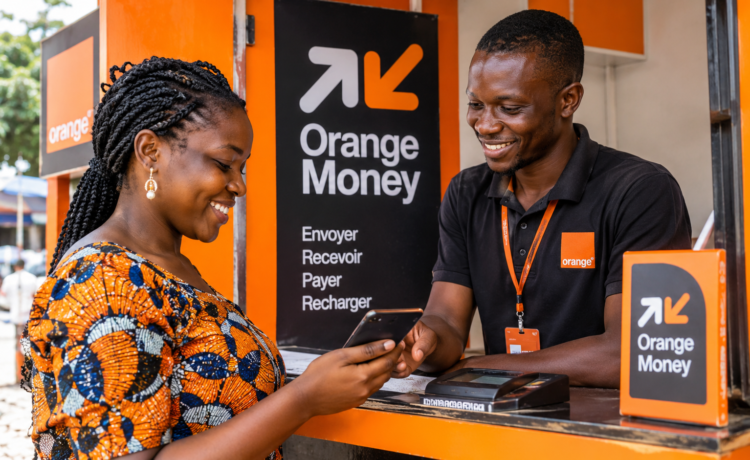
One of the company’s major growth areas is Orange Money, its mobile financial services platform.
The service allows customers to carry out financial transactions through their mobile phones, including sending and receiving money and making payments.
Orange Money had approximately 47 million active users across Africa and the Middle East at the end of 2025. By the end of March 2026, its monthly active users had increased to 48.5 million.
The platform’s revenue also recorded strong growth, increasing by 18 per cent in 2025 and 15.7 per cent year-on-year in the first quarter of 2026.
The expansion reflects the growing role of mobile money in markets where access to traditional banking services may be limited or inconvenient.
For Orange, the opportunity goes beyond helping customers communicate. By providing financial services through its telecommunications network, the company can develop additional sources of revenue while strengthening its relationship with existing customers.
Its wider financial services ambitions also include activities in savings and credit, extending its presence beyond transfers and payments.
Max It Super App Targets More Users
Orange is also expanding its digital services through Max it, a super app designed to bring different digital services together through one platform.
The application currently has approximately 39 million users, according to Shaker.
The company has set a target of increasing that figure to 75 million users by the end of 2028.
The strategy is to encourage customers to use a single digital platform to access services and make payments, creating more opportunities for Orange to connect its telecommunications and financial technology businesses.
A larger user base could also help the company introduce additional services and increase customer engagement across its markets.
However, Orange operates in countries with different regulations, purchasing power, infrastructure and levels of digital development. This means that services cannot always be introduced in exactly the same way in every market.
Shared Platforms Help Reduce Operating Costs
To manage these differences, Orange is relying on shared regional platforms and service centres to improve efficiency and reduce the cost of developing services separately in individual countries.
Shaker explained that the company’s operating model allows successful ideas in one market to be adapted and introduced in other markets.
This approach is designed to prevent different country operations from repeatedly spending money developing similar systems.
For example, Orange’s Global Network Operations Center, based in Senegal and Côte d’Ivoire, manages important parts of the network infrastructure for connected markets.
The company also uses shared systems to support Orange Money operations across the region. Côte d’Ivoire hosts a team that operates the mobile money service across multiple markets, while common software platforms support its expansion.
The arrangement allows Orange to maintain common standards while giving individual country operations the flexibility to respond to local regulations and customer needs.
Affordability Remains a Major Challenge
Despite the region’s growth potential, Orange faces challenges in expanding internet access and digital services.
Shaker identified affordability and access to mobile devices as major barriers preventing more Africans from using the internet.
He explained that many people who are not currently using internet services already live within areas covered by mobile networks. However, the cost of internet access and the devices needed to connect remain significant obstacles.
This means that expanding network coverage alone may not be enough to bring more people online.
Affordable smartphones, accessible data packages and suitable digital services will also be important in increasing internet adoption.
For telecommunications operators, addressing these challenges could create opportunities to attract new customers and increase the use of existing services.
Artificial Intelligence Offers New Opportunities
Artificial intelligence is another area Orange is exploring to improve its operations and customer experience.
According to Shaker, the company is already using AI to analyse customer information and improve marketing decisions.
The technology helps Orange determine which products and offers may be relevant to individual customers, when to communicate with them and how to tailor its marketing activities.
The company also sees opportunities to use artificial intelligence to address Africa’s language diversity.
Orange is working on local-language interfaces for digital platforms such as Max it and its customer-service channels. The initiative is expected to make digital services easier to use, including for customers who speak languages that receive less support from existing technology platforms.
Shaker also stressed the importance of continued investment in technology, warning that companies must remain alert to new developments that could change the telecommunications industry.
Africa Becomes Increasingly Important to Orange
Orange’s growing investment in financial technology and digital services reflects a broader shift in its business strategy.
While mobile connectivity remains a major source of revenue, the company is seeking to build additional income streams through mobile payments, digital platforms and business technology services.
Its strong performance in Africa and the Middle East also demonstrates the importance of emerging markets to the group’s future growth.
With millions of customers already using Orange Money and Max it, the company has an established platform from which to expand its financial and digital services.
However, the long-term success of the strategy will depend on its ability to make services affordable, respond to different market conditions and continue investing in technology.
As competition in Africa’s telecommunications and financial technology sectors increases, Orange’s ability to combine connectivity with accessible financial and digital services could become an important factor in maintaining its regional position.