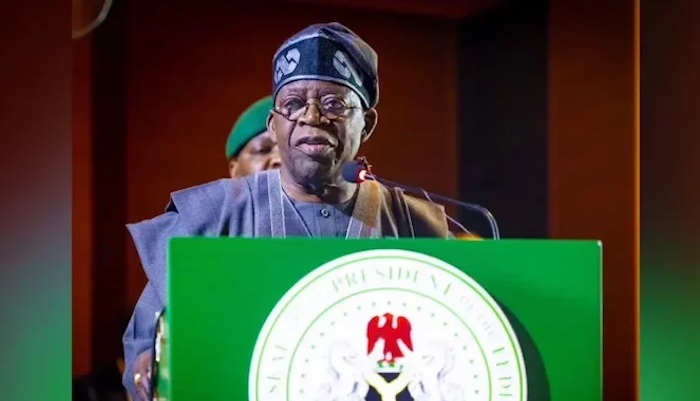
President Bola Tinubu has asked the National Assembly to approve a fresh external borrowing plan worth approximately $7.7 billion, equivalent to about ₦10.79 trillion, to help finance part of Nigeria’s 2026 budget deficit.
The revised request replaces an earlier proposal seeking approval to process external loans worth approximately $20.52 billion and €1.045 billion under the 2026–2027 Supplementary External Borrowing Plan.
Senate President Godswill Akpabio disclosed the development during plenary on Wednesday, November 4, after reading a letter from the President.
The new request is for $7,707,404,882.49 and is intended to support the implementation of programmes and projects contained in the 2026 Appropriation Act.
The development comes as the Federal Government continues to explore financing options for its expenditure plans amid pressure on public finances and the need to fund infrastructure and other development priorities.
The Senate has referred the request to its Committees on Local and Foreign Debts and Appropriations for further consideration. The committees are expected to examine the proposal and report back to the chamber.
The request has not yet received final Senate approval.
Why the Federal Government Wants to Borrow
According to the President’s letter, the proposed external borrowing forms part of the financing arrangements approved under the 2026 budget.
The 2026 Appropriation Act provides for total new borrowing of ₦29.2 trillion to help finance a projected budget deficit of approximately ₦31.4 trillion.
The borrowing provision is divided into two major components:
-
Domestic borrowing: ₦18.4 trillion.
-
External borrowing: ₦10.79 trillion.
The new $7.7 billion request represents the external component of the approved borrowing plan.
The government says the funds are needed to support projects and programmes across different sectors of the economy. These include infrastructure, education, healthcare, agriculture and other development priorities contained in the national budget.
However, the size of the proposed borrowing has renewed questions about Nigeria’s growing debt obligations, the cost of servicing loans and the government’s ability to generate enough revenue to meet its financial commitments.
Eurobond Issuance Among the Proposed Funding Options
Tinubu explained that the Federal Government intends to pursue different funding options simultaneously, depending on their cost, benefits and the time required to secure the money.
The President indicated that greater emphasis would be placed on issuing Eurobonds because the process could be faster and potentially allow the government to raise larger amounts under favourable market conditions.
Eurobonds are debt securities issued in an international market, usually in a currency different from the currency of the country where the issuing government is based.
The President also explained that the final interest rates, repayment periods and other conditions would depend on market conditions at the time the borrowing is arranged.
This means the precise cost of the proposed financing cannot be established until the transactions are priced and completed.
The government is expected to work through the Federal Ministry of Finance and the Debt Management Office to determine the most suitable funding arrangements.
Fresh Request Replaces Earlier Borrowing Proposal
The revised borrowing request represents a significant reduction from the earlier proposal submitted to the National Assembly.
The previous plan sought approval to process approximately $20.52 billion and €1.045 billion in external loans under the supplementary borrowing arrangement covering 2026 and 2027.
That proposal covered financing for several areas, including infrastructure, agriculture, healthcare, education, water supply, security and employment-related projects.
The latest request, however, focuses on raising $7.7 billion to finance the external borrowing component already provided for in the 2026 budget.
The change has attracted political attention, particularly from opposition figures who have questioned the government’s continued reliance on borrowing.
Former Vice-President Atiku Abubakar criticised the revised request and called on lawmakers to reject it. He argued that additional foreign borrowing could increase the financial burden on Nigerians.
His criticism reflects wider concerns about the country’s debt position, especially as citizens continue to face economic difficulties and pressure on household incomes.
Premium Times Nigeria+2
What the Senate’s Decision Could Mean
The Senate’s consideration of the request will be important in determining whether the Federal Government can proceed with the proposed external financing arrangement.
Lawmakers are expected to examine the purpose of the borrowing, the proposed funding sources, repayment conditions and the projects expected to benefit from the funds.
The review will also provide an opportunity to question the government on how the borrowed money will be managed and what measures are being put in place to ensure that the financing supports productive economic activities.
For Nigeria, the central issue is not only how much money the government can raise but also whether the funds will deliver lasting economic benefits.
Borrowing for productive infrastructure and development projects can support economic growth when funds are properly managed. However, loans that do not generate sufficient economic returns can increase pressure on public finances and future budgets.
As the Senate committees begin their review, attention will remain on the conditions attached to the proposed loan and the government’s explanation of how it intends to meet its repayment obligations.
The final decision will determine whether the President receives legislative authorisation to proceed with the revised external borrowing plan.