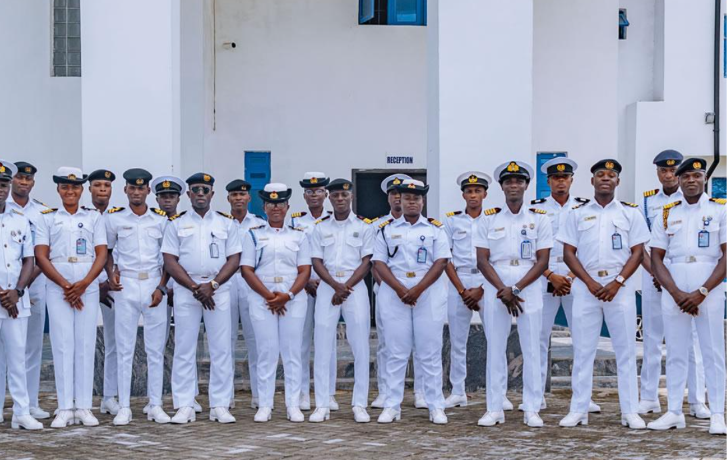
More than 50 Nigerian cadets have secured placements aboard internationally trading vessels for their mandatory one-year sea-service training, marking an important development in efforts to strengthen the country’s maritime workforce.
The placements include 43 cadets deployed aboard modern liquefied natural gas vessels through partnerships involving the Maritime Academy and industry stakeholders, including NLNG Shipping and Marine Services Limited (NSML) and other shipowners.
The development was disclosed by the Acting Rector of the Maritime Academy, Dr Kelvin Okonna, during the institution’s 2026 graduation ceremony.
Okonna said reports received on the cadets’ performance aboard the vessels had been encouraging, with assessments ranging from very good to excellent in professional competence and personal character.
The placements provide an opportunity for graduates to gain practical experience in the maritime industry after completing their academic and technical training.
Sea-time training is an important requirement for aspiring maritime professionals because it exposes them to the actual working environment aboard commercial vessels.
For cadets pursuing careers in nautical science and marine engineering, practical onboard experience helps bridge the gap between classroom instruction and the responsibilities involved in operating ships.
Partnerships With Maritime Industry Stakeholders
The sea-time opportunities reflect cooperation between the Maritime Academy and private-sector organisations operating within the shipping and marine services industry.
One of the key partners is NLNG Shipping and Marine Services Limited, which provides shipping-related services connected to the transportation of liquefied natural gas.
The Acting Rector also disclosed that the Academy had concluded arrangements with NSML to sponsor another batch of cadets for sea-time training aboard NLNG vessels in 2026.
He said further details would be announced during the graduation ceremony.
The partnerships are important because access to suitable training vessels has remained a major consideration in the development of competent seafarers.
Graduates require practical experience to develop their professional abilities and meet the requirements associated with maritime careers.
The opportunity to train aboard internationally trading vessels also exposes cadets to professional standards and operational procedures used in the global shipping industry.
International Certifications and Professional Development
Beyond the sea-time placements, the Academy has continued to strengthen its institutional standards through international certification.
Okonna disclosed that the institution secured certifications from the Standards Organisation of Nigeria earlier in the year.
These include ISO 9001:2015 for its Quality Management System and ISO 21001:2025 for its Educational Organisations Management System.
The certifications are intended to strengthen institutional processes and improve the quality of education and administrative management.
The Academy is also developing partnerships with international professional bodies to improve cadets’ access to recognised industry organisations.
According to the Acting Rector, every cadet is affiliated with at least one professional body.
These organisations include the Nautical Institute in the United Kingdom, the Institute of Marine Engineering, Science and Technology, the Chartered Institute of Logistics and Transport and the Chartered Institute of Transport Administration.
Such affiliations can help students become familiar with professional expectations and developments within the international maritime community.
Digital Transformation at the Academy
The institution is also preparing to move from manual, paper-based administrative processes to a more efficient digital system.
Okonna announced that the Academy was ready to launch its Enterprise Content Management System.
The system is expected to support a more transparent, secure and efficient administrative environment.
He encouraged graduating cadets to maintain the institution’s reputation and demonstrate integrity as they enter the maritime industry.
He stressed that a successful maritime professional must possess not only technical competence but also strong character and professional discipline.
Implications for Nigeria’s Maritime Industry
Nigeria’s maritime industry requires skilled personnel to support shipping, port operations, marine engineering and other related activities.
Developing local professionals is important for building domestic capacity and reducing dependence on foreign expertise in areas where Nigerians can be trained and employed.
The latest sea-time placements therefore represent an important opportunity for young maritime graduates.
However, sustaining the programme will require continued partnerships with shipowners, shipping companies and other industry stakeholders.
As more cadets gain access to practical training, the country will have an opportunity to strengthen its pool of qualified maritime professionals.