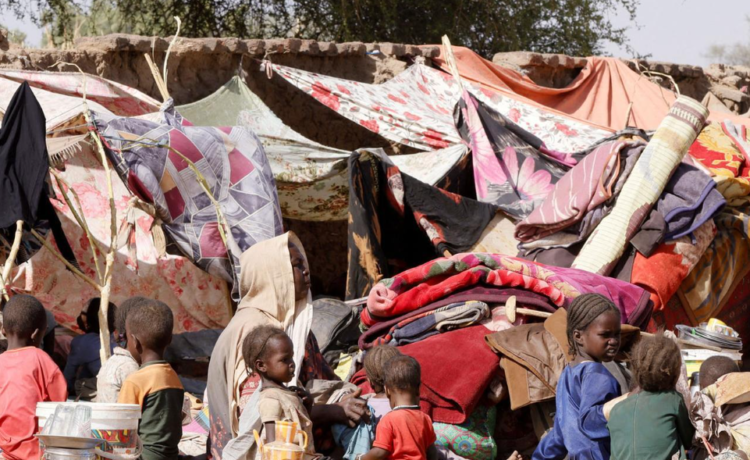
Sudan is facing a growing risk of famine in parts of Greater Darfur and Greater Kordofan, as continuing conflict, widespread displacement, drought and inadequate humanitarian funding place additional pressure on already vulnerable communities.
A food insecurity and malnutrition alert issued on October 12, 2026, by the Integrated Food Security Phase Classification (IPC), which includes the World Health Organization among its partners, warned that conditions were deteriorating in several parts of the country. The alert identified new areas of concern and called for urgent action to prevent further hunger and malnutrition.
The warning comes amid a conflict that has disrupted livelihoods, damaged essential infrastructure and forced large numbers of people to leave their homes. For families who depend on farming, livestock or local markets, insecurity can make it difficult to produce food, reach markets or earn enough money to purchase basic necessities.
Drought is adding another layer of pressure. According to the IPC alert, an El Niño-associated drought is affecting roughly half of Sudan, reducing food availability and damaging livelihoods. Rising food prices and restricted humanitarian access are making the situation more difficult for people who have already lost their income or been displaced.
The warning does not mean that every affected area is experiencing famine. Rather, it identifies an increasing risk that requires timely intervention to prevent conditions from deteriorating further.
Conflict and displacement disrupt food supplies
Food security depends on more than the amount of food available nationally. Families must also be able to obtain food safely and affordably.
In conflict-affected areas, roads may become dangerous, agricultural activities can be interrupted, and traders may be unable to transport goods. Farmers who cannot reach their land or purchase seeds and other inputs may struggle to plant crops. Livestock owners can also lose access to grazing areas, veterinary services and markets.
Displacement further complicates these problems. Families forced to leave their homes may lose stored food, tools, livestock and other assets that would normally help them survive periods of hardship.
Where markets remain operational, prices can still rise beyond the reach of households with little or no income. Children, pregnant women, older people and people with existing nutritional vulnerabilities face particularly serious risks when nutritious food becomes unavailable.
The IPC’s warning therefore points to the need for coordinated food assistance, livelihood support and protection for civilians.
Malnutrition and the health system
The food crisis is closely linked to Sudan’s weakened healthcare system. Malnutrition can reduce the body’s ability to fight infections, making diseases more dangerous for people who are already undernourished.
The World Health Organization reported that Sudan’s health system remained severely weakened by conflict, displacement, attacks on healthcare facilities and funding shortages. Its October alert said that 37% of the country’s health facilities had stopped functioning by 2026.
The organisation also reported supporting all 161 operational nutrition stabilisation centres across Sudan during 2026. These facilities helped treat more than 26,000 children with severe acute malnutrition and medical complications between January and August.
Such services are essential because children with severe malnutrition may require specialised treatment, therapeutic feeding and medical supervision. Delays in treatment can increase the risk of complications and death.
However, healthcare facilities cannot meet needs if they lack medicines, staff, supplies, electricity or safe access for patients.
Humanitarian funding and access
Humanitarian organisations face the challenge of delivering assistance in an environment where insecurity can obstruct transport and restrict movement. Funding shortages can also limit the amount of food, nutrition support, clean water and healthcare available.
In its October alert, the WHO said only 23% of its $97.7 million humanitarian appeal for Sudan had been funded. The organisation called for increased financing and sustained humanitarian access.
Assistance must reach affected populations consistently, rather than arriving only after conditions have become critical. This requires safe passage for relief workers, protection of civilian infrastructure and cooperation from parties to the conflict.
What must happen next?
The IPC called for an end to hostilities, protection of civilians and essential services, safe humanitarian access and increased funding for lifesaving operations.
Longer-term recovery will also require restoring agricultural production, supporting displaced families and rebuilding health and water systems.
Sudan’s food crisis is driven by several connected pressures, meaning that food deliveries alone cannot resolve it. Assistance must be combined with measures that protect livelihoods, improve access to essential services and reduce the insecurity preventing people from meeting their own needs.
The October warning offers a clear message: early action is critical. Without sustained humanitarian support and improved access, vulnerable communities could face an even more severe food and nutrition emergency.