Dangote Petroleum Refinery’s planned $1.6 billion initial public offering has reportedly attracted demand worth approximately three times its target, according to a Reuters report published on October 27, 2026.
Sources cited by Reuters said orders had reached ₦6.4 trillion, equivalent to approximately $4.78 billion, from Nigerian retail and institutional investors. The report also indicated that more than two million investors had reportedly applied through digital channels.
The reported demand highlights significant investor interest in the refinery’s proposed public offering and its planned entry into Nigeria’s capital market.
However, the figures were attributed to sources familiar with the offering. The refinery’s spokesperson declined to comment, according to Reuters, so the reported subscription levels should not be treated as independently audited final results.
The offer is being promoted as “The People’s IPO,” with shares reportedly available from approximately $4, as the company seeks to attract a broader group of investors.
What an IPO means
An initial public offering, or IPO, is the process through which a company offers shares to public investors for the first time as part of a public listing.
An IPO can allow a company to broaden its shareholder base and provide investors with an opportunity to own part of the business. It can also increase public scrutiny because listed companies are subject to disclosure and reporting obligations under applicable regulations.
For retail investors, an IPO can create an opportunity to participate in a major company’s growth. However, investing in shares carries risks, including changes in market prices, company performance and wider economic conditions.
A large number of applications does not guarantee that every applicant will receive the number of shares requested. Final allocations depend on the offering’s terms, demand, applicable rules and any decisions made by the issuer and relevant parties.
Strong reported demand
According to Reuters, the reported ₦6.4 trillion in orders exceeded the planned offering’s target by approximately three times.
The report said additional subscriptions were expected from other African countries. It also indicated that strong demand could prompt the company to consider a greenshoe option, potentially increasing the offering to $2.1 billion.
A greenshoe option is a mechanism that can allow an issuer or underwriters to increase the size of an offering under specified conditions. Whether such an option will be exercised depends on the final terms and decisions made by the relevant parties.
It is therefore important to distinguish between the original target, the level of reported demand and any potential increase in the offer size.
Demand figures alone do not establish the final amount raised or determine how shares will perform after listing.
Why the refinery matters
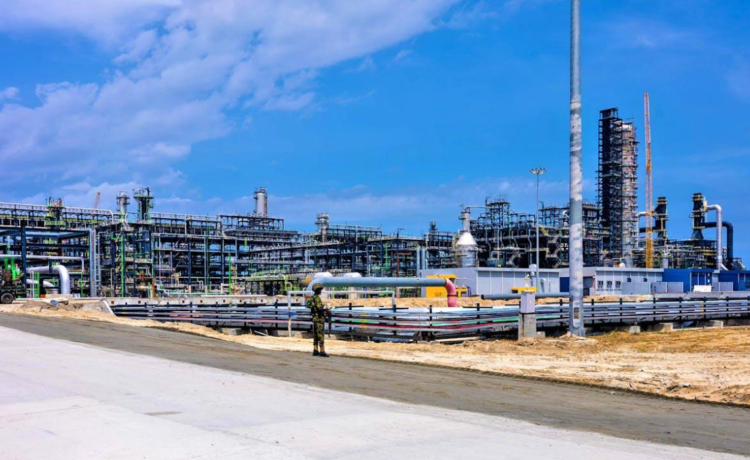
The refinery is a major industrial project designed to process crude oil into petroleum products and other refined outputs.
Reuters reported that the facility was built at a cost of approximately $20 billion and has a processing capacity of around 700,000 barrels of crude oil per day. The company aims to double capacity by 2029.
A facility of this scale can influence Nigeria’s petroleum supply chain, including the relationship between domestic refining, imports, exports and access to refined products.
The refinery’s performance will depend on factors such as crude supply, operating efficiency, maintenance, product demand, pricing and international market conditions.
Reuters also reported that the refinery had benefited from stronger margins amid higher crude prices associated with the conflict involving Iran. It was increasing production and exports, including jet fuel shipments to Europe and Africa.
Those developments are relevant to investors assessing the company’s commercial prospects, although past or current operating conditions do not guarantee future profitability.
Implications for Nigeria’s capital market
A widely subscribed IPO could broaden public participation in Nigeria’s stock market and encourage more investors to consider direct share ownership.
Digital application channels may make it easier for individuals to participate, subject to the offering’s eligibility requirements and procedures.
A successful public offering could also increase attention on the Nigerian Exchange and encourage discussion about other large private companies considering listings.
However, investor participation must be supported by clear disclosures, transparent allocation procedures and a proper understanding of the risks involved.
Prospective investors should review the official offer documents, including the company’s financial information, risks, fees, eligibility rules and proposed use of proceeds, before making an investment decision.
What happens next?
Reuters reported that share allocations were expected to begin the following week, ahead of a planned listing on the Nigerian Exchange later in November 2026.
Those dates were expectations reported at the time and should be checked against subsequent official announcements.
The next key developments will include confirmation of the final offer size, the number of shares allocated, the completion of the offering and the actual listing date.
For investors, the most important consideration is not simply how many people applied, but whether the investment’s valuation, risks and long-term prospects align with their financial objectives.
Dangote Refinery’s reported IPO demand is a notable development for Nigeria’s capital market. Its lasting significance will depend on the final outcome of the offering and the company’s performance after listing.