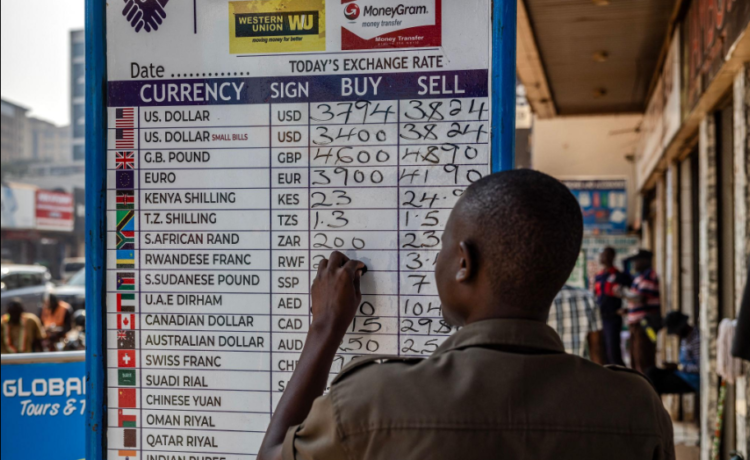
Uganda’s shilling is expected to face further pressure against the United States dollar as businesses increase their demand for foreign currency ahead of the final quarter of the year.
According to Reuters on Thursday, October 8, commercial banks quoted the Ugandan shilling at between 4,090 and 4,100 per dollar, compared with approximately 3,960 to 3,970 a week earlier.
The currency has weakened by more than 11 per cent against the dollar so far in 2026, recording repeated record lows during the year.
Market analysts attributed the pressure to strong demand for dollars from merchandise importers, energy companies and telecommunications businesses. These sectors require foreign currency to pay for imported goods, equipment, services and other international transactions.
Stephen Kaboyo, managing director of financial services firm Alpha Capital Partners, said businesses were aggressively sourcing and stockpiling dollars ahead of the fourth-quarter holiday period. Higher energy prices were also expected to add to the pressure.
The weakening currency presents challenges for businesses that depend on imported products and materials. When a local currency loses value against the dollar, companies generally need more local currency to purchase the same quantity of goods from abroad.
These higher costs can eventually affect consumer prices, particularly for imported food products, fuel-related goods, electronics and industrial equipment.
A weaker shilling may also increase the cost of servicing foreign-currency debt for businesses and institutions whose earnings are mainly denominated in the local currency.
Uganda’s central bank has indicated that it does not intend to defend a particular exchange-rate level through direct intervention. However, it has said it has tools available to manage excessive volatility in the foreign-exchange market.
The pressure is not limited to Uganda. Ghana’s cedi has also faced downward pressure as energy and manufacturing companies seek dollars, while other African currencies have shown different levels of resilience.
Nigeria’s naira was expected to remain broadly stable in the near term, supported by central bank dollar sales. Kenya’s shilling was also forecast to remain relatively steady, supported by foreign-exchange inflows and international reserves.
For Uganda, the direction of the shilling will depend partly on dollar demand, foreign-currency supply, global energy prices and business activity during the coming weeks.
The currency outlook remains important for policymakers and businesses because exchange-rate movements can influence inflation, import costs, investment decisions and household purchasing power.