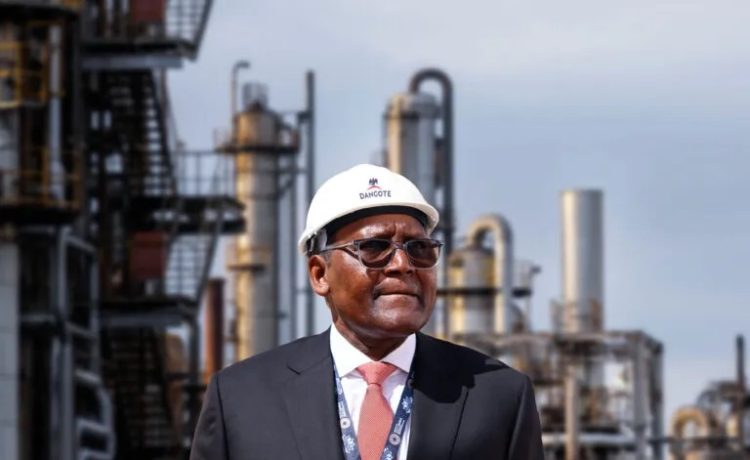
Indigenous shipowners have called on major cargo owners, particularly the Dangote Group, to support the development of Nigeria’s local shipping fleet through long-term Contracts of Affreightment (CoAs) for petroleum products, cement, fertiliser and other bulk cargoes.
The call was made by Captain Ladi Olubowale, former President of the Nigerian chapter of the African Shipowners Association and Group Managing Director of Seamate Maritime Integrated Services, during a Public-Private Dialogue with chief executives organised by the Nigerian Chamber of Shipping in Lagos.
Olubowale said predictable cargo contracts are important because they can provide the revenue certainty needed by Nigerian shipowners to obtain financing and acquire vessels.
He urged Dangote Group and other large cargo owners to allocate portions of their cargo requirements to qualified Nigerian shipping companies under multi-year agreements. Such contracts, he explained, could allow local shipowners to approach commercial banks, development finance institutions and other financiers with identifiable cargo and predictable revenue.
According to Olubowale, Dangote is particularly positioned to support local fleet development because its refinery, cement and fertiliser operations generate significant maritime cargo volumes.
He also raised concerns about the continued involvement of foreign-controlled vessels in transporting Nigerian crude from terminals including Forcados, Bonny and Escravos, arguing that more of the value generated from Nigerian cargo could be retained within the country through locally owned vessels, jobs and technical capacity.
Olubowale proposed a four-part model built around Cargo, Contract, Finance and Vessel. Under the model, cargo owners provide predictable volumes, contracts make the business bankable, financiers support vessel acquisition, while Nigerian operators provide the vessels and maritime services.
He said the approach could complement existing government initiatives such as the Cabotage Vessel Financing Fund, while allowing the private sector to play a stronger role in expanding Nigeria’s maritime fleet.
The shipowners’ position is that securing cargo contracts before acquiring vessels could make it easier for Nigerian companies to obtain financing and gradually develop the capacity to operate larger commercial vessels.
Olubowale further called for closer cooperation among cargo owners, shipowners, banks, investors, regulators and government to strengthen Nigeria’s maritime and blue economy.