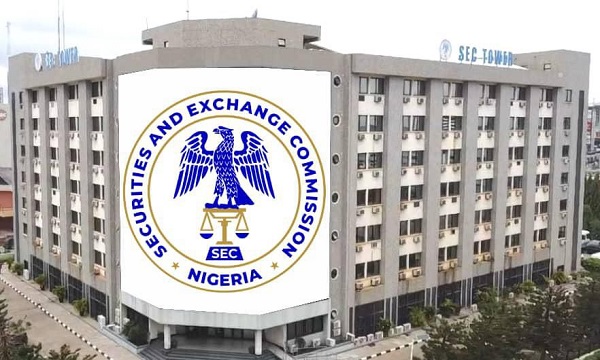
SEC Moves to Strengthen Oversight of Online Forex Trading
Nigeria’s Securities and Exchange Commission, SEC, has proposed a new regulatory framework for online foreign exchange and Contracts for Difference, CFD, trading, introducing stricter registration, capital and liquidity requirements for operators serving Nigerian investors.
The proposed rules could significantly reshape Nigeria’s online forex trading industry, particularly for local operators and offshore firms seeking to offer trading services to Nigerians.
Under the proposed framework, capital requirements will range from N30 million to as much as N5 billion, depending on the category of operator.
The SEC’s move reflects growing regulatory attention on the expanding online trading market and the need to strengthen investor protection, market oversight and operational standards.
The proposed rules will cover a wide range of participants in the forex trading ecosystem.
These include forex brokers, introducing brokers, technology providers and platform operators.
Offshore firms that market their services to Nigerian residents or allow Nigerians to open trading accounts will also fall within the scope of the proposed regulatory framework.
Forex Brokers Face Multi-Billion Naira Capital Requirements
Under the proposed rules, market-making or principal-operator forex brokers will be required to maintain a minimum paid-up capital of N3 billion.
Brokers operating under the Straight-Through Processing, STP, or Electronic Communication Network, ECN, models will be required to maintain a minimum capital of N2 billion.
Technology and platform providers face the highest proposed capital requirement of N5 billion.
The SEC also proposed lower thresholds for introducing brokers.
Individual introducing brokers will be required to maintain N30 million in minimum capital, while corporate introducing brokers will need N150 million.
The differences in the proposed requirements reflect the varying roles and financial responsibilities of operators within the forex and CFD trading market.
Larger firms that execute or facilitate significant volumes of transactions may be required to demonstrate stronger financial capacity.
Technology and platform providers, which play a critical role in supporting trading infrastructure, will also be expected to meet a substantial capital threshold.
New Rules Target Both Local and Offshore Operators
One of the major features of the proposed framework is its potential application to offshore forex companies.
The SEC said offshore firms that actively market their services to Nigerians or allow Nigerian residents to open trading accounts could be required to operate within the country’s regulatory framework.
This could bring more international forex platforms under closer scrutiny.
Online forex trading has grown significantly because digital platforms make it easier for individuals to access international financial markets.
However, the cross-border nature of the industry can make regulatory oversight more difficult.
The SEC’s proposed rules appear designed to address this challenge by extending regulatory attention beyond companies physically based in Nigeria.
For Nigerian investors, the move could provide clearer standards for determining which operators are authorised to offer services within the country.
It could also increase compliance obligations for international platforms seeking to maintain access to the Nigerian market.
SEC Introduces Stronger Liquidity Requirements
Beyond minimum capital, the proposed rules also introduce significant liquidity requirements for brokers.
Market-making operators will be required to maintain minimum liquid capital of N2.4 billion or 10 per cent of their total liabilities, depending on whichever amount is higher.
STP and ECN brokers will be required to maintain N1.6 billion or 10 per cent of their total liabilities, whichever is higher.
The liquidity requirements are expected to place greater emphasis on the ability of operators to meet their financial obligations.
Capital alone does not always determine whether a company can respond quickly to financial pressure.
Liquidity requirements are designed to ensure that operators maintain sufficient accessible funds to support their obligations.
For regulators, this can become particularly important in a fast-moving market such as online forex and CFD trading.
Tougher Regulation May Reshape Nigeria’s Forex Market
The proposed framework could have significant implications for existing and prospective operators.
Smaller companies may need to raise additional capital, restructure their operations or seek strategic partnerships to meet the new requirements.
The high capital threshold could also lead to increased consolidation within the industry.
Companies that are unable to meet the requirements independently may consider mergers, acquisitions or partnerships with larger financial institutions.
At the same time, well-capitalised operators could benefit from a more structured regulatory environment.
Stronger rules could potentially improve confidence among investors and encourage higher standards across the industry.
However, the ultimate impact will depend on how the rules are finalised and implemented by the SEC.
Investor Protection Takes Centre Stage
The proposed rules come at a time when more Nigerians are exploring online investment opportunities.
Digital platforms have made it easier to access global currencies and other financial instruments.
However, increased accessibility has also created new risks.
Many retail investors may have limited experience with the volatility and complexity associated with forex and CFD trading.
Stronger regulation could therefore become an important part of efforts to improve market discipline.
The SEC’s proposed framework seeks to establish clearer responsibilities for operators while ensuring that companies serving Nigerian investors meet defined financial standards.
The inclusion of brokers, technology providers and offshore firms also suggests that the regulator is taking a broader approach to supervision.
What the New SEC Rules Could Mean for Forex Traders
For individual traders, the most immediate effect may not necessarily be the capital requirements themselves.
Instead, the biggest impact could come from changes in the number and type of platforms authorised to serve Nigerian residents.
A stricter regulatory environment could require operators to review their business models and compliance structures.
It could also create a clearer distinction between regulated and unregulated service providers.
For investors, this may improve transparency within the industry.
However, the transition could also present challenges for operators and traders if some platforms decide that the cost of meeting the proposed requirements is too high.
A New Phase for Nigeria’s Online Trading Industry
The SEC’s proposed rules signal what could become a major turning point for Nigeria’s online forex and CFD market.
With capital requirements ranging from N30 million to N5 billion, the proposed framework would establish one of the clearest regulatory structures yet for operators serving Nigerian investors.
The rules also show the regulator’s intention to bring greater financial discipline to a market that increasingly operates across digital and international borders.
For forex brokers and platform providers, the message is clear: financial capacity and regulatory compliance will become increasingly important.
For investors, the proposed framework could offer stronger safeguards if effectively implemented.
As consultations and regulatory processes continue, the final structure of the rules will be closely watched by brokers, technology firms, investors and other stakeholders.
What remains clear, however, is that the SEC is moving towards tighter oversight of Nigeria’s growing online forex market, with stronger capital and liquidity standards expected to play a central role in the next phase of the industry’s development.