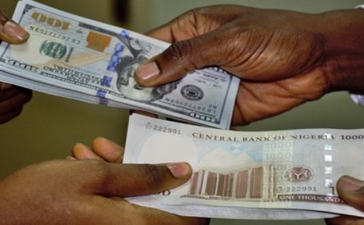
Hedge Funds Drive Strong Demand for CBN OMO Bills
Hedge funds and other yield-seeking investors are driving strong demand for the Central Bank of Nigeria’s Open Market Operations, OMO, bills, as market participants continue to pursue attractive returns on naira-denominated assets.
The latest auction recorded subscriptions worth N4.26 trillion, significantly higher than the N1 trillion initially offered by the Central Bank of Nigeria, CBN.
The strong investor appetite came despite a reduction in the stop rates on both instruments offered at the August 26, 2026 auction.
The development underscores the continued attraction of high-yielding naira assets at a time when investors are seeking opportunities to deploy excess liquidity.
According to the auction results, the CBN offered N500 billion each in 97-day and 132-day OMO bills.
However, total investor demand exceeded the amount offered by more than four times.
The 97-day instrument attracted N783 billion in subscriptions, while the longer-dated 132-day bill recorded a much stronger N3.48 trillion in investor demand.
The CBN eventually allotted N613 billion for the 97-day bill and N2.18 trillion for the 132-day instrument.
This brought the total allotment to N2.80 trillion, far above the original N1 trillion offer.
Investors Chase Effective Yields Above 21%
Although the CBN reduced the stop rates at the auction, the effective returns on the instruments remained attractive.
The 97-day OMO bill cleared at a stop rate of 19.90 per cent, compared with 20.39 per cent at the previous auction.
The effective yield on the instrument was estimated at about 21.02 per cent.
Similarly, the stop rate on the 132-day bill declined to 19.65 per cent from 20.01 per cent at the previous auction.
However, the longer-tenor instrument offered an effective yield of approximately 21.16 per cent.
The returns appear to have encouraged sophisticated investors, including hedge funds and other institutional market participants, to maintain a strong appetite for the securities.
The concentration of demand in the 132-day instrument was particularly notable.
With N3.48 trillion in subscriptions against a N500 billion offer, investors showed a greater willingness to commit funds for a longer period in exchange for a slightly higher effective return.
The outcome suggests that, despite adjustments in nominal rates, attractive returns remain available to investors in Nigeria’s fixed-income market.
CBN Absorbs Excess Liquidity From Financial System
The scale of the allotment also highlights the role of OMO operations in the CBN’s broader liquidity management strategy.
Open Market Operations are used by the apex bank to manage liquidity within the financial system.
By selling securities to eligible investors, the CBN can absorb excess funds that might otherwise increase pressure on inflation, foreign exchange demand and other areas of the economy.
The decision to allot N2.80 trillion, compared with the N1 trillion originally offered, demonstrates the significant volume of liquidity available in the market.
It also shows the level of investor interest in CBN-issued instruments.
The strong demand provides the apex bank with an opportunity to absorb excess liquidity while offering investors a relatively attractive avenue for short-term and medium-term fund deployment.
For investors, the appeal remains clear.
In an environment where portfolio managers are seeking competitive returns, effective yields above 21 per cent continue to make OMO bills an attractive option.
Longer-Tenor Bills Attract Bigger Investor Interest
The sharp difference in demand between the two instruments provides further insight into investor sentiment.
While the 97-day bill attracted N783 billion in subscriptions, the 132-day instrument received N3.48 trillion in bids.
The longer-dated security therefore accounted for the bulk of investor demand at the auction.
This suggests that many investors were prepared to lock in funds for a longer period.
The marginally higher effective yield on the 132-day bill may also have contributed to the strong demand.
For institutional investors and hedge funds managing large pools of capital, even small differences in yield can influence portfolio allocation decisions.
The strong response to the longer-dated instrument could therefore reflect expectations that current high returns may become more difficult to secure if interest rates continue to adjust in the future.
High-Yielding Naira Assets Remain Attractive
The latest auction reinforces the continued competition for high-yielding government and CBN securities.
Nigeria’s fixed-income market remains an important destination for investors seeking predictable returns from naira assets.
While the CBN has begun adjusting nominal rates on some instruments, the effective yields available through OMO bills remain high enough to sustain strong investor interest.
Analysts believe the latest auction demonstrates that investors remain willing to deploy significant funds into high-yielding instruments.
The development could also influence broader investment decisions across the financial markets.
Attractive fixed-income yields can compete with equities and other asset classes for investor capital.
As a result, portfolio managers are likely to continue assessing opportunities across Treasury bills, OMO instruments, bonds and the equities market.
What the Strong OMO Demand Means for the Market
The N4.26 trillion subscription recorded at the latest OMO auction sends a clear signal about investor appetite for naira-denominated securities.
Despite lower stop rates, effective returns above 21 per cent continue to attract substantial capital.
The strong demand also gives the CBN an important tool for managing liquidity in the financial system.
However, the continued attraction of high-yielding fixed-income instruments means that other investment classes may face stronger competition for investor funds.
For the CBN, the challenge will be to maintain its liquidity management objectives while supporting broader economic and monetary policy goals.
For investors, the latest auction confirms that opportunities for attractive naira returns remain available.
The overwhelming demand, particularly for the 132-day instrument, suggests that sophisticated investors remain confident in the ability of OMO bills to provide competitive short-term returns.
As monetary conditions continue to evolve, market participants will closely watch future CBN auctions to determine whether investor appetite remains strong and whether yields will continue to adjust.
For now, the latest auction has shown that Nigeria’s high-yield fixed-income market continues to attract significant interest, with hedge funds and other investors willing to commit trillions of naira in pursuit of returns above 21 per cent.