Global financial markets began Tuesday under pressure as investors reacted to weakness in technology stocks, falling oil prices and continuing geopolitical uncertainty.
Asian shares declined, with technology companies among the main sources of pressure.
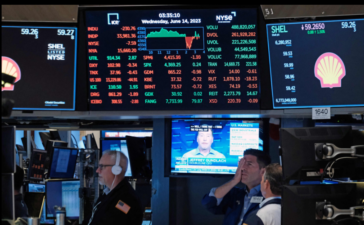
Reuters reported that MSCI’s Asia-Pacific index fell about 0.5 percent, while Japan’s Nikkei dropped 0.9 percent and South Korea’s Kospi declined 2.7 percent.
The movement demonstrates the sensitivity of global markets to changes in investor expectations surrounding technology companies and economic growth.
Technology valuations face scrutiny
Technology stocks have become an increasingly important component of global equity markets.
The rapid growth of artificial intelligence has generated enormous expectations for technology companies.
Investors have poured money into semiconductor manufacturers, cloud computing companies and AI-related businesses.
However, high expectations also create risks.
When valuations become expensive, investors can become more sensitive to disappointing results.
Nvidia’s upcoming earnings have therefore become an important event for global markets.
Analysts expect extremely strong growth, with revenue expectations reportedly approaching $92 billion.
The market question is whether even very strong results will be enough to justify current valuations.
Oil prices decline
Oil prices also came under pressure.
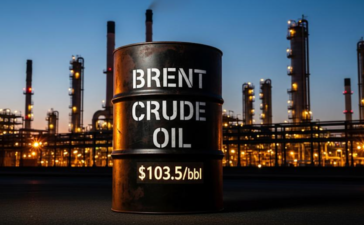
Brent crude traded around $92 per barrel while US crude was around $85.
The movement came amid developments involving the United States and Iran.
Oil markets are particularly sensitive to geopolitical developments because disruptions to supply can quickly affect prices.
For oil-importing countries, lower prices can reduce inflationary pressure.
For oil-producing countries such as Nigeria, lower prices can reduce export revenue.
Nigeria’s exposure
Nigeria’s economy remains strongly linked to oil.
Although the government is attempting to increase non-oil revenue, crude oil remains an important source of foreign exchange.
Changes in global oil prices therefore matter for Nigeria’s currency, government finances and external reserves.
A sustained fall in crude prices could create pressure on oil-exporting economies.
On the other hand, lower prices could benefit countries that spend heavily on petroleum imports.
Interest rates remain important
Investors are also watching central banks.
Global markets remain sensitive to expectations about interest rates in the United States and other major economies.
Lower rates can encourage investment in equities.
Higher rates can make bonds more attractive.
That creates competition for investor capital.
The Federal Reserve’s policy direction is particularly important because changes in US interest rates can affect emerging markets.
Currency implications
The dollar’s movement is another major market factor.
When the dollar strengthens, emerging-market currencies can face pressure.
Investors may move money toward US assets.
For countries such as Nigeria, currency movements affect imported goods, external debt and foreign investment.
A stronger dollar can therefore create additional challenges for emerging markets.
Geopolitical uncertainty
Markets dislike uncertainty.
Investors need to estimate future profits.
When geopolitical developments become unpredictable, businesses may delay investment.
Consumers may also become more cautious.
Energy prices can become volatile.
Shipping costs can increase.
All of these factors can affect corporate earnings.
What investors are watching
The coming days will be dominated by corporate earnings, central-bank signals and geopolitical developments.
Technology investors will pay particular attention to major AI companies and semiconductor businesses.
Energy investors will monitor oil supply.
Emerging markets will watch the dollar and US interest rates.
The current market weakness therefore reflects several forces operating simultaneously.
For investors, the environment reinforces the importance of diversification and careful valuation.
Strong economic fundamentals can support markets over the long term, but short-term volatility remains a major feature of the global investment landscape.