The Federal Government has unveiled a new National Agricultural Mechanisation Policy and National Agricultural Mechanisation Investment Strategy, setting an ambitious target of producing between 2,000 and 4,000 tractors annually as Nigeria intensifies efforts to modernise agriculture and strengthen food security.
The policy was unveiled on August 12, 2026, during a high-level national policy dialogue on agricultural mechanisation in Abuja. The initiative is designed to address Nigeria’s long-standing mechanisation deficit and create a more efficient and commercially viable agricultural sector.
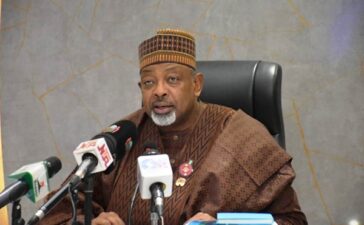
Minister of Agriculture and Food Security, Senator Abubakar Kyari, said the new policy framework is intended to move Nigeria from agricultural potential to agricultural productivity and ultimately achieve food sovereignty.
According to the minister, agricultural mechanisation should not be viewed simply as the provision of tractors. Instead, it should cover the entire agricultural value chain, including land preparation, planting, irrigation, crop protection, harvesting, processing, storage, logistics and precision agriculture.
He also highlighted the importance of financing, insurance, maintenance and after-sales services in building a sustainable mechanisation ecosystem.
The Federal Government is also planning the establishment of a major tractor assembly plant with an annual production capacity of between 2,000 and 4,000 tractors.
Under the Renewed Hope National Agricultural Mechanization Programme, the government has already commenced the procurement and deployment of 2,000 tractors, alongside more than 9,000 agricultural implements and spare parts. The ministry described the initiative as the largest single agricultural mechanisation programme undertaken in Africa.
Kyari said the government wants to develop a “Mechanization-as-a-Service” economy, allowing farmers to access modern equipment when needed without necessarily having to purchase expensive machinery themselves.
The approach is expected to particularly benefit smallholder farmers who often struggle to acquire tractors and other mechanised equipment because of high costs.
The mechanisation drive is also creating opportunities for young Nigerians. Recent government-backed efforts include the training of 4,000 tractor operators nationwide, with the first 250 trainees beginning a residential programme in Nasarawa State. The training covers tractor operations, safety, hydraulics, preventive maintenance, troubleshooting and equipment management.
The Federal Government believes that combining modern machinery with skilled operators, financing, technology and improved agricultural services will help increase farm productivity, reduce production costs and improve farmers’ incomes.
The policy is therefore expected to play an important role in Nigeria’s broader food-security strategy as the country seeks to increase domestic production, reduce dependence on food imports and build a more competitive agricultural economy.