The European Union (EU) has reaffirmed its support for local nutrition production in Nigeria as part of wider efforts to combat child malnutrition and reduce dependence on imported therapeutic foods.
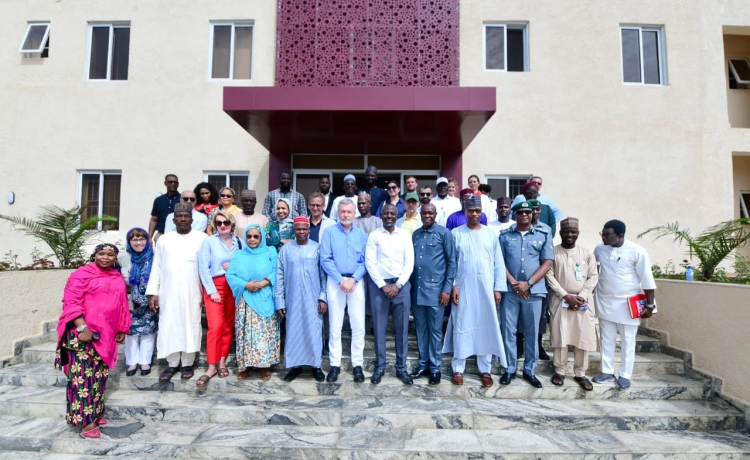
This commitment was restated during a visit by the EU Ambassador to Nigeria and ECOWAS, Gautier Mignot, who led a Team Europe delegation to NutriK’s production facility at the Kano Free Trade Zone on Wednesday.
The delegation included representatives of EU member states and officials from UNICEF, reflecting a coordinated approach to nutrition, health systems strengthening, and sustainable development in northern Nigeria.
During the visit, Mignot emphasised the importance of linking industrial investment with humanitarian impact, noting that local production of Ready-to-Use Therapeutic Food (RUTF) plays a critical role in addressing urgent child nutrition needs.
“The products manufactured here are helping to support vulnerable children while demonstrating how investment and innovation as well as business-friendly conditions created by the Kano authorities contribute to human development and economic growth,” he said.
He added that the engagement was also aimed at strengthening collaboration between development partners working to improve nutrition outcomes in Nigeria.
“We came here to learn more about the progress being made, to engage with partners on the ground and to explore how collaboration between Kano, the European Union, UNICEF and the private sector can continue to deliver results,” he said.
NutriK’s, a French–Nigerian nutrition company and subsidiary of France-based Nutriset Group, highlighted ongoing efforts to expand local sourcing of raw materials used in production.
Currently, the company relies heavily on imported groundnuts due to quality gaps in local supply. However, it says investments are underway to upgrade domestic processing systems to enable increased use of Nigeria-sourced inputs in the near future.
The company’s Managing Director, Abdoulkader Yonli, said the shift would lower production costs and strengthen Nigeria’s agricultural value chain by improving linkages between farmers, processors, and manufacturers.
He also noted that demand for Ready-to-Use Therapeutic Food in Nigeria remains significantly higher than current production capacity, underscoring the scale of the nutrition challenge.
Nigeria continues to face a severe child malnutrition crisis, with UNICEF estimating that about two million children suffer from severe acute malnutrition, a condition that can be fatal without timely therapeutic intervention.
Development partners say expanding local manufacturing capacity, improving agricultural standards, and strengthening industrial ecosystems such as the Kano Free Trade Zone are essential to reducing import dependence and improving nutrition security.
The EU stated that its continued involvement reflects a broader strategy to align humanitarian assistance with local production systems, ensuring that nutrition interventions are both sustainable and scalable in the long term.