The Minister of Arts, Culture, Tourism and Creative Economy, Hannatu Musa Musawa, has urged operators in Nigeria’s tourism sector to embrace digital transformation, sustainability and quality service delivery to remain competitive in the global tourism market.
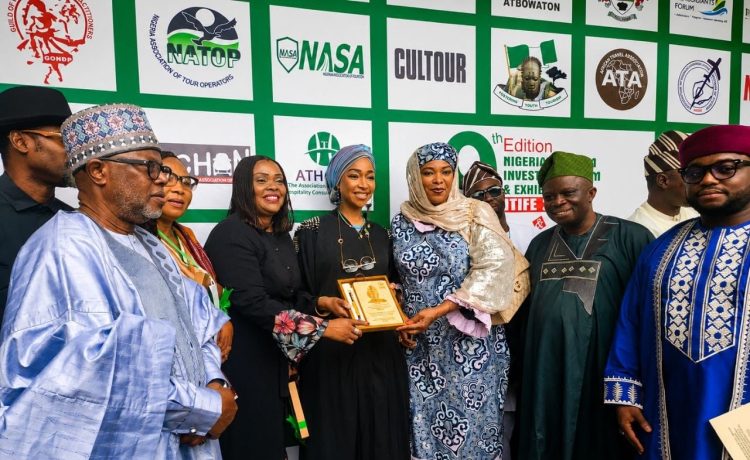
Musawa made the call at the opening ceremony of the ninth edition of the Nigeria Tourism Investors Forum and Exhibition (NTIFE) 2026 and the 29th Annual General Meeting of the Federation of Tourism Associations of Nigeria (FTAN) in Abuja.
The event was held under the theme, “Tourism Transformation Through Collaboration, Policy Alignment and Investment.”
Speaking on “Building a National Tourism Architecture for Nigeria,” Musawa stressed the need for the industry to focus on competition in the global tourism market.
She said Nigeria must adopt innovation and modern technology while improving the overall experience of visitors and the management of tourism destinations.
“To remain competitive, we must embrace innovation, digital transformation, sustainability and quality service delivery. We must develop tourism corridors. We must modernise visitor experiences. We must improve destination management. Above all, we must tell Nigeria’s story confidently and authentically,” she said.
The minister commended FTAN for sustaining the NTIFE platform, describing it as an important avenue for bringing together policymakers, investors, tourism operators, development partners, financial institutions, state governments and other industry stakeholders.
She said the forum had evolved into one of Nigeria’s leading private-sector platforms for tourism investment, policy engagement and business development.
Musawa described the theme of this year’s forum as timely, noting that Nigeria was accelerating efforts to position tourism as a major pillar of economic diversification.
According to her, meaningful transformation of the sector requires collaboration, sound policies, investment and effective leadership.
She said these priorities align with President Bola Ahmed Tinubu’s Renewed Hope Agenda, which recognises tourism and the creative economy as strategic sectors capable of creating jobs, attracting investment, generating foreign exchange and strengthening Nigeria’s global image.
Musawa said her ministry was committed to repositioning tourism as a globally competitive economic sector through deliberate and strategic interventions.
She identified strengthening the policy and regulatory environment, deepening collaboration with state governments, expanding international partnerships and promoting domestic tourism as some of the ministry’s key areas of focus.
The minister urged participants at the forum to move beyond discussions and develop practical initiatives capable of attracting investment and creating lasting partnerships.
“I encourage every participant to move beyond dialogue toward practical commitments, bankable investments and enduring partnerships that will redefine Nigeria’s tourism landscape for generations to come,” she said.
However, the President of FTAN, Dr Aliyu Ajayi Badaki, expressed concern over what he described as poor direction, weak collaboration and a fragmented approach to operations within Nigeria’s tourism industry.
Badaki called for deliberate restructuring of the sector, arguing that a thriving and sustainable tourism industry could only be achieved through clear policy direction and greater unity among stakeholders.
He said the Tourism Transformation Movement (TTM) mantra of his administration was founded on the belief that Nigeria’s tourism industry could not reach its full potential while operating in a fragmented manner.
“Our mandate is therefore built on one simple but powerful principle: to unite every segment of the tourism ecosystem under one common purpose,” Badaki said.
He noted that public and private sector stakeholders had for years operated as parallel institutions pursuing similar objectives without adequate coordination.
According to him, private-sector operators had also sometimes competed in areas where greater collaboration could have created more value for the industry.
Badaki said FTAN had worked to bridge these gaps by promoting dialogue, strengthening relationships among member associations, engaging governments at different levels and positioning the federation as the collective voice of Nigeria’s private tourism sector.
“We believe that unity is no longer optional; it is the foundation upon which a globally competitive tourism industry must be built,” he said.
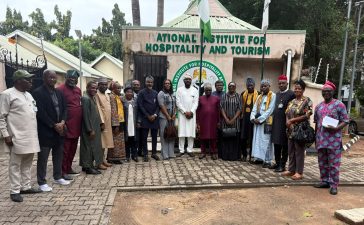
The FTAN president also reiterated the federation’s appeal to President Tinubu to return the existing National Institute of Hospitality and Tourism Act 2022 and the Regulations of 2025 to the National Assembly for review.
He said the legislation should be reworked in the interest of the tourism industry, the country and operators.
Badaki referenced the President’s recent decision to withhold assent to bills concerning two institutions and return them to the National Assembly for review, arguing that a similar approach should be applied to the legislation governing the hospitality and tourism sector.
The FTAN president maintained that stronger collaboration, clearer policy direction and appropriate regulatory frameworks would be critical to unlocking the full economic potential of Nigeria’s tourism industry.