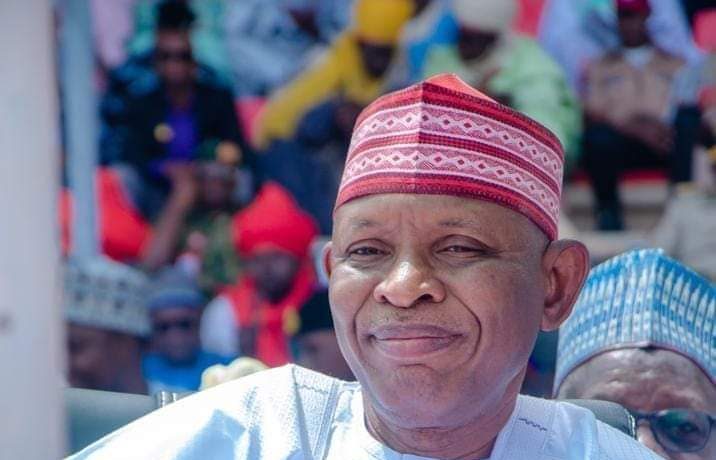
Political tensions are intensifying in Kano State as Governor Abba Yusuf continues to strengthen his political position, while opposition forces reportedly face internal divisions ahead of the 2027 general elections.
The political developments have increased attention on Kano, one of Nigeria’s most politically influential states and a major battleground in national elections.
Governor Yusuf’s growing political influence is being closely watched as political parties and key actors begin positioning themselves for the next electoral cycle.
The governor’s administration has continued to consolidate its political base while maintaining a strong presence within the state’s political structure.
At the same time, opposition groups are reportedly struggling with internal disagreements and competing interests, creating uncertainty over their ability to present a united challenge.
The situation reflects the broader political realignments taking place across Nigeria ahead of the 2027 elections.
Political parties are increasingly focused on building alliances and strengthening their structures at the grassroots level, particularly in states with large populations and significant electoral influence.
Kano is considered one of the country’s most important political states because of its large voting population and its historical role in shaping national election outcomes.
The state’s political dynamics could therefore have implications beyond Kano, particularly as national parties seek to secure support across northern Nigeria.
Governor Yusuf’s political position has also attracted considerable attention as his administration works to strengthen relationships with political stakeholders and maintain its influence within the state.
Opposition parties, meanwhile, face the challenge of managing internal disagreements while preparing for the next election.
Political analysts say divisions within opposition groups could weaken their ability to effectively challenge the ruling structure if they fail to reach agreements on candidates, alliances and campaign strategies.
However, political realignments remain fluid, and the situation could change significantly as the 2027 elections draw closer.
Nigeria’s political history demonstrates that alliances can shift rapidly in response to changing interests and electoral calculations.
The opposition may still have opportunities to reorganise and build a stronger coalition capable of challenging the dominant political forces in the state.
For Governor Yusuf, maintaining political unity and strengthening his administration’s support base will remain important as the political contest intensifies.
The governor’s ability to manage internal party dynamics and maintain support among key political stakeholders could influence the state’s political direction.
As political activity increases, Kano is expected to remain a major focus of attention for national parties and political observers.
The emerging contest is likely to involve questions about governance, economic development, security and the future direction of the state.
With the 2027 elections approaching, the political landscape in Kano is expected to remain highly competitive, with both the ruling and opposition camps seeking to strengthen their positions.