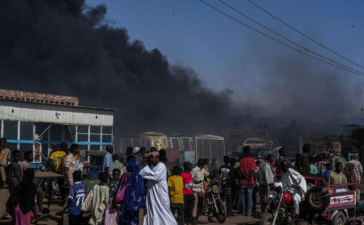
Some residents of Kinshasa have expressed support for a controversial referendum law recently introduced in the Democratic Republic of Congo, saying the legislation could provide citizens with a greater opportunity to participate directly in decisions affecting the country’s future.
The debate over the law has generated mixed reactions across the capital, with supporters viewing the referendum process as a potential tool for strengthening popular participation in governance.
For some residents, the ability to vote directly on major national issues represents an important element of democracy. They argue that citizens should have a voice in decisions that could shape the country’s political, constitutional and institutional direction.
Supporters also believe that a properly conducted referendum could provide an avenue for resolving major national questions through a democratic process rather than leaving such decisions solely to political leaders and institutions.
However, the referendum law has also attracted controversy and criticism. Opponents have raised concerns about the political circumstances surrounding its introduction and the possibility that the process could be used to advance the interests of those in power.
The disagreement reflects broader political tensions in the Democratic Republic of Congo, where questions about constitutional reform, governance and the country’s political future remain highly sensitive.
The law has therefore become a subject of intense public discussion, with residents expressing different views about whether a referendum would strengthen democracy or create additional political uncertainty.
Those who support the legislation argue that the key issue should be ensuring that any referendum is conducted transparently, fairly and in accordance with democratic principles. They say citizens should be given access to accurate information and allowed to make decisions without intimidation or political pressure.
Critics, meanwhile, are calling for greater scrutiny of the law and its potential consequences. They argue that any constitutional or political changes must be carefully examined to ensure that they serve the broader interests of the Congolese population.
The controversy comes at a time when the Democratic Republic of Congo continues to face significant political, economic and security challenges. The country has struggled with armed conflict in parts of the east, while political institutions remain under pressure to address concerns over governance and national stability.
The reactions from Kinshasa residents demonstrate the complexity of the debate. While some citizens see the referendum law as an opportunity to exercise greater democratic power, others remain cautious about the motivations behind the legislation.
The coming months are expected to bring further discussion about the law, its implementation and the issues that could ultimately be put before voters.
For supporters, the referendum represents an opportunity to give ordinary Congolese citizens a direct voice in determining the country’s future. For critics, the process must be carefully monitored to ensure that it does not undermine democratic institutions or concentrate excessive political power.
As the debate continues, the focus is likely to remain on whether the new framework can provide a credible, transparent and inclusive process that reflects the will of the Congolese people.