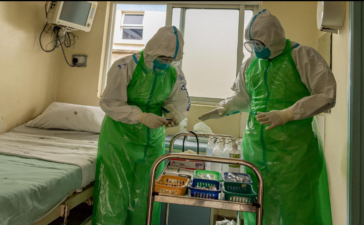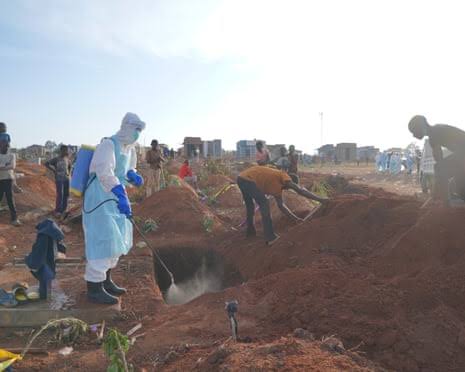
The Democratic Republic of Congo (DRC) is battling the deadliest Ebola outbreak in its history, with the health crisis continuing to spread despite intensified efforts by national and international health authorities.
As of August 16, health authorities had recorded 4,945 confirmed Ebola cases and 2,325 deaths, surpassing the 2,299 deaths recorded during the country’s 2018–2020 outbreak.
The outbreak, which was first declared on May 15, is being driven by the Bundibugyo strain of Ebola. Unlike the Zaire strain responsible for several previous major outbreaks, there is currently no licensed vaccine or proven treatment specifically approved for the Bundibugyo strain.
The outbreak has also become one of the fastest-growing Ebola epidemics ever recorded in the DRC. Health authorities are facing serious challenges, including delayed diagnosis, weak health infrastructure, insecurity and difficulties tracing people who have come into contact with infected patients.
The situation is particularly worrying because a large proportion of infections are being detected outside established contact-tracing networks. Reuters reported that as many as 80 percent of infections may be occurring outside known transmission chains, making conventional containment measures considerably more difficult.
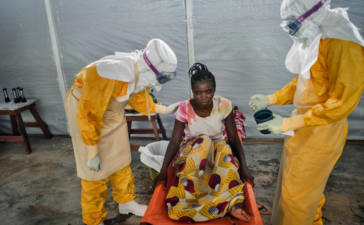
The fatality rate has also risen sharply. Reuters reported that it increased from around 20 percent in early June to approximately 46–47 percent, a development health experts associate largely with delays in diagnosis and access to treatment rather than necessarily a more lethal virus.
The outbreak has spread into a sixth province, increasing the geographical area that health authorities must monitor and placing additional pressure on an already stretched health system.
The humanitarian situation is further complicated by conflict and population displacement, particularly in eastern DRC. Attacks, mistrust and misinformation have made it harder for health workers to reach communities and persuade suspected patients to seek treatment.
Despite the severity of the situation, the World Health Organization (WHO) says there is still an opportunity to bring the outbreak under control.
Speaking on Tuesday, WHO incident manager Dr. Thierno Balde said the organisation remains confident that the epidemic could be contained within approximately three months if adequate resources are made available.
Experimental vaccines and treatments are also being evaluated. However, these remain at early stages and cannot yet provide the same level of protection available against other Ebola strains.
The latest outbreak has renewed concerns about Africa’s capacity to respond rapidly to emerging infectious diseases, particularly in areas affected by conflict and weak healthcare infrastructure.
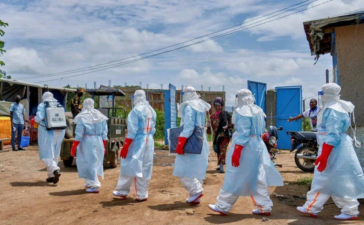
For health authorities, the immediate priorities include faster detection, expanded testing, improved contact tracing, stronger community engagement and ensuring that frontline health workers have the resources and protection they need.
The WHO’s three-month containment target offers a measure of hope, but achieving it will depend heavily on sustained international support and the ability of health teams to reach communities where transmission is occurring undetected.