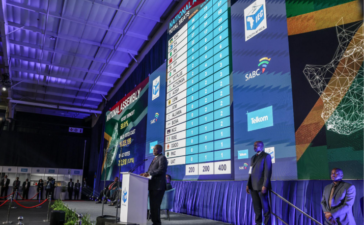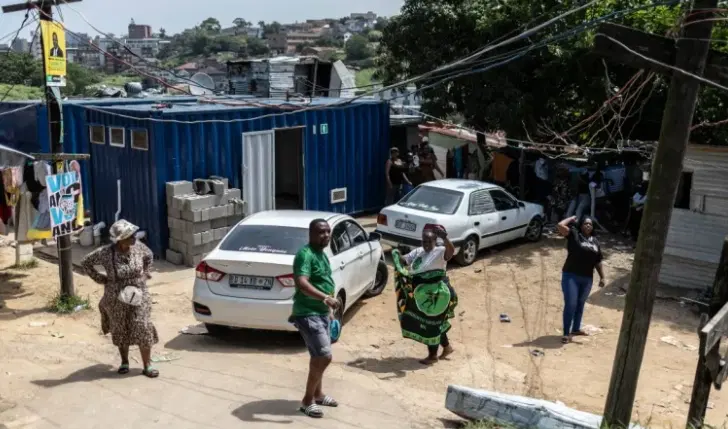
South Africa’s ruling African National Congress (ANC) has recorded its worst-ever electoral performance, securing just 30.76 per cent of the votes in the country’s latest municipal elections, in a major setback for the party that has dominated national politics since the end of apartheid.
The outcome, announced by the Electoral Commission of South Africa on Sunday, underscores the growing erosion of public confidence in the governing party and signals a potentially significant shift in the country’s political landscape.
The liberal Democratic Alliance (DA), the ANC’s closest challenger and a key partner in the country’s national unity government, secured approximately a quarter of the votes, according to the final results.
The poor performance of the ANC represents a dramatic reversal for the party of late liberation icon Nelson Mandela, which won nearly two-thirds of the votes in South Africa’s first democratic elections in 1994.
Its declining electoral fortunes have been attributed to mounting public dissatisfaction over unemployment, corruption allegations, crime, deteriorating infrastructure and persistent failures in the delivery of essential public services.
South Africa’s unemployment rate remains above 34 per cent, among the highest globally, while recurring electricity outages, water shortages, poorly maintained roads and inadequate waste management have continued to frustrate residents.
These concerns featured prominently in Wednesday’s municipal elections, with voters assessing the performance of political parties responsible for administering their communities and local governments.
ANC Secretary-General Fikile Mbalula acknowledged the scale of the party’s electoral setback, describing the outcome as catastrophic.
He admitted that the party had fallen short in several areas of governance, particularly the provision of basic services, including water supply, waste collection and road maintenance.
Mbalula said the party could not dispute the concerns raised by communities, acknowledging that residents had experienced prolonged service delivery failures.
The elections recorded a voter turnout of 52 per cent, representing an increase of six percentage points compared with the 2021 municipal elections, which were affected by the COVID-19 pandemic.
However, the results have left more than half of South Africa’s 213 municipal councils without an outright majority, setting the stage for complicated coalition negotiations among political parties.
The situation could create fresh political uncertainty across several major cities, particularly as previous coalition arrangements have frequently been undermined by internal disagreements, shifting political alliances and leadership disputes.
The instability has, in several instances, affected the ability of local administrations to deliver essential services and implement development programmes.
President Cyril Ramaphosa has urged political parties to place the interests of residents above partisan considerations during the coalition negotiations, warning against allowing political disagreements to undermine public services.
He said the electoral outcome reflected the will of the people and called on political leaders to respect the verdict while responding to voters’ expectations.
Under the electoral timetable, newly elected municipal councils are required to hold their inaugural meetings within 14 days of the formal declaration of results, during which councillors will elect mayors and other principal officeholders.
All but one of South Africa’s eight major cities face coalition negotiations, with the DA securing an outright majority in Cape Town, its strongest political base.
The party was also leading in Johannesburg, the country’s economic hub, where it fielded veteran politician Helen Zille, 75, a longstanding critic of the ANC and former premier of the Western Cape.
Meanwhile, the centre-right ActionSA, founded by former Johannesburg mayor Herman Mashaba after his departure from the DA, finished fifth nationally but could emerge as an influential political player in coalition negotiations across major metropolitan areas.
Its potential influence is particularly significant in Tshwane, which includes Pretoria, South Africa’s administrative capital.
The latest results could reshape municipal governance and increase pressure on the ANC to rebuild public confidence ahead of future national political contests.
For South Africa, the immediate challenge will be translating the election outcome into stable local administrations capable of addressing unemployment, infrastructure deficiencies and the growing demand for reliable public services.