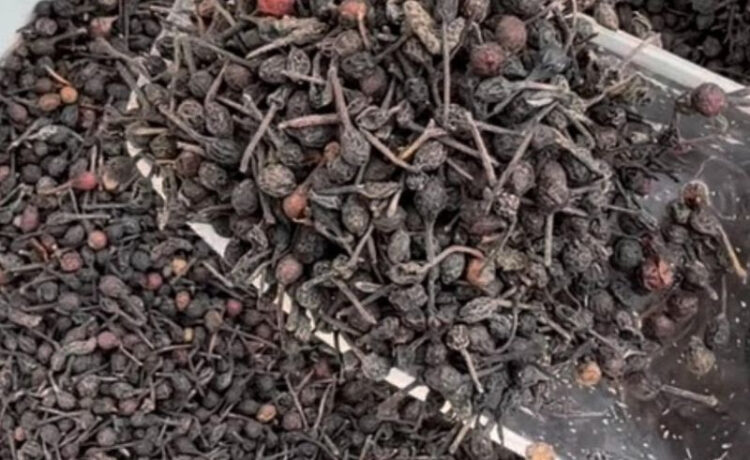
Madagascar’s rare Voatsiperifery pepper, a highly prized wild spice used by international chefs, is facing increasing threats from deforestation and unsustainable harvesting practices, raising concerns about the future of the plant and the livelihoods of communities that depend on it.
The distinctive pepper, which grows naturally in Madagascar’s tropical forests, has attracted international culinary interest because of its unique flavour and limited availability.
However, the plant’s dependence on forest ecosystems for survival has made it particularly vulnerable to the country’s continuing loss of natural forest cover.
Voatsiperifery grows on climbing vines that rely on forest trees for structural support. As trees are cleared for agriculture, charcoal production and other human activities, the plant loses the natural environment required for its growth.
According to the United Nations Food and Agriculture Organization (FAO), Madagascar’s natural forests declined by approximately 27 per cent between 1990 and 2025.
The loss has been driven by several factors, including bushfires, charcoal production and unsustainable resource extraction.
The continued degradation of forest habitats threatens not only Voatsiperifery but also other plant and animal species that depend on Madagascar’s unique ecosystems.
The pepper has developed a strong reputation in international culinary markets, where its distinctive characteristics have made it attractive to chefs and specialist spice buyers.
However, its significance extends beyond the restaurant industry.
Local Malagasy communities also value the plant for its traditional medicinal applications, making its preservation important to both cultural practices and local economic activities.
As demand for the spice continues to create commercial opportunities, pressure on wild populations could increase if harvesting is not properly managed.
In response, local entrepreneurs and other stakeholders are exploring ways to domesticate the pepper, reducing dependence on harvesting from natural forests while creating a more sustainable supply chain.
The cultivation experiments are aimed at developing production systems that can support commercial demand without further degrading the plant’s natural habitat.
Successful domestication could also create additional income opportunities for local farmers and communities, particularly if cultivation is integrated into wider forest conservation and sustainable agriculture programmes.
The challenge, however, is to ensure that commercial expansion does not reproduce the same environmental pressures associated with uncontrolled harvesting.
This will require investment in research, cultivation techniques, sustainable land management and effective conservation policies.
Madagascar is internationally recognised for its exceptional biodiversity, much of which is found nowhere else in the world. Continued deforestation therefore presents significant risks to its ecological resources and nature-based economic opportunities.
Protecting Voatsiperifery could provide an example of how the commercial value of indigenous plant species can be linked to conservation and sustainable livelihoods.
For the country’s spice industry, the future of the rare pepper will depend on balancing growing international demand with the protection of the forests that sustain it.