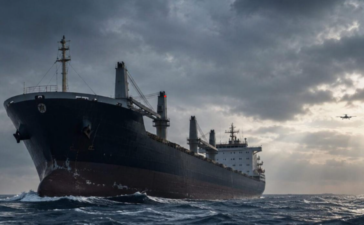
Two major Chinese state-controlled shipping companies have stopped sending oil tankers through the Strait of Hormuz and the Bab al-Mandab, as growing security concerns force one of the world’s biggest oil-importing nations to rethink its maritime supply routes.
The companies, COSCO Shipping Energy Transportation and China Merchants Energy Shipping, have reportedly kept their tankers away from both strategic waterways since late July.
The decision marks a significant development for global shipping and the international oil trade.
Together, the companies control more than 100 very large crude carriers. Before the current conflict disrupted the region, they played an important role in transporting Middle Eastern oil to China.
The two shipping groups reportedly carried around half of China’s crude oil imports from the Middle East, excluding sanctioned Iranian oil.
Their decision to avoid the Strait of Hormuz and Bab al-Mandab shows how seriously shipping companies now view the security risks around the region’s major maritime chokepoints.
Two Vital Maritime Routes Under Pressure
The Strait of Hormuz is a crucial gateway between the Persian Gulf and international markets. It has historically carried a major share of global crude oil and liquefied natural gas shipments.
The Bab al-Mandab is equally important to international shipping because it connects the Red Sea with the Gulf of Aden and provides access to the Suez Canal route.
Problems at either chokepoint can affect global trade.
When shipping companies avoid Hormuz, Gulf oil exporters may struggle to move crude through their usual routes. When vessels also avoid Bab al-Mandab, ships travelling between Asia and Europe face additional challenges.
For Chinese oil companies, avoiding both routes creates a complicated logistical problem.
China is the world’s largest crude oil importer and depends heavily on supplies from overseas producers. Middle Eastern oil has traditionally been an important part of that supply.
However, security concerns have changed normal shipping patterns.
Reports indicate that the Chinese companies received communications linked to Chinese central authorities before keeping their vessels away from the two chokepoints.
The companies are now turning to alternative methods to keep oil flowing while reducing the risks to their ships and crews.
Ship-to-Ship Transfers Become an Alternative
One of the biggest changes has been the increased use of ship-to-ship oil transfers outside the Persian Gulf.
Instead of sending tankers through the most dangerous routes, crude can be transferred between vessels in safer areas, including locations near Fujairah in the United Arab Emirates and ports in Oman.
This allows shipping companies to reorganise their supply chains.
China- and Hong Kong-owned vessels have increasingly used such arrangements in the Gulf of Oman.
Shipping data showed that offshore transfer activity increased sharply during June and July. The growing use of ship-to-ship transfers highlights how maritime companies are adapting to a difficult security environment.
However, alternative arrangements are not always simple or cheap.
They can require additional vessels, more coordination and longer voyages. Every extra stage in the supply chain can increase operational costs.
The disruption has also affected vessel utilisation.
Tankers that previously completed regular voyages through established routes may now spend more time repositioning or waiting for cargo transfers. This can reduce the number of voyages a ship completes.
At the same time, the increased demand for safer alternative routes has pushed freight costs higher.
Freight Rates Rise as Risks Increase
Security concerns are having a major financial effect on the tanker market.
The risks associated with the conflict have increased the cost of moving crude oil, while shipping companies must also consider higher insurance and security expenses.
Reports indicate that tanker earnings on some routes have risen sharply.
The increased rates may benefit shipowners with vessels available in safer locations. However, higher freight costs can also be passed through the supply chain, affecting oil buyers and eventually contributing to broader energy market pressure.
The situation demonstrates an important reality of modern shipping: geopolitical events can quickly change the economics of maritime transport.
A route that was commercially efficient a few weeks earlier can suddenly become too risky. Companies then have to find alternatives, even if those alternatives are slower and more expensive.
For China, the challenge is particularly important because of the huge volume of oil the country imports.
Any prolonged disruption to Middle Eastern shipping routes could force Chinese buyers and transport companies to rely more heavily on alternative loading locations and supply sources.
Major Implications for Global Shipping
The decision by the two Chinese shipping companies is significant because of their size and their role in the oil trade.
When companies operating more than 100 very large crude carriers avoid two of the world’s most important maritime chokepoints, the effect can be felt across the wider tanker industry.
Other shipowners may also reassess their operations based on the changing security situation.
The continued avoidance of Hormuz and Bab al-Mandab could reshape tanker deployment, freight rates and oil trading patterns for as long as the risks remain high.
It also places renewed attention on the safety of seafarers.
Behind every tanker route are crews who must operate vessels in increasingly difficult environments. Shipping companies and governments will continue to face pressure to ensure that commercial seafarers are not placed in unnecessary danger.
For now, COSCO Shipping Energy Transportation and China Merchants Energy Shipping appear to be maintaining their cautious approach.
Their move away from the Strait of Hormuz and Bab al-Mandab underlines the continuing disruption facing maritime trade in the Middle East.
As the security situation develops, the global shipping industry will be watching closely to see whether these companies return to their traditional routes or continue relying on longer and more complex alternatives.
The answer could have major consequences for oil markets, tanker freight rates and the future movement of energy cargoes across some of the world’s most important waterways.