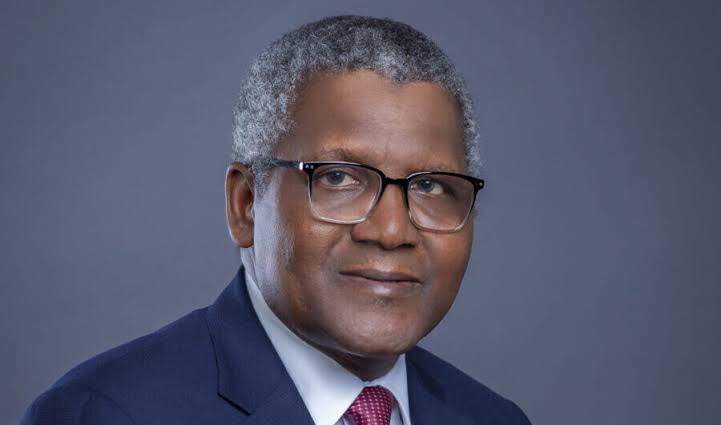
Nigerian industrialist Aliko Dangote has formally launched construction of a $16 billion oil refinery in Lamu, Kenya, in one of Africa’s biggest new industrial projects and a major attempt to reduce East Africa’s dependence on imported refined petroleum products.
Dangote joined Kenyan President William Ruto and other African leaders on Wednesday for the groundbreaking of the proposed Dangote East Africa Petroleum Refinery, which is designed to process 700,000 barrels of crude oil per day when completed.
The planned capacity would put the facility on a scale comparable with Dangote’s refining operation in Nigeria.
Current reporting puts completion at around 40 months, or 2030, depending on construction progress and resolution of outstanding legal issues.
East Africa Targets Greater Fuel Security
The economic argument behind the project centres on East Africa’s reliance on imported refined petroleum.
Rather than exporting raw materials while importing higher-value finished products, the project is intended to create additional refining capacity within the region.
Dangote told the groundbreaking ceremony that African economies need to process more of their own resources, arguing that the continent cannot continue exporting what it has and importing what it needs.
The refinery is expected to produce petrol, diesel and jet fuel for Kenya and neighbouring markets.
Dangote has argued that regional fuel consumption provides a sufficiently large market for the planned 700,000-bpd capacity.
1,000MW Power Plant Planned
The investment extends beyond the refinery itself.
The project includes plans for a 1,000-megawatt power plant, while Honeywell Technologies has been brought in to provide engineering services, technology licensing and equipment.
Lamu’s port infrastructure is another important component of the investment case.
Dangote said the Kenyan location was selected partly because of its deep-water access and ground conditions suitable for heavy industrial equipment. The refinery had previously been considered for Tanga in Tanzania.
For Kenya, the investment is being presented by the government as a major industrialisation project and its largest-ever foreign direct investment.
President Ruto has said the development could significantly expand economic output, while employment estimates associated with the project run into tens of thousands of jobs. Reuters reported the government’s projection that the project could lift annual GDP by 12 per cent.
Crude Supply Remains Critical
One of the central commercial questions is where the refinery will secure the enormous volume of crude required to operate near its designed capacity.
The project is expected to draw crude from neighbouring African producers.
Ugandan President Yoweri Museveni, who attended the ceremony, said Uganda would nevertheless continue pursuing its own smaller refinery project, arguing that the region has room for multiple refining facilities.
The issue underlines the regional nature of the Lamu investment.
A refinery of this scale will depend not only on Kenyan demand but on crude-supply arrangements, regional infrastructure and access to consumers across several East African economies.
Land Dispute, Environmental Concerns Shadow Project
The groundbreaking does not remove the legal and environmental challenges surrounding the development.
A Kenyan court has been considering a dispute brought by residents claiming ownership rights over land earmarked for the refinery. Reuters reported before Wednesday’s ceremony that the court order would not prevent the formal launch but could affect activities at the site.
Residents have also protested over compensation, while environmental campaigners have raised concerns about possible effects on the coastal marine ecosystem.
Lamu’s environmental and cultural significance adds another layer to the debate. The wider area includes Lamu Old Town, a UNESCO World Heritage site, and critics have raised concerns about the potential impact of large-scale industrial development.
Those concerns mean the project’s economic ambitions will run alongside continuing scrutiny over land rights, compensation and environmental protection.
Dangote Expands Industrial Footprint Beyond Nigeria
For Dangote, the Kenyan project represents a major expansion of his refining strategy beyond Nigeria.
His Nigerian refinery has already demonstrated the scale at which the group intends to operate in petroleum processing, and the Lamu investment seeks to apply a similar large-scale industrial model to the East African market.
The new project also reflects a wider debate across Africa about capturing more value from the continent’s natural resources before export.
If delivered at its proposed scale, the Lamu refinery would significantly expand East Africa’s petroleum-processing capacity and could alter regional fuel-supply patterns.
Its eventual impact, however, will depend on securing reliable crude supplies, completing the enormous construction programme and resolving the legal, community and environmental issues surrounding the site.