An international conference has adopted a draft treaty aimed at banning cluster munitions, advancing efforts to strengthen protections for civilians affected by armed conflict.
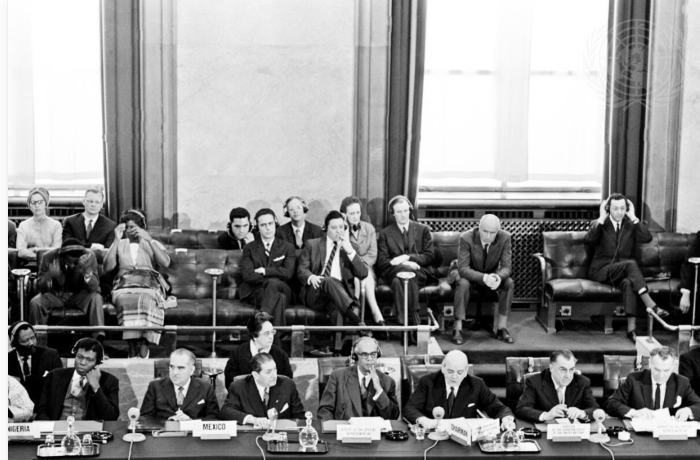
Reuters reported on Thursday, October 29, that the draft agreement was adopted on Wednesday at a conference in Dublin, Ireland.
The development represents a diplomatic step towards establishing additional international restrictions on weapons that can cause serious harm to civilians during and after conflicts.
Cluster munitions are weapons that release multiple smaller explosive submunitions over a wide area. Depending on the weapon and circumstances, some submunitions may fail to explode as intended, leaving dangerous unexploded ordnance behind.
These remnants can threaten civilians long after fighting has ended, particularly in communities where people need to return to homes, farmland, roads and public facilities.
The adoption of a draft treaty is an important stage in international negotiations, but it does not automatically mean that a legally binding global prohibition has entered into force.
Why cluster munitions raise humanitarian concerns
The effects of cluster munitions can extend well beyond the battlefield.
Because the weapons disperse explosive submunitions over an area, they may pose risks to civilians when used in populated places or near essential infrastructure.
Unexploded devices can remain hazardous for years. Children, farmers, construction workers and people travelling through affected areas may encounter them without knowing the danger.
Clearing contaminated land can be expensive and time-consuming. Specialist teams must identify and remove explosive remnants before land can be used safely.
The presence of unexploded ordnance can also delay reconstruction, obstruct agricultural activity and discourage displaced families from returning home.
Humanitarian organisations have therefore supported international measures intended to reduce the use of weapons that create prolonged risks for civilians.
The challenge of international agreement
Reuters reported that major powers, including the United States, were absent from the conference at which the draft treaty was adopted.
The absence of major military powers raises questions about how broadly a future agreement might be supported and how effective it would be in practice.
International arms-control agreements depend on more than the adoption of a text. Their effectiveness may also depend on participation, ratification, national implementation, verification and compliance.
Countries may disagree over military requirements, security circumstances and the restrictions they are prepared to accept.
Those differences can make negotiations difficult, particularly when governments believe that a weapon has a role in their defence strategies.
Supporters of restrictions must therefore consider both the humanitarian arguments and the practical steps needed to secure wider participation.
What happens after adoption?
The next steps depend on the conference’s procedures and the terms of the draft agreement.
Further diplomatic work may be required to finalise the text, determine how it will be opened for signature and establish the conditions under which it could become legally binding.
Governments would then need to decide whether to participate and, where applicable, complete their domestic approval processes.
The available report confirms the adoption of a draft treaty but does not establish that a worldwide ban is already legally in force.
That distinction is important for accurate reporting.
Implications for conflict-affected communities
For civilians living in areas affected by armed conflict, the central concern is whether international commitments will reduce future harm.
A successful agreement could strengthen efforts to prevent the use of cluster munitions and encourage improved support for clearance and victim assistance.
However, the practical outcome will depend on the final treaty, the countries that join it and the extent to which its provisions are implemented.
The conference’s decision is a diplomatic milestone, but much work may remain before it produces a broadly accepted and effective international framework.