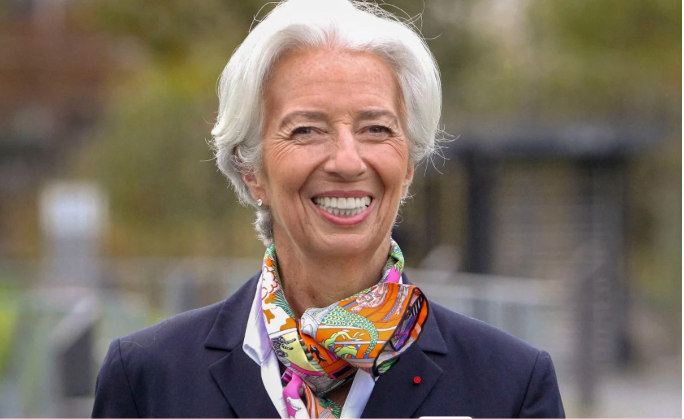
European Central Bank President Christine Lagarde has announced plans to step down from her position on February 7, 2027, several months before the scheduled end of her term.
The announcement was made on Thursday, October 29, 2026, according to a report published by Punch Newspapers.
Lagarde informed the European Central Bank’s Governing Council and the President of the European Council, Antonio Costa, about her decision.
Her departure is expected to create an opportunity for European leaders to select a new head of the institution before the French presidential election scheduled for April 2027.
Lagarde’s decision comes at an important period for the European economy, as policymakers continue to manage inflation, interest rates, economic growth and financial stability across the eurozone.
An early departure from the ECB
Lagarde’s planned exit will take place in February 2027, although her current term was scheduled to end in October of the same year.
The European Central Bank confirmed the development in an official statement.
Her decision means the process of identifying a successor can begin earlier than originally expected.
The timing is particularly significant because the ECB presidency is one of the most influential positions in European economic policymaking.
The institution is responsible for monetary policy across the eurozone, which includes countries that use the euro as their official currency.
Its decisions affect borrowing costs, savings, business investment, inflation and financial conditions across the region.
A change in leadership therefore attracts attention from governments, investors, financial institutions and international markets.
Lagarde’s role in European monetary policy
Lagarde became President of the European Central Bank in November 2019 after previously serving as Managing Director of the International Monetary Fund.
During her leadership, the ECB has faced several major economic challenges.
These have included the economic disruption associated with the COVID-19 pandemic, rising energy prices, inflationary pressures and geopolitical tensions.
The institution has had to balance the need to control inflation with the importance of supporting economic activity.
Interest-rate decisions made by the ECB influence the cost of borrowing for households and businesses.
Higher interest rates can help reduce inflation by discouraging excessive spending and borrowing, but they can also increase financing costs for companies and consumers.
Lower rates may encourage economic activity, although they can also create inflationary pressure if demand grows too quickly.
The ECB therefore operates within a complex economic environment in which its decisions have consequences for millions of people and businesses.
Why the timing matters
Lagarde’s departure before the end of her term gives European leaders an opportunity to organise the succession process ahead of the French presidential election.
The political significance of the timing comes from the importance of France within the European Union and the influence of its leadership in discussions about European economic policy.
The ECB is designed to operate independently from national governments.
Its monetary policy decisions are not supposed to be directed by individual political leaders.
Nevertheless, the selection of its president involves European political institutions and member states.
An early succession process could therefore attract considerable attention as governments consider candidates capable of leading the institution through future economic challenges.
What happens next?
The announcement does not mean that the ECB’s monetary policy operations will immediately change.
The institution continues to operate under its existing mandate, with its governing structures responsible for maintaining financial and price stability.
The selection of a successor will be an important responsibility for European leaders.
The next president will inherit an institution facing continuing questions about inflation, economic growth, international trade and financial stability.
The change will also be closely watched by financial markets because investors often assess leadership transitions for possible implications for future monetary policy.
For businesses and households across Europe, the most important consideration will be whether the institution maintains stability and consistency during the transition.
Lagarde’s planned departure marks the beginning of a significant leadership change at one of the world’s most influential central banks.