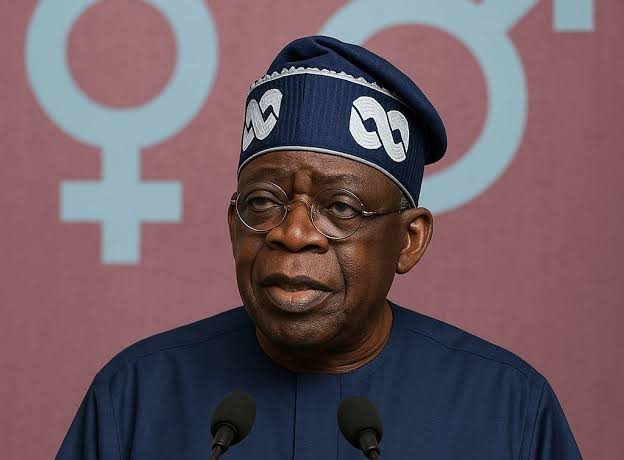
President Bola Ahmed Tinubu has asked the National Assembly to approve a supplementary external borrowing plan worth $20.52 billion and €1.045 billion for the 2026–2027 fiscal period.
The request was conveyed to lawmakers as part of the Federal Government’s plans to finance infrastructure and other development programmes across critical sectors of the economy.
According to reports published by Channels Television, Reuters and THISDAY on October 27 and 28, 2026, the proposed financing is intended to address Nigeria’s infrastructure funding gap and support projects expected to contribute to economic growth.
The borrowing plan will require legislative approval before the proposed external financing can proceed. It is therefore a request for authorisation, not confirmation that the entire amount has already been borrowed or disbursed.
Channels Television+2
Government identifies priority sectors
In his communication to lawmakers, Tinubu said the proposed funds would support projects and programmes in sectors including infrastructure, agriculture, healthcare, education, water supply, security and employment generation.
The administration’s position is that additional financing is necessary to address the country’s substantial infrastructure requirements and bridge funding gaps affecting development projects.
Infrastructure remains a major policy concern in Nigeria, where investments in electricity, transport, healthcare and other public services require substantial financial resources.
The government expects the proposed borrowing to help fund development priorities and improve the country’s capacity to implement projects across different sectors.
However, the potential benefits will depend on how the funds are allocated, the quality of project selection, the terms of the financing and the government’s ability to implement projects effectively.
Borrowing on this scale also raises questions about debt servicing, the cost of external financing and the impact future repayments could have on public finances.
National Assembly begins consideration
The proposed external borrowing plan has been referred for legislative scrutiny.
According to THISDAY’s reporting, Senate President Godswill Akpabio referred the request to the Senate Committee on Local and Foreign Debts and directed it to report back within one week.
The committee’s review is an important stage in the approval process. Lawmakers are expected to examine the proposal and consider its implications before the National Assembly determines how to proceed.
Legislative scrutiny allows representatives to question the government about the intended use of borrowed funds, the financing arrangements and the expected benefits to the country.
The proposed borrowing should therefore be distinguished from an approved financing programme. The government cannot treat the requested authorisation as a substitute for the necessary legislative process.
Atiku Abubakar questions the borrowing plan
The proposal has attracted criticism from former Vice-President Atiku Abubakar, who has questioned the scale of the borrowing and called for greater transparency.
According to THISDAY, Atiku argued that the government should disclose detailed information about the projects to be financed, their costs, the contractors involved, the loan terms and the repayment obligations.
He also raised concerns about the possibility of public borrowing being used for political purposes. These are allegations and concerns expressed by an opposition figure; they do not establish that the funds would be misused.
The ADC Presidential Campaign Council has also criticised the proposal, arguing that additional borrowing could place further pressure on future generations.
The criticism highlights a broader debate in Nigerian politics over how the government should finance development while managing debt and meeting existing financial obligations.
Supporters of government borrowing generally argue that external financing can be justified when it funds productive projects capable of improving infrastructure and supporting economic activity. Critics, however, emphasise that borrowing must be accompanied by transparency, accountability and evidence that the expected benefits justify the cost.
Why the borrowing request matters
The proposed financing could have significant implications for Nigeria’s fiscal position, particularly because external loans create repayment obligations that may extend beyond the current administration.
The value of projects financed through borrowing will depend on whether they are completed, deliver the expected public benefits and contribute to economic activity.
Currency movements may also affect the domestic cost of servicing foreign-currency debt. If the naira weakens against the currencies in which loans are denominated, repayments could become more expensive in naira terms.
For this reason, lawmakers and the public have an interest in understanding the financing conditions, repayment schedules and expected returns from the projects.
The government’s ability to publish reliable project information and demonstrate how borrowed funds are spent will be important to maintaining public confidence.
What happens next?
The next major step is the National Assembly’s consideration of the request. Lawmakers will need to assess the proposal before deciding whether to approve it, seek further information or require changes.
The public will also be watching for details about the individual projects, financing terms and safeguards against waste or misuse.
For the Tinubu administration, the challenge is to demonstrate that the proposed borrowing will deliver measurable development benefits. For the opposition, the focus is on ensuring that any additional debt is justified, transparent and consistent with Nigeria’s long-term economic interests.
The final outcome will depend on the legislative process and the details made available to lawmakers. Until approval is granted and financing arrangements are completed, the proposed borrowing remains a plan awaiting authorisation.