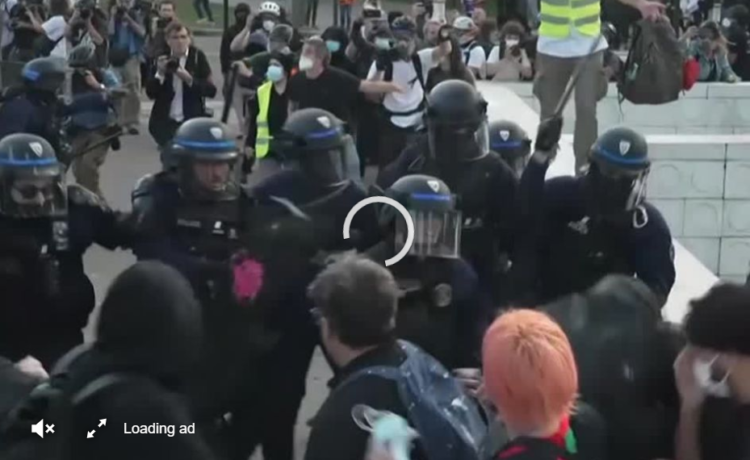
France witnessed one of its largest student protest movements in decades on Tuesday, October 6, as more than 250,000 people took to the streets across the country to demand improvements in the education system.
The demonstrations involved high school students, teachers, parents and trade union members. Protests were reported in major cities including Paris, Marseille, Lyon, Strasbourg, Nantes and Toulouse, with students blocking school entrances and participating in marches.
The movement began in September, initially in deprived areas around Paris, before spreading nationwide. Students say they are protesting against teacher shortages, overcrowded classrooms, long school hours and deteriorating school buildings.
Some students have reported leaking roofs, damaged classrooms, inadequate furniture and, in some schools, rodent infestations. They are also demanding that teachers who are absent be replaced more quickly.
The protests have become increasingly tense, with clashes occurring between demonstrators and riot police. French authorities said hundreds of police officers and protesters have been injured since the movement began.
The Interior Ministry said 488 people were arrested on Tuesday, while government figures indicated that more than 700 police officers had been injured during the wider unrest. More than 6,000 people have reportedly been arrested since the protests started, many of them minors.
The demonstrations have also raised concerns about the use of force against young protesters. Rights groups have criticised the use of tear gas, batons and other riot-control equipment. French authorities, however, have defended the police response and said officers have acted proportionately in most cases.
The situation became particularly serious after a 15-year-old teenager lost a hand during clashes with police in northern France. Other teenagers have also suffered serious injuries during the protests.
French Prime Minister Sébastien Lecornu has acknowledged the concerns raised by students and ordered ministers to work on measures addressing teacher shortages, school buildings, classroom conditions and the length of the school day. The government is expected to present initial proposals before the end of October.
The protests come at a difficult time for the French government, which is also facing pressure over public spending, rising debt and weak economic growth.
The education crisis has therefore become part of wider concerns about public services and government spending. Finding additional money for school repairs, teachers and other reforms could prove difficult while France attempts to reduce its budget deficit.
Despite the clashes, many of Tuesday’s demonstrations remained peaceful. Students and their supporters carried placards demanding better schools and greater government investment in education.
The protests are expected to continue as student groups demand concrete changes rather than promises from the government.