The World Bank has raised its economic growth forecast for Sub-Saharan Africa to 4.3 per cent in 2026, up from the 4.1 per cent it projected in April, citing stronger economic performance and reforms across several countries in the region.
The revised forecast was contained in the World Bank’s latest Africa Economic Update, released on Tuesday, October 6, 2026. The bank said economic activity across the region has remained resilient despite global uncertainty, higher energy prices, geopolitical tensions and financial pressures.
According to the World Bank, growth forecasts have been upgraded for nearly three-quarters of countries in Sub-Saharan Africa. Countries including Nigeria, Zambia, Ethiopia and Angola are among those benefiting from improved growth expectations as economic reforms and better management begin to show results.
The bank said Africa’s economy grew by 4.1 per cent in 2025, while the stronger 2026 outlook reflects improved macroeconomic stability, domestic demand and investment linked to the energy transition and digital technologies.
However, the World Bank warned that stronger economic growth has not yet translated into enough jobs or significant reductions in poverty. Per-capita income growth is expected to remain relatively weak, while inflation in the region is projected to rise to a median 5.5 per cent in 2026, compared with 3.7 per cent in 2025.
The institution also expressed concern over Africa’s debt burden. Although public debt has broadly stabilised at around 57 per cent of GDP, high debt-servicing costs continue to limit government spending on important areas such as healthcare, education and infrastructure.
World Bank Calls for AI Investment
A major focus of the World Bank’s latest report is the need for African countries to invest in artificial intelligence (AI).
The bank believes AI could help African economies improve productivity, create jobs and provide better public services. Rather than trying to compete directly with major economies in developing expensive frontier AI systems, African countries could focus on affordable and practical AI applications.
Such applications could include tools that help farmers identify livestock diseases, digital learning assistants for students and automated accounting systems for small businesses.
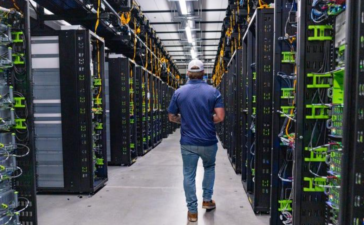
The World Bank said Africa will need reliable electricity, affordable internet connectivity, digital skills, quality data, computing infrastructure and stronger governance to take advantage of AI.
It also pointed to Kenya, Nigeria and South Africa as some of the countries where AI adoption is already gaining attention.
For Nigeria, the World Bank separately raised its 2026 growth forecast to 4.3 per cent, from 4.0 per cent in 2025, and expects the economy to grow by 4.4 per cent annually in 2027 and 2028.
Despite the positive outlook, the World Bank warned that Africa remains exposed to risks including prolonged geopolitical tensions, high interest rates, rising energy and food prices, climate shocks and the possibility of an El Niño event.
The bank therefore urged African governments to ensure that economic growth translates into more jobs, higher incomes and better living conditions for citizens.