Sudan’s humanitarian crisis is worsening as renewed fighting continues to force civilians from their homes, with thousands arriving in already overcrowded areas seeking safety and basic necessities.
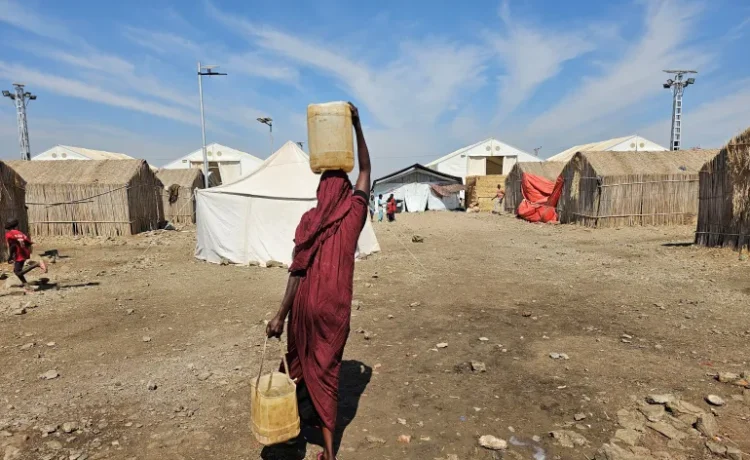
In El Obeid, a city in North Kordofan, more than 15,000 families have arrived since mid-July, adding to the hundreds of thousands of displaced people who had already sought refuge there earlier this year. Many of those arriving are women and children who have fled areas affected by fighting between the Sudanese Armed Forces and the Rapid Support Forces (RSF).
Humanitarian conditions in El Obeid are becoming increasingly difficult. Displaced families are facing shortages of food, clean water and sanitation facilities, while overcrowded camps are struggling to accommodate the growing number of people seeking refuge.
The wider conflict has displaced millions of people across Sudan since fighting began in April 2023. The United Nations and humanitarian organisations continue to describe Sudan as one of the world’s most severe humanitarian emergencies.
The situation is particularly serious in Darfur and the Kordofan region, where fighting continues and humanitarian access remains limited. Aid organisations are struggling to reach civilians because of insecurity, damaged infrastructure and a shortage of funding.
Food insecurity is also becoming increasingly severe. More than 21 million people across Sudan are facing severe food insecurity, while humanitarian organisations have warned that some areas remain at risk of famine.
The reduction in humanitarian assistance is making the situation even more difficult. Aid organisations have warned that cuts to food distributions are leaving displaced families with fewer resources to survive. Children and women are among those facing the greatest risks from hunger and malnutrition.
Healthcare services have also been badly affected by the conflict. Many hospitals and clinics have been damaged or forced to close, while facilities that remain open are struggling with shortages of medicines, medical supplies and trained personnel. In parts of Darfur, outbreaks of diseases including cholera and malaria are adding another layer to the humanitarian emergency.
Meanwhile, fighting continues in several parts of the country. In Blue Nile State, nearly 20,000 people have reportedly been displaced by recent clashes, with families scattering to nearby communities and shelters. Local emergency workers have called for urgent humanitarian assistance as displaced people face shortages of shelter and basic necessities.
The continuing violence is also making it difficult for humanitarian organisations to operate safely. Drone strikes and attacks on populated areas have caused civilian casualties, while damaged roads and infrastructure make it harder to deliver food, medicine and other essential supplies.
Sudan’s war began in April 2023 following a power struggle between the army, led by General Abdel Fattah al-Burhan, and the RSF, commanded by General Mohamed Hamdan Dagalo, widely known as Hemedti. Despite repeated diplomatic efforts, the conflict has continued with no lasting nationwide ceasefire.
Humanitarian organisations are calling for increased international support, better access for aid workers and an end to attacks against civilians. Without a significant reduction in fighting and an increase in humanitarian assistance, millions of Sudanese civilians are expected to remain at serious risk of hunger, displacement and disease.
The crisis has therefore become not only a security problem but also a major humanitarian challenge requiring urgent international attention.