South Africa’s African National Congress (ANC) is facing another major electoral setback as preliminary results from the country’s November 4 local government elections point to a further decline in support for the party that has governed the country since the end of apartheid.
Early results released on Thursday showed the ANC securing approximately 32 per cent of the vote, with about 28 per cent of ballots counted. The figure suggests a significant drop from its already weakened performance in the 2021 local elections, when it received 46 per cent of the national vote.
The Democratic Alliance (DA) was polling at approximately 28 per cent in the early count, increasing pressure on the ANC as the results continue to emerge.
The figures remain preliminary, and the final outcome could change as more votes, particularly from major urban centres, are counted. Nevertheless, the early results underline the scale of the political challenge facing the ANC.
The elections covered 257 municipal councils, comprising eight metropolitan municipalities, 44 district municipalities and 205 local municipalities. More than 29 million registered voters were eligible to participate across the country.
Service Delivery Failures Fuel Voter Discontent
The ANC’s declining support has been linked to growing public dissatisfaction with the delivery of essential municipal services.
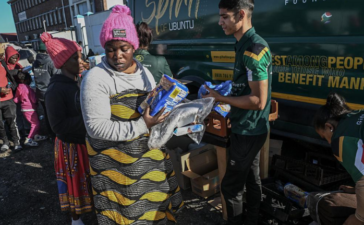
In communities across the country, residents have complained about unreliable water supplies, electricity disruptions, poor roads, uncollected rubbish and deteriorating public infrastructure.
In Alexandra township, near Johannesburg, residents have expressed frustration over worsening living conditions and the failure of local authorities to provide dependable services.
Water shortages have been particularly significant in Johannesburg, where some communities experienced prolonged interruptions before the elections. The situation generated public protests and increased pressure on municipal leaders to address the crisis.
Unemployment, crime, corruption and persistent inequality have also contributed to dissatisfaction with the governing party.
South Africa continues to face an unemployment challenge, particularly among young people. For many voters, the elections provided an opportunity to express frustration with the pace of economic improvement and the quality of services delivered by local authorities.
Some younger residents have become disillusioned with politics and question whether voting can bring meaningful change. Others, however, believe participating in elections remains an important way to hold elected officials accountable.
These concerns have made service delivery one of the central issues shaping the country’s political environment.
ANC’s Political Dominance Continues to Weaken
The latest election results reflect a longer decline in the ANC’s political dominance.
The party led South Africa out of apartheid in 1994 and maintained majority control of national government for three decades. However, its electoral support has steadily weakened amid criticism of governance, economic performance and public service delivery.
In the 2024 national elections, the ANC lost its parliamentary majority for the first time since the end of apartheid. The development forced it to enter a government of national unity with several political parties, including the Democratic Alliance.
The local elections are another important test of whether the party can regain public confidence or whether voters will continue moving towards opposition parties.
The ANC’s declining support also creates challenges for President Cyril Ramaphosa, whose leadership and political influence could face further scrutiny if the final results confirm the preliminary figures.
The elections are particularly important because local governments are responsible for services that directly affect people’s daily lives, including water, sanitation, electricity distribution, waste management and local infrastructure.
A poor performance at municipal level could therefore deepen pressure on the party ahead of the next national elections scheduled for 2029.
Coalition Governments Expected in Major Cities
The fragmented political landscape is expected to make coalition governments increasingly important across South Africa.
Early results suggest that no single political party may secure an outright majority in several major municipalities, including Johannesburg.
This could lead to negotiations between parties seeking to form governing coalitions and control municipal councils.
The ANC and DA are among the parties that could become important partners in negotiations, although their political differences may complicate cooperation at local level.
Other parties, including the Economic Freedom Fighters (EFF), the Inkatha Freedom Party (IFP) and former President Jacob Zuma’s uMkhonto weSizwe (MK) party, could also influence the formation of municipal governments.
The MK party’s performance is particularly significant in KwaZulu-Natal, where early results indicated that it was competing strongly against the ANC.
Coalition politics has become a defining feature of South African governance since the ANC lost its national parliamentary majority in 2024.
However, unstable coalitions have previously contributed to political disagreements, leadership changes and difficulties in maintaining consistent municipal administration.
Analysts have therefore warned that parties must prioritise effective governance and service delivery when negotiating coalition agreements.
Election Results Could Shape South Africa’s Political Future
The outcome of the local elections could have implications beyond municipal leadership, particularly as political parties prepare for the 2029 national elections.
A further decline in ANC support would strengthen arguments that the party needs significant internal reforms to rebuild public confidence.
For opposition parties, the results could provide an opportunity to expand their influence and demonstrate their ability to manage municipalities more effectively.
However, winning votes will not automatically translate into improved living conditions. Parties that secure control of municipal councils will face pressure to address unemployment, infrastructure deterioration, water shortages, electricity disruptions and other longstanding problems.
The Electoral Commission is continuing the counting process, with final results expected after the remaining ballots have been verified. Coalition negotiations are likely to follow in municipalities where no party secures an outright majority.
The early results have already demonstrated that South Africa’s political landscape is becoming increasingly competitive. Whether the ANC can recover its support will depend largely on its ability to respond to public concerns and demonstrate meaningful improvements in governance.
For millions of South Africans, the most important measure of the election will not simply be which party wins, but whether the new municipal administrations can deliver better services and improve everyday living conditions.