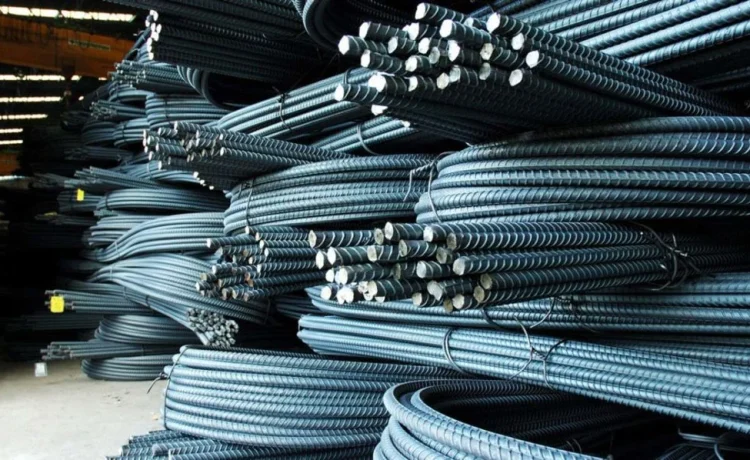
Nigeria’s long-standing ambition to build a competitive domestic steel industry is gaining fresh momentum as private investors commit billions of dollars to projects aimed at addressing the country’s estimated $4 billion steel supply gap.
The latest investment push represents one of the strongest signs in years that Nigeria’s steel sector could be moving from prolonged government-led discussions towards a more commercially driven model.
According to a report, private investors have committed approximately $2.72 billion to steel-related developments as businesses seek to take advantage of the large gap between domestic demand and local production capacity.
The development is particularly significant because Nigeria has struggled for decades to establish a functioning integrated steel industry.
A persistent industrial challenge
Steel is considered a foundation of industrial development.
Construction companies require it for buildings, bridges and infrastructure.
Manufacturers depend on steel for machinery and industrial equipment.
Automotive businesses use steel in vehicle production, while energy companies require steel products for pipelines, processing facilities and other infrastructure.
Nigeria’s inability to produce enough steel domestically has therefore created a structural dependence on imports.
That dependence exposes businesses to foreign exchange movements, international shipping costs and global commodity prices.
For Nigerian manufacturers, imported steel can become significantly more expensive when the naira weakens.
This increases production costs and ultimately affects consumers.
Ajaokuta remains central to the conversation
Nigeria’s steel story has for decades been associated with the Ajaokuta Steel Complex.
The project was conceived as a major industrial undertaking capable of transforming Nigeria’s manufacturing base.
However, years of delays, ownership disputes, financing problems and political uncertainty prevented the complex from reaching its full potential.
The continued underperformance of Ajaokuta has become symbolic of Nigeria’s wider difficulty in converting large industrial projects into productive commercial assets.
The latest private investment wave could change the nature of the conversation.
Rather than relying exclusively on government resources, private investors are increasingly looking for commercially viable opportunities across the steel value chain.
Why investors are interested
Nigeria has a large and growing market for steel products.
Population growth, urbanisation and infrastructure development are all creating additional demand.
The government’s emphasis on roads, housing, industrial parks and other infrastructure could further increase consumption.
The opportunity therefore extends beyond producing raw steel.
There is potential in processing, fabrication, distribution and specialised steel products.
Private investors can also introduce modern technology and management systems that may improve efficiency.
The economic impact
A stronger steel industry could generate benefits across several sectors.
Local production would reduce the amount of foreign exchange required for imports.
It could also create jobs in mining, manufacturing, transportation and engineering.
More importantly, domestic steel production could support other industries.
A local steel supply chain makes it easier for manufacturers to source inputs.
This could encourage companies to establish more production facilities in Nigeria.
The impact could therefore extend well beyond steel companies themselves.
The infrastructure connection
Nigeria’s infrastructure deficit represents one of the biggest potential markets for steel producers.
Road construction, railways, bridges, housing and power projects all require significant volumes of steel.
If local production becomes competitive, government infrastructure spending could create a stable source of demand.
That would help investors justify large capital expenditure.
The challenge ahead
Investment commitments are not the same as completed projects.
Nigeria has experienced several cycles of ambitious announcements followed by delays.
Investors will therefore need predictable regulations, reliable electricity, efficient logistics and transparent government policies.
Access to finance will also remain important.
Steel production is capital intensive and requires long-term investment.
The government must consequently provide an environment in which investors can plan over decades rather than years.
The $2.72 billion commitment is nevertheless an important signal.
If the projects progress successfully, Nigeria could gradually reduce its dependence on imported steel and strengthen the manufacturing base.
The country’s $4 billion steel gap is therefore not simply a market deficiency.
It represents an industrial opportunity.
For Nigeria, the real test will now be turning investment commitments into functioning plants, competitive products and sustainable jobs.