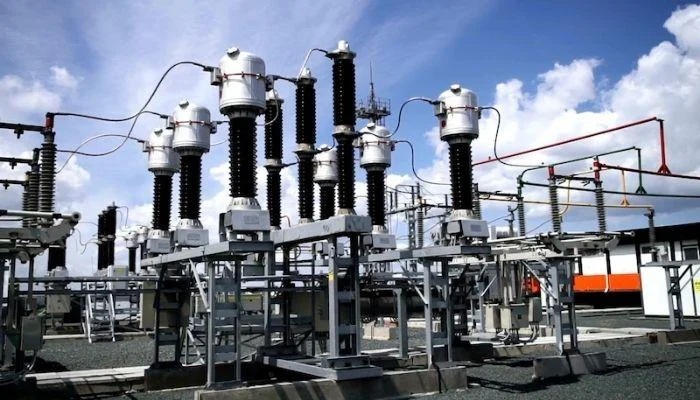
Nigeria’s electricity distribution sector is facing renewed financial pressure, with nine of the country’s 11 electricity distribution companies reportedly still dependent on government support to remain operational.
The situation highlights one of the biggest challenges facing the country’s power-sector reforms: ensuring that electricity companies can recover the actual cost of providing power while keeping electricity affordable for consumers.
Why DisCos are struggling
Electricity distribution companies occupy a critical position in Nigeria’s power system.
They purchase electricity from the market and distribute it to customers.
Their revenue therefore depends on two major factors: the amount of electricity supplied and the amount of money collected from customers.
Both sides of the equation have been problematic.
Many customers complain about unreliable supply.
At the same time, distribution companies face challenges collecting payments from consumers.
This creates a cycle in which insufficient revenue limits the ability of DisCos to invest in infrastructure.
Poor infrastructure then contributes to poor service.
Poor service makes consumers less willing or able to pay.
Subsidies become necessary
When electricity tariffs do not adequately reflect the cost of supply, government intervention becomes necessary.
Subsidies can help bridge the gap.
However, subsidies also place pressure on public finances.
The government must effectively compensate electricity companies for costs that consumers are not paying.
As the gap grows, the subsidy burden can become difficult to sustain.
Nigeria’s broader economic reforms have therefore created a difficult policy question.
Should electricity prices rise closer to cost-reflective levels?
Or should government continue to subsidise electricity to protect households and businesses?
The business impact
The power-sector problem affects virtually every Nigerian business.
Manufacturers spend heavily on alternative electricity sources.
Small businesses purchase generators and fuel.
Banks, telecommunications companies and technology firms also maintain backup power systems.
These costs increase the price of doing business.
A company that should be spending money on expansion may instead be spending it on diesel, generators and maintenance.
That reduces productivity.
The investment challenge
Private investors are unlikely to commit large amounts of capital to distribution networks if they cannot recover their investment.
The sector therefore needs a clearer commercial model.
That means improving billing.
It means reducing electricity theft.
It means increasing collection rates.
It also requires investment in meters so consumers can accurately understand how much electricity they consume.
Without those improvements, simply increasing tariffs may not solve the underlying problem.
Kaduna as a warning
The financial difficulties of Kaduna Electricity Distribution Company have become a particularly important example.
Analysis points to the interaction between weak customer profiles and poor collection rates.
Where customers have limited ability to pay, raising tariffs alone may not generate enough revenue.
That creates a structural challenge.
The solution therefore needs to combine tariff reform with better service, improved metering and stronger economic conditions.
What businesses need
Nigerian businesses require predictable electricity costs.
They need to know how much energy will cost before making investment decisions.
Uncertainty makes it difficult for manufacturers to calculate production costs.
It can also discourage foreign investors.
An investor comparing Nigeria with another market may see unreliable power as an additional operating expense.
The road ahead
Nigeria’s power sector cannot become financially sustainable through subsidies alone.
Government support may remain necessary during the transition, but long-term reform will require commercially viable electricity companies.
That means reducing technical and commercial losses while improving supply.
It also means ensuring that consumers receive better service when tariffs increase.
The electricity crisis is therefore not simply a problem for DisCos.
It is an economy-wide issue.
Until the sector becomes financially sustainable, Nigeria’s manufacturing, technology, retail and services industries will continue to carry part of the cost through expensive alternative power.