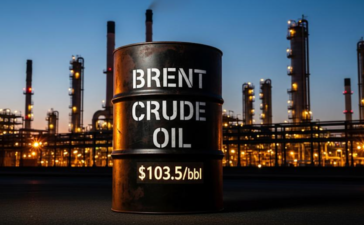
Global oil prices climbed above $90 per barrel on Monday as escalating military tensions between the United States and Iran heightened fears of supply disruptions in the Middle East, sending shockwaves through international energy and financial markets.
Brent crude, the global benchmark for oil prices, rose by more than 2 percent to trade above $90 per barrel, reaching its highest level since mid-June. U.S. West Texas Intermediate (WTI) crude also recorded strong gains, reflecting growing investor concerns over the potential impact of the conflict on global energy supplies.
Market analysts attributed the latest rally to intensifying military exchanges between the United States and Iran, which have raised fears that oil shipments through the Strait of Hormuz—one of the world’s most important energy transit routes—could be disrupted.
The Strait of Hormuz handles nearly a fifth of global oil exports, making any threat to shipping activities in the region a significant concern for international energy markets.
According to market reports, the conflict escalated over the weekend as the United States carried out another round of military strikes against Iran, while regional allies, including Kuwait and Bahrain, also reported Iranian attacks.
The renewed hostilities have prompted investors to move cautiously, with many seeking safer assets amid fears that a prolonged conflict could trigger wider instability across the Gulf region.
Analysts at ING said the absence of any signs of de-escalation continues to support higher crude prices.
“ICE Brent broke above $90 per barrel this morning with no let-up in the escalation in the Gulf. The U.S. and Iran continue to exchange strikes, which are proving to be deadly for both sides. If this escalation goes unchecked, we could return to an environment of wide-scale attacks across the Gulf,” the analysts said.
The rise in oil prices has also revived concerns about global inflation.
Higher crude prices typically increase transportation and production costs, leading to more expensive fuel, food and consumer goods. Economists warn that sustained increases could complicate efforts by central banks to keep inflation under control.
Financial markets reacted cautiously to the developments.
Government bond prices fell in several markets as investors anticipated renewed inflationary pressures, while stock markets posted mixed performances.
Although technology stocks recovered slightly after last week’s sell-off, market sentiment remained fragile as investors weighed the combined impact of geopolitical risks and uncertainty surrounding global economic growth.
For oil-importing nations such as Nigeria, sustained increases in international crude prices present both opportunities and challenges.
Higher oil prices could boost government revenue from crude exports, but they may also increase the cost of importing refined petroleum products, potentially putting additional pressure on domestic fuel prices and inflation.
Energy experts say the direction of oil prices in the coming weeks will largely depend on whether diplomatic efforts succeed in easing tensions in the Middle East.
Until then, global markets are expected to remain volatile as investors closely monitor developments in one of the world’s most strategically important energy-producing regions.