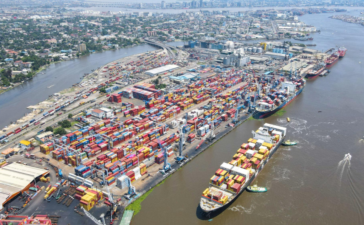
The cost of transporting containers in Nigeria has surged by as much as 450 per cent, with freight forwarders blaming inadequate holding bays and limited facilities for receiving empty containers.
According to a report published by The PUNCH on Friday, August 7, 2026, container transport costs that previously stood at about ₦200,000 have risen to approximately ₦1.1 million in some cases.
The development is raising concerns among importers, freight forwarders and transport operators, particularly those operating around the Lagos port corridor.
The Africa Association of Professional Freight Forwarders and Logistics of Nigeria (APFFLON) attributed the increase largely to difficulties associated with returning empty containers after cargo has been delivered.
The association specifically raised concerns about the availability and location of holding bays operated by shipping companies, arguing that inadequate facilities are forcing truck operators to travel longer distances to return empty containers.
APFFLON said the situation has increased pressure on the Apapa port corridor, contributing to traffic congestion, longer truck turnaround times and higher logistics expenses.
The association also singled out Mediterranean Shipping Company (MSC), alleging that the location and availability of some of its empty-container facilities are contributing to the problem.
According to the freight forwarders, some containers that could previously be returned within the immediate port environment are now being directed to locations such as Ijanikin and Agbara.
This has increased the distance travelled by trucks and, consequently, the cost of cargo evacuation.
The association said the problem is also contributing to demurrage and container detention charges because importers may be unable to return empty containers within the stipulated period when receiving facilities are unavailable.
APFFLON argued that importers should not bear additional financial penalties for delays caused by inadequate facilities for receiving empty containers.
The association therefore called on the Federal Ministry of Marine and Blue Economy, the Nigerian Ports Authority, the Nigerian Shippers’ Council and the Federal Competition and Consumer Protection Commission to investigate the situation.
It also demanded the provision of more holding bays and designated empty-container collection centres.
The freight forwarders further called for the suspension of demurrage and detention charges where importers can demonstrate that they were unable to return containers because adequate reception facilities were unavailable.
The development comes as the Federal Government continues efforts to improve Nigeria’s ports through road rehabilitation, digitalisation and other reforms designed to reduce cargo dwell time and lower the cost of doing business.
However, APFFLON warned that such reforms could be undermined if operational bottlenecks continue to increase the cost of cargo movement.
The association maintained that Nigeria’s ports must function as engines of economic growth rather than sources of additional costs for businesses.
The latest concerns highlight the importance of efficient empty-container management in Nigeria’s maritime logistics chain.
With importers already facing multiple costs associated with customs clearance, haulage, port operations and storage, further increases in container transportation could ultimately affect the prices of imported goods and place additional pressure on businesses and consumers.