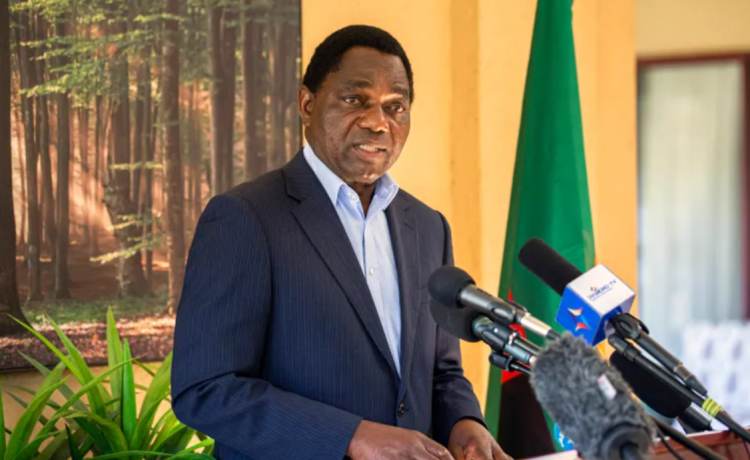
Zambia’s President, Hakainde Hichilema, has been sworn in for a second five-year term, promising to build on the economic progress recorded during his first administration and create greater opportunities for citizens.
Hichilema took the oath of office on Tuesday, September 1, 2026, at the National Heroes Stadium in Lusaka, in a ceremony attended by thousands of Zambians and several African leaders. Vice-President Mutale Nalumango was also sworn in for another term.
The inauguration followed Hichilema’s victory in Zambia’s August 13 presidential election. Official results showed that he secured more than 60 per cent of the vote, defeating his closest challenger, Brian Mundubile.
In his inaugural address, Hichilema promised to govern for all Zambians, regardless of their political affiliations. He described his second term as a period that would focus on moving the country beyond economic stabilisation towards stronger growth, investment and prosperity.
“Grow Zambia” is at the centre of his new administration’s agenda. The president said his government would focus on sectors including agriculture, mining, energy and manufacturing while expanding opportunities for businesses and vulnerable groups.
Hichilema also highlighted the economic challenges his administration inherited when he first took office in 2021. His government has been credited with pursuing debt restructuring, strengthening economic stability and supporting the mining sector, particularly Zambia’s important copper industry.
During the inauguration, Hichilema said the next five years should translate economic growth into tangible improvements in the lives of ordinary citizens.
He pointed to the need for more jobs for young people, better opportunities for farmers and entrepreneurs, improved education and stronger support for women in business.
However, the beginning of Hichilema’s second term has been overshadowed by controversy surrounding the August election.
Opposition figures and observers have raised concerns about the conduct of the election, including allegations of intimidation, restrictions on opposition activities and irregularities in the handling and counting of votes. Hichilema’s government has rejected allegations that the election result was improperly obtained.
The controversy has been heightened by the detention of Hichilema’s main opposition challenger, Brian Mundubile, who faces treason allegations that he rejects. His detention has attracted further attention from observers concerned about Zambia’s democratic institutions and the treatment of political opponents.
Despite the political tensions, the inauguration attracted several African leaders. Presidents from Kenya, Tanzania, Zimbabwe, Botswana and Namibia were among those who attended the ceremony, while other countries sent senior representatives.
Kenyan President William Ruto used the occasion to call for national unity, urging Hichilema to govern for both those who supported him and those who voted for the opposition. Ruto stressed that political differences should not divide the Zambian people.
Hichilema’s second term is expected to be closely watched, particularly as Zambia seeks to maintain economic recovery while addressing concerns about living costs, employment, energy security and public finances.
The president now faces the challenge of turning his economic promises into improvements that ordinary Zambians can feel in their daily lives while also restoring confidence in the country’s democratic institutions.
With his second term now officially underway, Hichilema has pledged to use the next five years to expand Zambia’s economy, attract investment and create opportunities for citizens.
His administration’s ability to deliver those promises while addressing concerns surrounding democracy and political freedoms is likely to shape his legacy as Zambia’s leader through 2031.