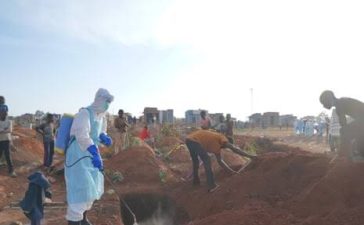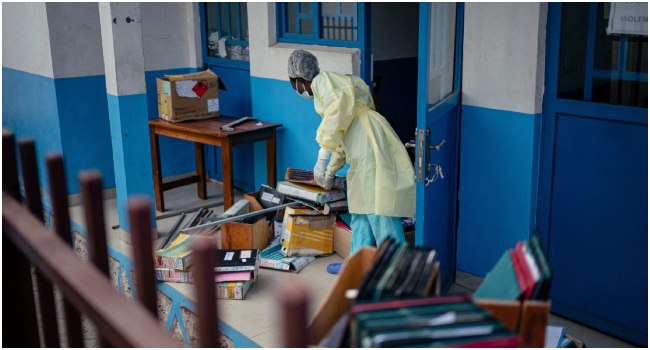
An Ebola outbreak in the Democratic Republic of Congo (DRC) has killed more than 80 people, prompting the World Health Organization (WHO) to declare an international health emergency.
According to the Africa Centres for Disease Control and Prevention (CDC Africa), at least 88 deaths and 336 suspected cases have been recorded so far.
The WHO announced on Sunday that the outbreak, caused by the Bundibugyo strain of Ebola, now qualifies as a “public health emergency of international concern.” The agency warned that the actual number of infections could be much higher than currently reported.
Health officials say the situation is especially dangerous because there is no approved vaccine or specific treatment for the Bundibugyo strain.
DR Congo’s Health Minister, Samuel-Roger Kamba, said the strain has a fatality rate that can reach 50 percent.
“The Bundibugyo strain has no vaccine, no specific treatment,” Kamba said.
The strain was first discovered in 2007 and has already spread beyond DR Congo’s borders. Officials confirmed that one infected Congolese national died in neighbouring Uganda.
Vaccines currently available only protect against the Zaire strain of Ebola, which was first identified in 1976 and carries a fatality rate of up to 90 percent.
The latest outbreak was confirmed in Ituri province in northeastern Democratic Republic of Congo, near the borders with Uganda and South Sudan.
Local residents say the healthcare system is struggling to contain the outbreak.
“We’ve been seeing people die for the past two weeks,” said Isaac Nyakulinda, a civil society representative in the region.
“There is nowhere to isolate the sick. They are dying at home, and their bodies are being handled by their family members.”
Authorities traced the outbreak to a nurse who visited a health facility in Bunia on April 24 with Ebola-like symptoms.
Symptoms of Ebola include fever, vomiting, bleeding and severe weakness. The virus spreads through direct contact with bodily fluids or infected blood.
Medical charity Doctors Without Borders, also known as MSF, said it is preparing a large-scale emergency response.
MSF Emergency Programme Manager Trish Newport warned that the rapid increase in infections and cross-border cases is “extremely concerning.”
The WHO also warned that poor transportation and communication infrastructure in DR Congo could make it harder to deliver medical supplies and control the outbreak.
This is the 17th Ebola outbreak recorded in the DRC. The country has faced repeated Ebola crises over the past five decades.
The deadliest outbreak in the country occurred between 2018 and 2020, when nearly 2,300 people lost their lives.
Health experts say Ebola is believed to originate from bats and can lead to severe bleeding, organ failure and death. The disease has historically recorded mortality rates ranging from 25 percent to 90 percent.